
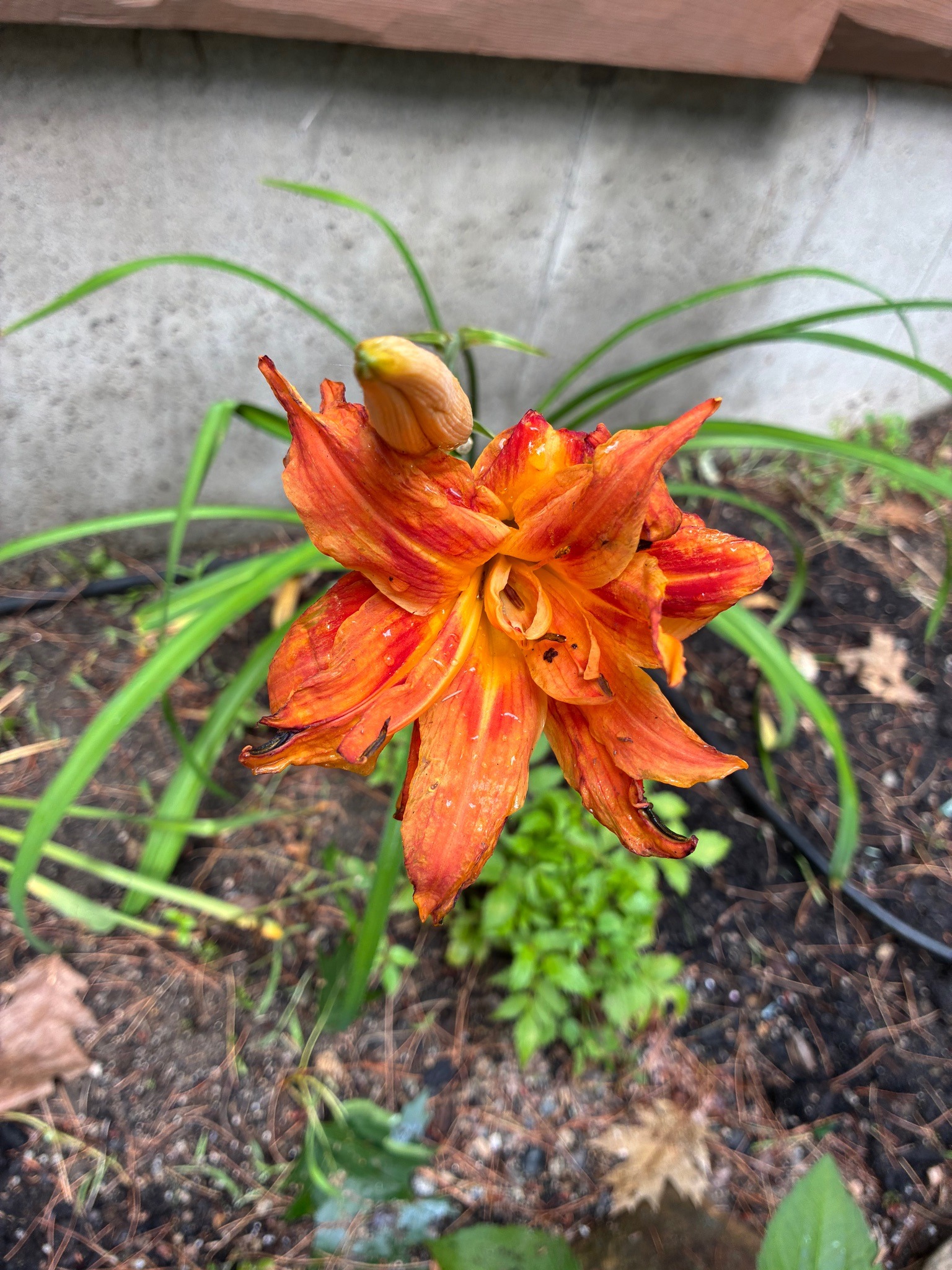
Double Orange Daylily
Hemerocallis fulva 'Kwanso'
A clump-forming herbaceous perennial with long, arching, sword-shaped green leaves and showy, multi-layered (double) orange flowers with darker red-orange centers.
- Light
- Full sun to partial shade; ideally 6 or more hours of direct sunlight per day for the best bloom production.
- Water
- Average water needs; keep soil moist but not waterlogged. Once established, it is moderately drought-tolerant, though flowering may decrease during dry spells.
- Growth
- Perennial herb with a clumping habit; typically reaches 2 to 4 feet in height and 2 to 3 feet in spread with a fast growth rate.
Care instructions
Thrives in full sun or partial shade and is highly adaptable to various soil types. Requires regular watering during the first growing season to establish and prefers occasional fertilizer in early spring.
Growing details
Sunlight
Full sun to partial shade; ideally 6 or more hours of direct sunlight per day for the best bloom production.
Watering
Average water needs; keep soil moist but not waterlogged. Once established, it is moderately drought-tolerant, though flowering may decrease during dry spells.
Soil
Adaptable to most soil types, including clay and sandy soils, but prefers fertile, well-draining loam with a pH of 6.0 to 7.0.
Hardiness zone
USDA Zones 3 through 9
Growth habit
Perennial herb with a clumping habit; typically reaches 2 to 4 feet in height and 2 to 3 feet in spread with a fast growth rate.
Bloom season
Mid to late summer; features large, trumpet-shaped double blossoms in shades of orange and bronze that last only one day each.
Propagation
Most commonly propagated by division of the root clumps in early spring or autumn after flowering has ceased.
Common pests & issues
Generally pest-resistant, but can be affected by aphids, spider mites, or daylily rust. Thrips may cause bud deformities in some conditions.
Similar species
Hemerocallis fulva (single-flowered variety) which has only six petals; Lilium species (true lilies), which have leaves whorled or alternating along the stem rather than growing from a basal clump.