
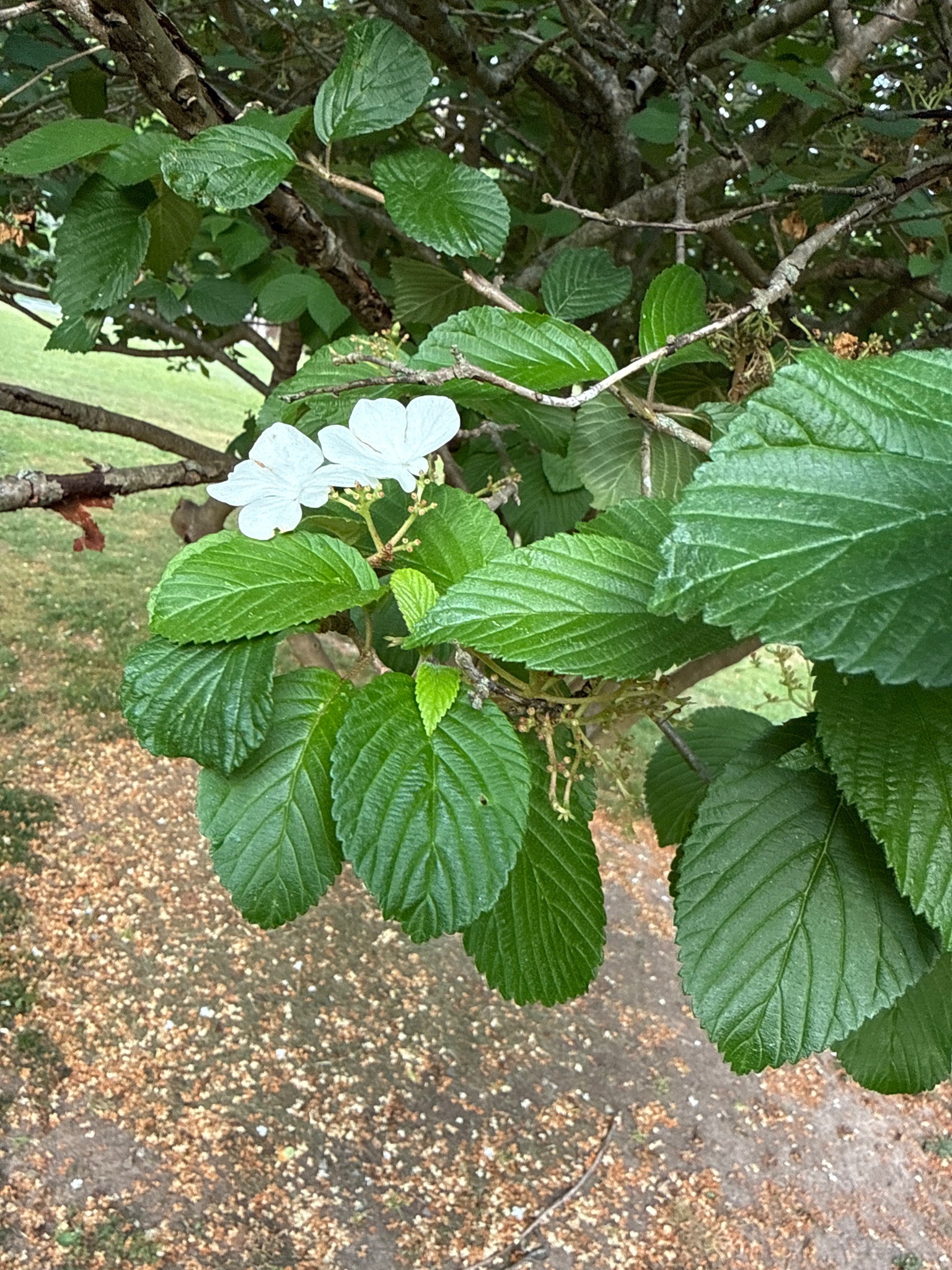
Doublefile Viburnum
Viburnum plicatum f. tomentosum
A deciduous shrub known for its distinctive horizontal branching pattern and lacecap-like white flowers that line the tops of the branches in two neat rows. The leaves are ovate, deeply veined, and serrated.
- Light
- Full sun to partial shade; ideally 4-6 hours of sunlight. In very hot climates, afternoon shade is beneficial.
- Water
- Moderate watering needs; requires consistent moisture, especially during the first few growing seasons. Soil should not be allowed to dry out completely, but it is not drought-tolerant.
- Growth
- Multi-stemmed deciduous shrub with a broad, rounded habit and strong horizontal branching. Typically reaches 8-10 feet in height and 10-12 feet in spread.
Care instructions
Plant in a location with partial shade to full sun. Needs moist, well-drained soil rich in organic matter. Provide deep watering during dry spells and fertilize in early spring before new growth appears.
Growing details
Sunlight
Full sun to partial shade; ideally 4-6 hours of sunlight. In very hot climates, afternoon shade is beneficial.
Watering
Moderate watering needs; requires consistent moisture, especially during the first few growing seasons. Soil should not be allowed to dry out completely, but it is not drought-tolerant.
Soil
Prefers moist, well-draining, slightly acidic to neutral soil (pH 5.5 to 7.0). Tolerates various soil types except for heavy, standing-water clay.
Hardiness zone
USDA Zones 5 through 8.
Growth habit
Multi-stemmed deciduous shrub with a broad, rounded habit and strong horizontal branching. Typically reaches 8-10 feet in height and 10-12 feet in spread.
Bloom season
Flowering occurs in late spring (May to June). The flowers are flat-topped cymes featuring small fertile flowers in the center surrounded by showy, white, sterile flowers on the outer edge.
Propagation
Propagated via softwood cuttings taken in summer or by layering low-hanging branches into the soil.
Common pests & issues
Susceptible to the Viburnum Leaf Beetle, which can defoliate the plant. Occasional issues with powdery mildew or leaf spot if air circulation is poor.
Similar species
Viburnum plicatum 'Popcorn' (has globose 'snowball' clusters rather than flat lacecaps) and Viburnum sieboldii (which has much larger leaves and different flower structure).