
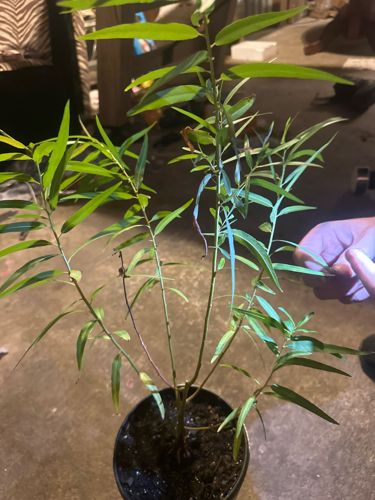
Due to the young age and lack of distinguishing features like flowers or specific bark characteristics, it is very difficult to definitively identify the exact plant name from the provided image. The elongated, narrow leaves bear a resemblance to a young Willow (Salix species), but this is not conclusive. It could also potentially be a young sapling of another tree or shrub species.
A precise scientific name cannot be assigned without a more definitive identification. If it were a willow, the scientific name would be Salix followed by the species epithet (e.g., Salix babylonica for Weeping Willow, Salix alba for White Willow). However, this remains speculative.
The plant in the image appears to be a young sapling with slender, upright stems and green, lance-shaped leaves that are alternately arranged. The leaves are somewhat elongated and pointed at the ends. The plant currently has a bushy appearance due to multiple stems growing from the base in a pot.
Learn more about Due to the young age and lack of distinguishing features like flowers or specific bark characteristics, it is very difficult to definitively identify the exact plant name from the provided image. The elongated, narrow leaves bear a resemblance to a young Willow (Salix species), but this is not conclusive. It could also potentially be a young sapling of another tree or shrub species. in the encyclopedia →Care instructions
Generally, plants with this leaf shape and growth habit, such as willows or some types of eucalyptus (though less likely at this young stage without further features), prefer full sun to partial shade. They typically need consistent moisture, especially when young, so keep the soil evenly moist but not waterlogged. Well-draining soil is crucial. Fertilize sparingly if needed, using a balanced liquid fertilizer during the growing season. Pruning can help maintain desired shape and encourage bushier growth.