Sweet Pea Bush
Scientific Name: Polygala myrtifolia
Plant Family: Polygalaceae
Native Region: South Africa
Brief Description
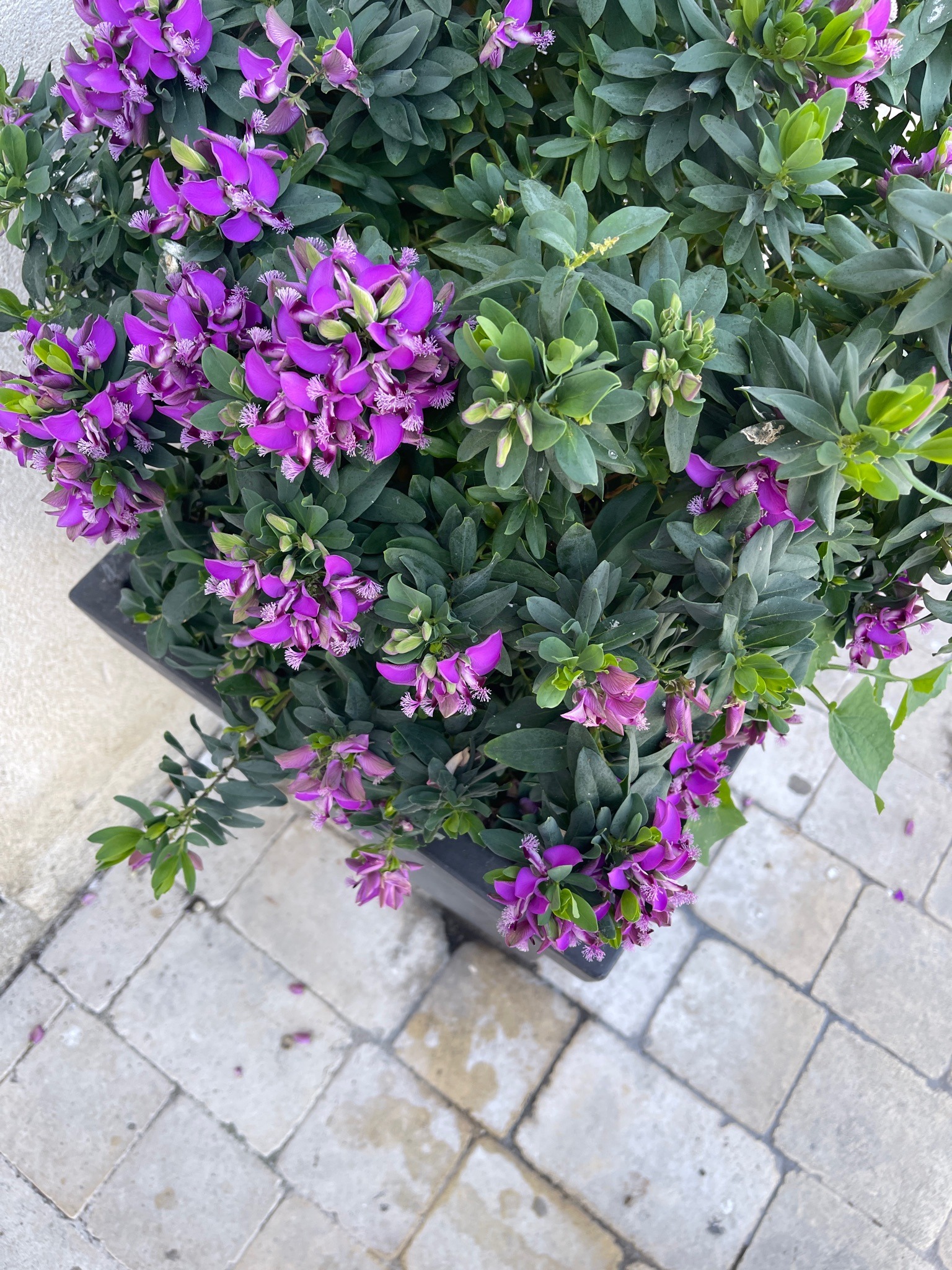
An evergreen shrub featuring oval, grayish-green leaves and clusters of vibrant purple flowers with a distinctive white fringed keel, resembling sweet pea blossoms.
Care Instructions
Grow in full sun to partial shade in well-draining soil. Water regularly during the first growing season to establish roots, then reduce frequency. Prune lightly after flowering to maintain a bushy shape and apply a balanced fertilizer in spring.
Medicinal Value
We do not currently provide medicinal value for plant identifications.
Sunlight
Full sun to partial shade; at least 6 hours of direct sunlight is preferred for the best flowering.
Watering
Moderate watering needs. Water when the top inch of soil feels dry. It is relatively drought-tolerant once established but performs best with regular moisture.
Soil
Requires well-draining soil. Thrives in sandy, loamy, or slightly acidic to neutral soil (pH 5.5-7.0).
Hardiness Zone
USDA zones 9-11; frost sensitive and can only tolerate light freezes.
Growth Habit
Evergreen perennial shrub. Reaches a mature height of 3-6 feet (up to 10 feet in ideal conditions) with a rounded, bushy spread.
Bloom Season
Year-round in mild climates, with heaviest blooming in late winter through summer. Flowers are purple/magenta with two wings and a fringed crest.
Toxicity
Low toxicity to humans and pets, but ingestion may cause mild digestive upset. Generally considered safe but not edible.
Propagation
Propagated by softwood or semi-hardwood cuttings in summer or by seeds sown in spring.
Common Pests & Issues
Relatively pest-free but can be affected by aphids or whiteflies. Overwatering can lead to root rot. It can become invasive in certain Mediterranean climates like parts of Australia.
Similar Species
Polygala virgata (Broom Milkwort), which has a more lanky, leafless appearance, and various species of Lathyrus (True Sweet Peas), which are climbing vines rather than shrubs.
Interesting Facts
The genus name 'Polygala' comes from the Greek words meaning 'much milk,' based on an ancient belief that the plant increased milk production in nursing mothers and cattle.
Created At: 2026-06-23T10:16:32.329672