Roselle (Hibiscus)
Scientific Name: Hibiscus sabdariffa
Plant Family: Malvaceae
Native Region: West Africa, now cultivated in tropical and subtropical regions worldwide
Brief Description
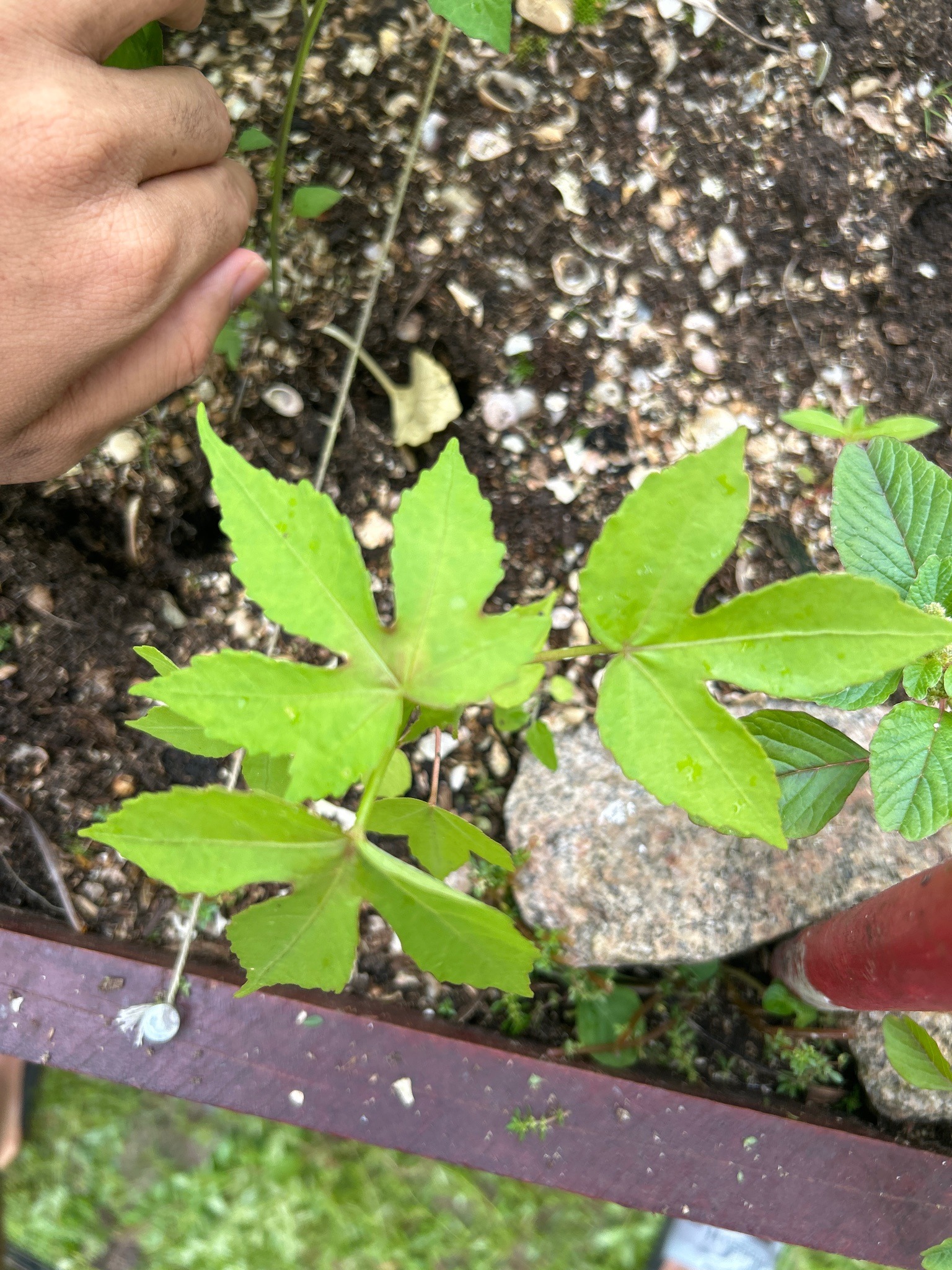
An annual or perennial shrub known for its lobed green leaves often featuring reddish veins and stems. It is primarily grown for its edible, fleshy red calyces that develop after the flowers fade.
Care Instructions
Plant in a sunny spot with at least 6 hours of direct light. Use well-draining soil and water regularly to keep the soil moist but not waterlogged. Apply a balanced fertilizer during the growing season to encourage flowering.
Medicinal Value
We do not currently provide medicinal value for plant identifications.
Sunlight
Full sun, 6 to 8+ hours per day
Watering
Moderate to high; requires consistent moisture. Drought tolerant once established but produces better calyces with regular watering. Avoid soggy roots.
Soil
Rich, well-draining sandy loam with a slightly acidic to neutral pH (6.0-7.0)
Hardiness Zone
9-12 (grown as an annual in cooler climates)
Growth Habit
Upright, woody-based subshrub reaching 5 to 7 feet in height and 3 to 4 feet in spread.
Bloom Season
Late summer to fall; flowers are pale yellow to cream with a dark maroon eye, followed by the distinctive bright red fleshy calyx.
Toxicity
Generally non-toxic to humans; however, excessive consumption of tea may affect some individuals. Generally considered safe for pets, but always monitor for individual reactions.
Propagation
Propagated by seed (best started indoors 6-8 weeks before last frost) or by stem cuttings in early summer.
Common Pests & Issues
Susceptible to root-knot nematodes, aphids, and mealybugs. In wet conditions, it may develop mildew or root rot.
Similar Species
Okra (Abelmoschus esculentus) has similar leaves and flowers but produces long green seed pods. Other Hibiscus species lack the fleshy edible red calyx of H. sabdariffa.
Interesting Facts
The 'tea' made from this plant is known as 'Zobo' in Nigeria, 'Sorrel' in the Caribbean, and 'Agua de Jamaica' in Mexico. It is a major commercial crop for the food coloring and herbal tea industries.
Created At: 2026-05-05T20:10:02.076621