
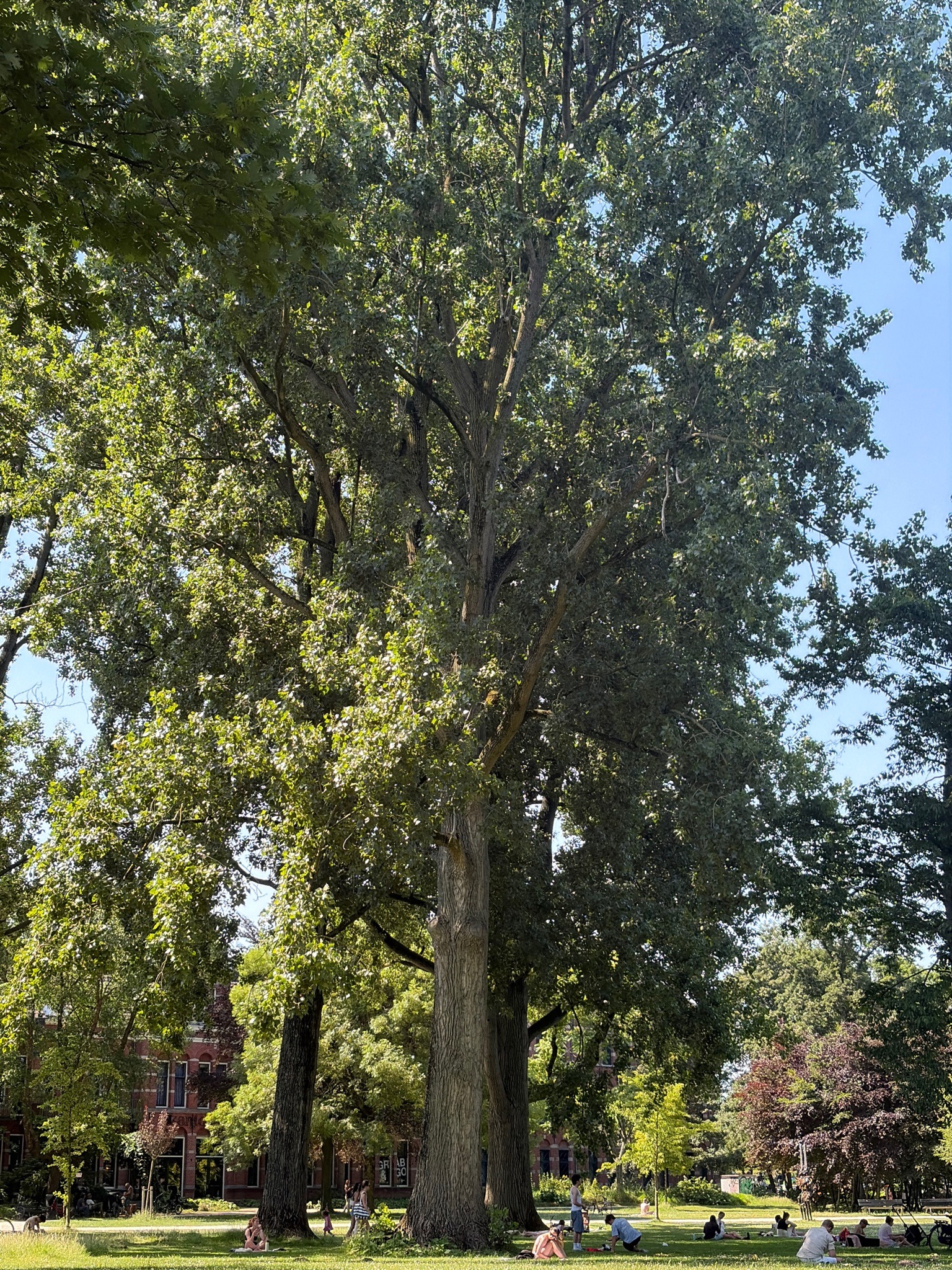
Eastern Cottonwood
Populus deltoides
A fast-growing, large deciduous tree known for its massive trunk, deeply furrowed gray bark, and triangular (deltoid) leaves that shimmer and rustle in the breeze.
- Light
- Full sun, requiring at least 6 to 8 hours of direct sunlight per day.
- Water
- High water needs; prefers consistently moist soil but can tolerate occasional flooding. Drought can lead to early leaf drop.
- Growth
- Perennial tree; fast-growing (up to 6 feet per year) reaching 75-100 feet tall with a wide, spreading canopy.
Care instructions
Requires full sun and ample space. Exceptionally water-demanding; thrives near riparian zones but tolerates urban settings if soil is kept moist during establishment. Minimal pruning needed except to remove brittle, fallen branches.
Growing details
Sunlight
Full sun, requiring at least 6 to 8 hours of direct sunlight per day.
Watering
High water needs; prefers consistently moist soil but can tolerate occasional flooding. Drought can lead to early leaf drop.
Soil
Rich, moist, well-drained soils; adaptable to various pH levels but prefers slightly acidic to neutral (5.0-7.5).
Hardiness zone
2 to 9
Growth habit
Perennial tree; fast-growing (up to 6 feet per year) reaching 75-100 feet tall with a wide, spreading canopy.
Bloom season
Spring (March to April); produces catkins before leaves emerge. Female trees produce 'cotton' seeds in early summer.
Propagation
Easily propagated through hardwood cuttings in winter or by seed (fresh seeds must be sown immediately).
Common pests & issues
Subject to leaf rust, cankers, and aphids. Known for brittle wood that breaks easily in wind or ice storms (hazard tree near structures).
Similar species
Quaking Aspen (shorter, smoother bark) and Silver Poplar (white underside of leaves). Cottonwood leaves are larger and strictly triangular.