
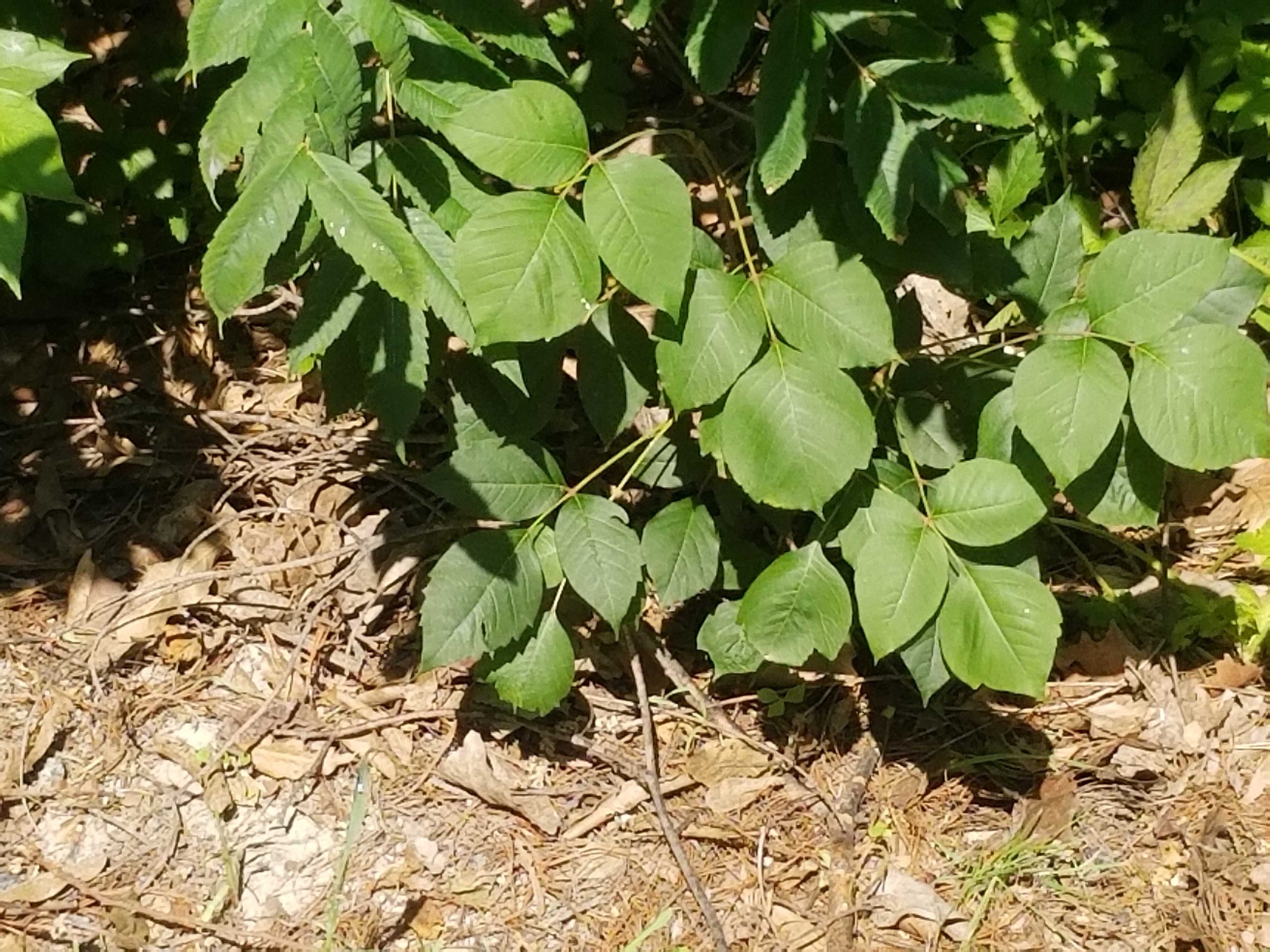
Eastern Poison Ivy
Toxicodendron radicans
A woody vine or shrub known for its compound leaves arranged in groups of three. The leaves are typically alternate on the stem, with the middle leaflet having a longer stalk than the two side leaflets. Leaf edges can be smooth, lobed, or toothed.
- Light
- Full sun to deep shade, though it prefers partial shade or woodland edges with 2-6 hours of dappled light.
- Water
- Highly adaptable; prefers consistently moist soil but can tolerate moderate drought once established. It is often found in floodplains and along stream banks.
- Growth
- Perennial; can grow as a trailing groundcover, an upright shrub, or a climbing woody vine reaching up to 60 feet or more using aerial rootlets.
Care instructions
This plant is rarely cultivated intentionally. In its natural environment, it thrives in undisturbed areas with moist soil and filtered light. It requires minimal care as a wild species and can spread aggressively via rhizomes and seeds.
Growing details
Sunlight
Full sun to deep shade, though it prefers partial shade or woodland edges with 2-6 hours of dappled light.
Watering
Highly adaptable; prefers consistently moist soil but can tolerate moderate drought once established. It is often found in floodplains and along stream banks.
Soil
Adaptable to a wide range of soil types, including sandy, loamy, or clay soils; prefers pH 5.0 to 7.5.
Hardiness zone
USDA zones 3 through 10
Growth habit
Perennial; can grow as a trailing groundcover, an upright shrub, or a climbing woody vine reaching up to 60 feet or more using aerial rootlets.
Bloom season
Small, inconspicuous yellowish-green flowers bloom in late spring to early summer, followed by clusters of grayish-white waxy berries in late summer.
Propagation
Propagates naturally through underground rhizomes, rooting at the nodes of stems, and through seeds dispersed by birds.
Common pests & issues
Generally resilient to most pests and diseases; can be considered an aggressive weed in managed landscapes.
Similar species
Boxelder (Acer negundo) seedlings have opposite leaves rather than alternate. Virginia Creeper (Parthenocissus quinquefolia) usually has five leaflets. Fragrant Sumac (Rhus aromatica) has leaflets that are more deeply lobed and attach directly to the stem without long stalks.