
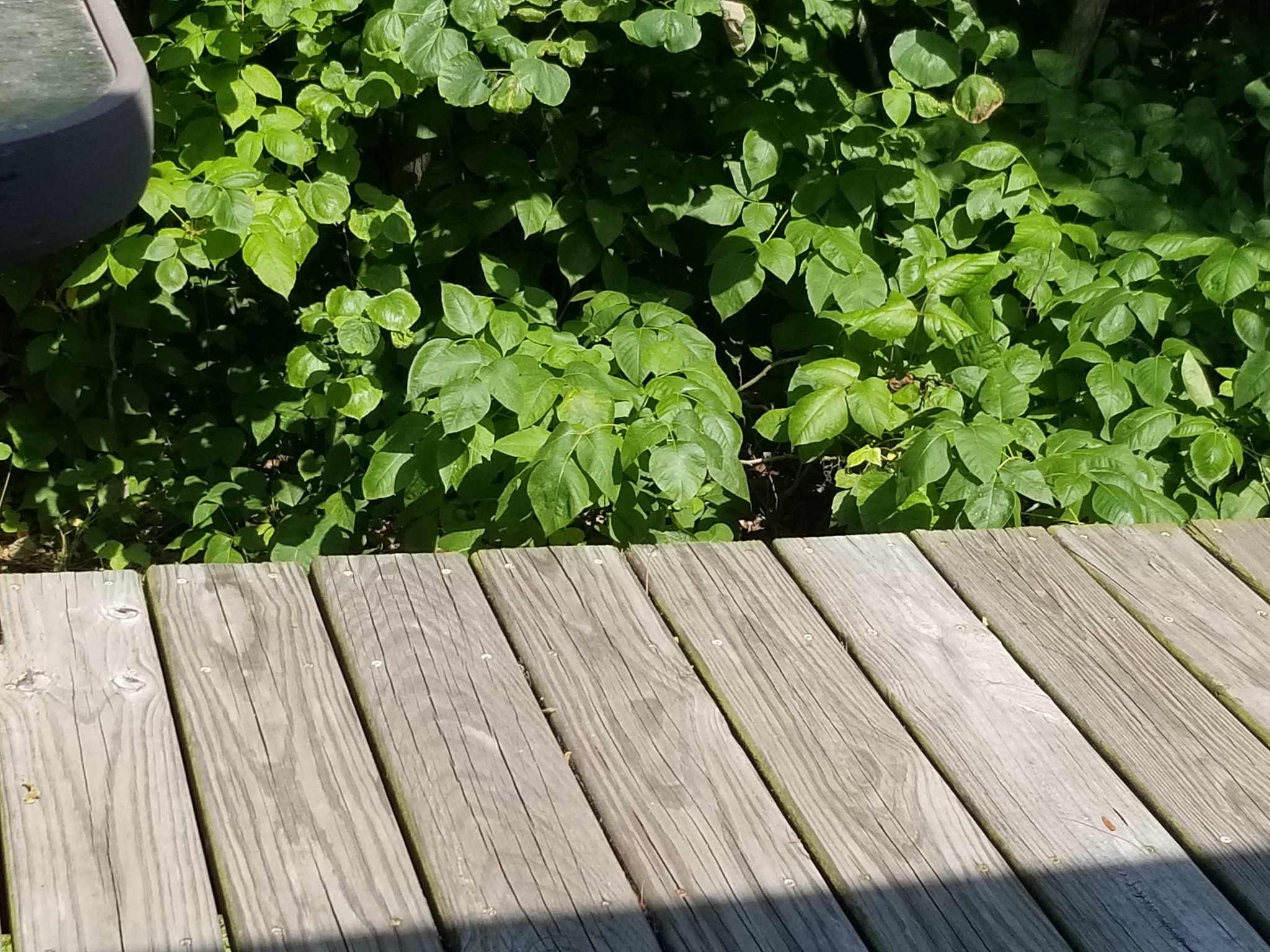
Eastern Poison Ivy
Toxicodendron radicans
A woody perennial vine or shrub known for its compound leaves arranged in groups of three. The leaves can be glossy or dull, with smooth, lobed, or toothed edges, often turning bright red or orange in the fall.
- Light
- Adaptable; performs well in full sun, partial shade, or full shade (2-8 hours of light).
- Water
- Moderate; prefers consistent moisture but is highly drought-tolerant once established.
- Growth
- Perennial; grows as a climbing vine, a trailing groundcover, or an upright shrub reaching heights up to 4 feet as a shrub or climbing over 60 feet as a vine.
Care instructions
This plant is rarely cultivated intentionally. It thrives in various conditions, preferring partial shade to full sun and moist, well-drained soil. It requires little to no maintenance and is highly adaptable to different light and soil types.
Growing details
Sunlight
Adaptable; performs well in full sun, partial shade, or full shade (2-8 hours of light).
Watering
Moderate; prefers consistent moisture but is highly drought-tolerant once established.
Soil
Grows in a wide range of soil types, including loamy, sandy, or clay soils, with a pH range of 5.0 to 7.5.
Hardiness zone
3 to 10
Growth habit
Perennial; grows as a climbing vine, a trailing groundcover, or an upright shrub reaching heights up to 4 feet as a shrub or climbing over 60 feet as a vine.
Bloom season
Late spring to early summer; produces small, inconspicuous yellowish-green flowers followed by small, round, greenish-white drupes.
Propagation
Propagates easily via seeds dispersed by wind or birds, as well as through underground rhizomes and vigorous root branching.
Common pests & issues
Generally resilient to most pests and diseases; however, it can be aggressive and invasive in managed landscapes.
Similar species
Boxelder (Acer negundo) seedlings, which have opposite leaf arrangement, and Virginia Creeper (Parthenocissus quinquefolia), which typically has five leaflets rather than three.