
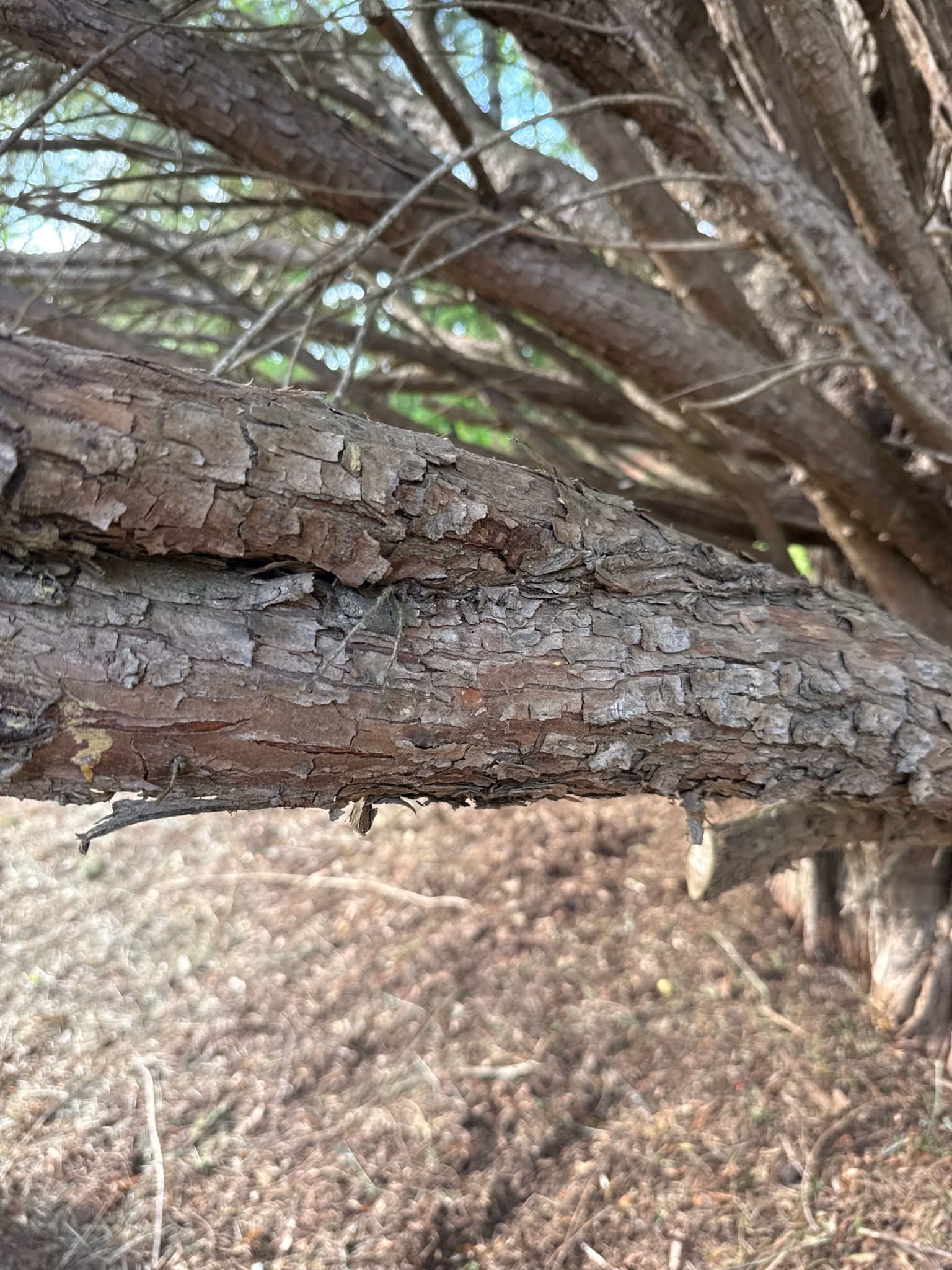
Eastern Red Cedar
Juniperus virginiana
A dense, slow-growing coniferous evergreen tree with reddish-brown, shreddy bark and scale-like or needle-like foliage. It often has a pyramidal or columnar shape when young, becoming more irregular with age.
- Light
- Full sun (6+ hours of direct sunlight per day). It is shade-intolerant.
- Water
- Low; drought-tolerant once established. New trees need weekly watering, but mature trees generally rely on natural rainfall.
- Growth
- Perennial evergreen tree; typically 30–65 feet tall with an 8–25 foot spread. Slow to moderate growth rate.
Care instructions
This is an exceptionally hardy and low-maintenance tree. It thrives in full sun and adapts to various soil types. Once established, it is highly drought-tolerant and requires little to no supplemental fertilizer.
Growing details
Sunlight
Full sun (6+ hours of direct sunlight per day). It is shade-intolerant.
Watering
Low; drought-tolerant once established. New trees need weekly watering, but mature trees generally rely on natural rainfall.
Soil
Well-drained soil; very adaptable to alkaline, acidic, rocky, or clay soils. pH range 6.0 to 8.0.
Hardiness zone
2 - 9
Growth habit
Perennial evergreen tree; typically 30–65 feet tall with an 8–25 foot spread. Slow to moderate growth rate.
Bloom season
Non-flowering (Gymnosperm). Cones appear in spring; male cones are small and yellow-brown, female cones develop into bluish-purple berry-like structures.
Propagation
Primarily by seed (requires cold stratification) or by semi-hardwood cuttings in late summer or autumn.
Common pests & issues
Cedar-apple rust (a fungal disease that requires an Apple/Crabapple alternate host), bagworms, and spider mites in hot, dry conditions.
Similar species
Rocky Mountain Juniper (Juniperus scopulorum), which has more glaucous foliage, and Northern White Cedar (Thuja occidentalis), which has flattened, fan-like foliage.