
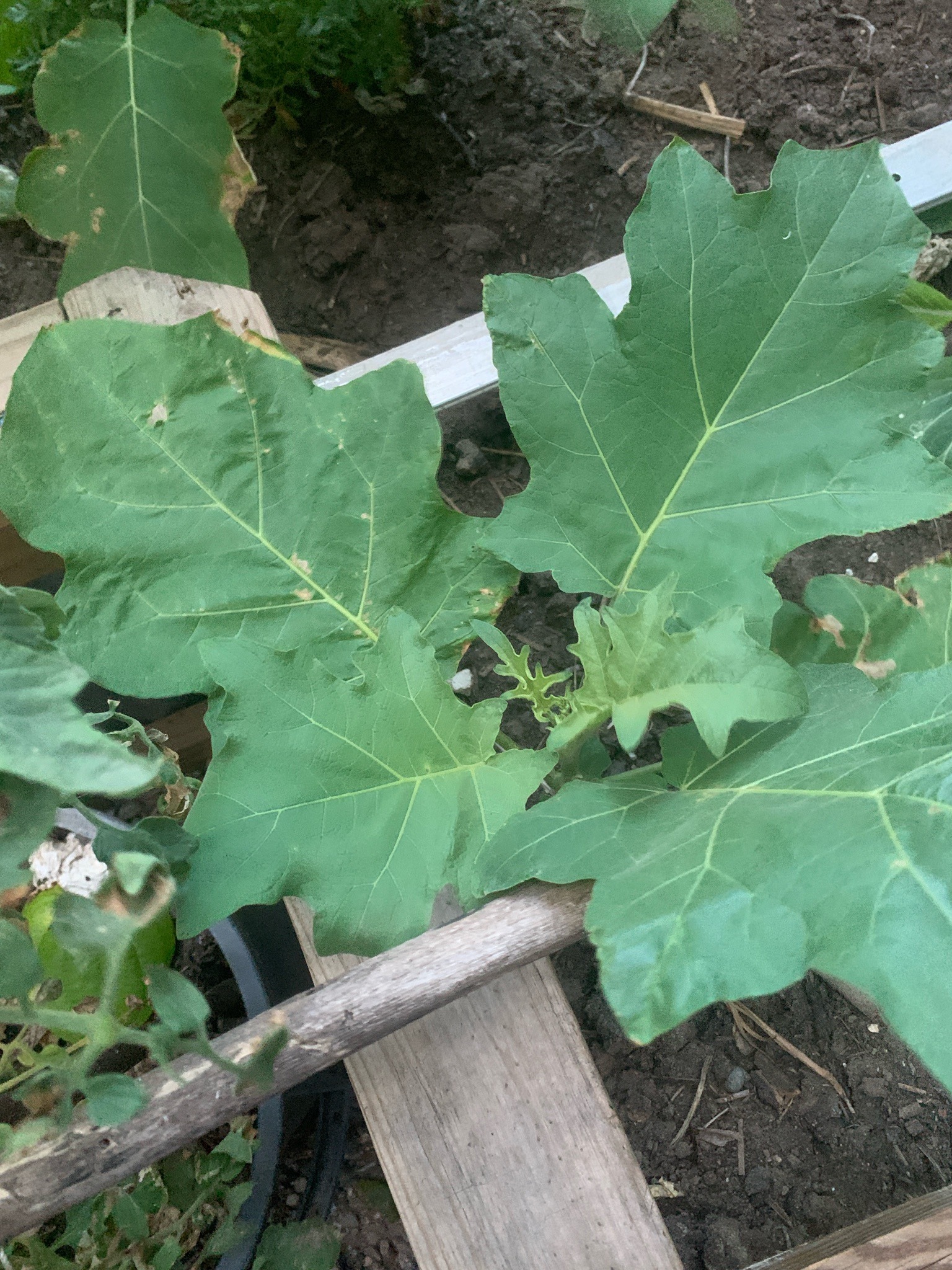
Eggplant (or Aubergine)
Solanum melongena
A bushy herbaceous perennial (often grown as an annual) with large, coarse, lobed green leaves that sometimes feature small prickles on the stems and undersides.
- Light
- Full sun; at least 6 to 8 hours of direct sunlight daily for fruit production.
- Water
- Requires regular, deep watering to keep the soil consistently moist but not waterlogged. Mulching helps retain moisture.
- Growth
- Upright, bushy growth habit. Typically reaches 2 to 4 feet in height and spread depending on the variety.
Care instructions
Requires full sun, consistent moisture, and fertile, well-draining soil. Provide a balanced fertilizer every few weeks and consider staking as the heavy fruit develops.
Growing details
Sunlight
Full sun; at least 6 to 8 hours of direct sunlight daily for fruit production.
Watering
Requires regular, deep watering to keep the soil consistently moist but not waterlogged. Mulching helps retain moisture.
Soil
Rich, loamy, well-drained soil with a slightly acidic to neutral pH (5.5 to 7.0).
Hardiness zone
USDA zones 9 to 11 (grown as an annual in cooler zones). Very sensitive to frost.
Growth habit
Upright, bushy growth habit. Typically reaches 2 to 4 feet in height and spread depending on the variety.
Bloom season
Summer; produces star-shaped, purple to white flowers with prominent yellow anthers.
Propagation
Most commonly propagated by seed started indoors 6 to 8 weeks before the last frost.
Common pests & issues
Flea beetles, aphids, spider mites, and Colorado potato beetles. Susceptible to verticillium wilt and tobacco mosaic virus.
Similar species
Potato (Solanum tuberosum) and various Nightshades (Solanum nigrum); distinguished by larger, lobed leaves and distinctive large, glossy fruits.