
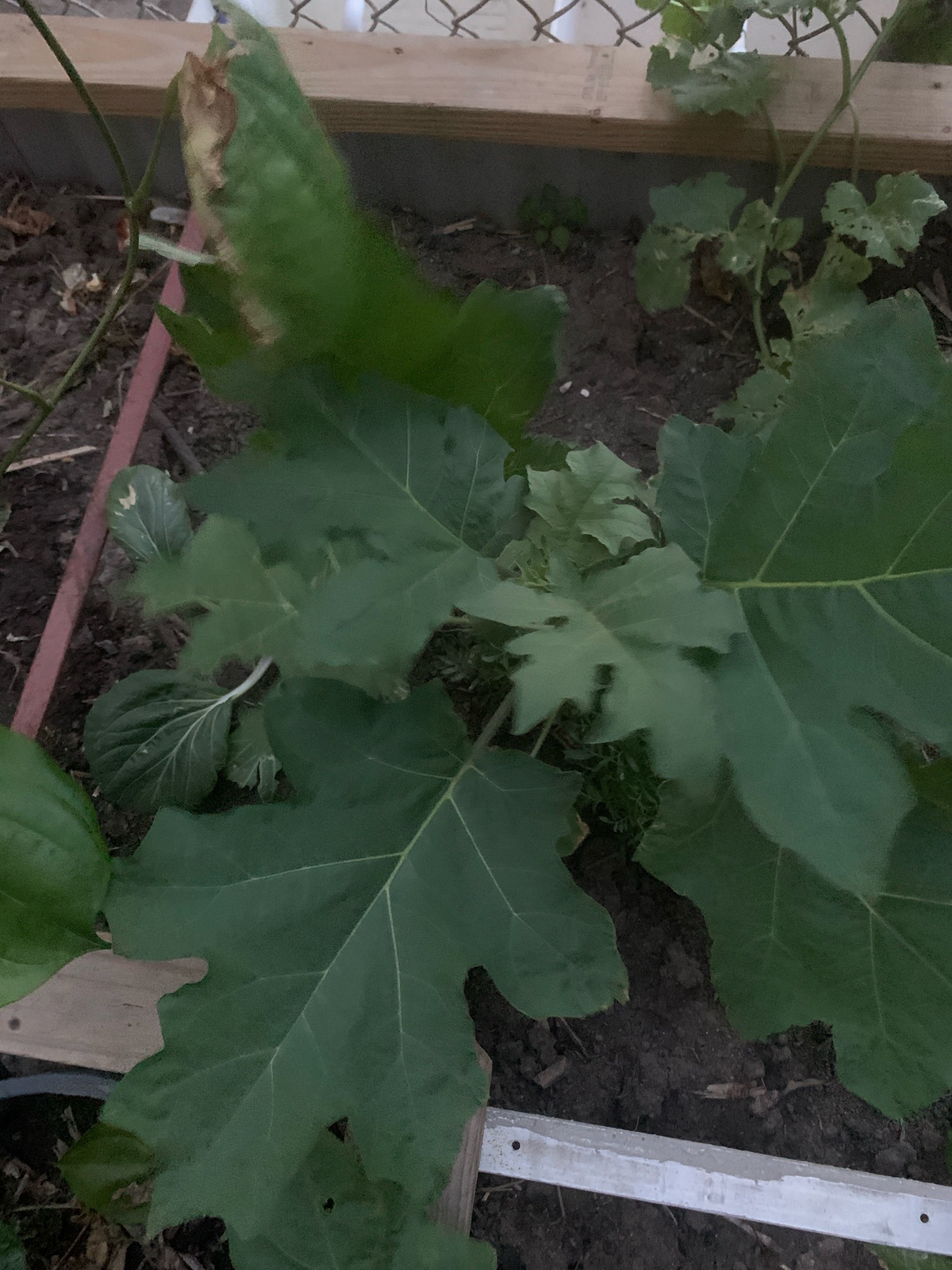
Eggplant (or Aubergine)
Solanum melongena
A bushy herbaceous perennial (often grown as an annual) with large, coarse, lobed green leaves. The leaves sometimes feature small prickles on the midribs.
- Light
- Full sun; requires 6 to 8 hours of direct sunlight per day for fruit production.
- Water
- Consistent moisture is key. Water deeply 1-2 times per week, keeping the soil moist but not waterlogged. Mulching helps retain moisture.
- Growth
- Upright, bushy growth form. Typically reaches 2 to 4 feet in height and 2 to 3 feet in width.
Care instructions
Requires full sun, warm temperatures, and fertile, well-draining soil. Provide consistent moisture and feed regularly with a balanced fertilizer during the growing season.
Growing details
Sunlight
Full sun; requires 6 to 8 hours of direct sunlight per day for fruit production.
Watering
Consistent moisture is key. Water deeply 1-2 times per week, keeping the soil moist but not waterlogged. Mulching helps retain moisture.
Soil
Rich, loamy, well-draining soil with a pH between 5.5 and 7.2.
Hardiness zone
USDA zones 9-12 (grown as an annual in cooler zones 4-8).
Growth habit
Upright, bushy growth form. Typically reaches 2 to 4 feet in height and 2 to 3 feet in width.
Bloom season
Summer; produces star-shaped, pale violet to purple flowers with yellow centers.
Propagation
Most commonly grown from seeds sown indoors 6-10 weeks before the last frost.
Common pests & issues
Flea beetles, aphids, spider mites, and Colorado potato beetles. Susceptible to verticillium wilt and tobacco mosaic virus.
Similar species
Potato (Solanum tuberosum) and some wild nightshades; however, Eggplant is distinguished by its larger, more deeply lobed leaves and distinctive fruit.