
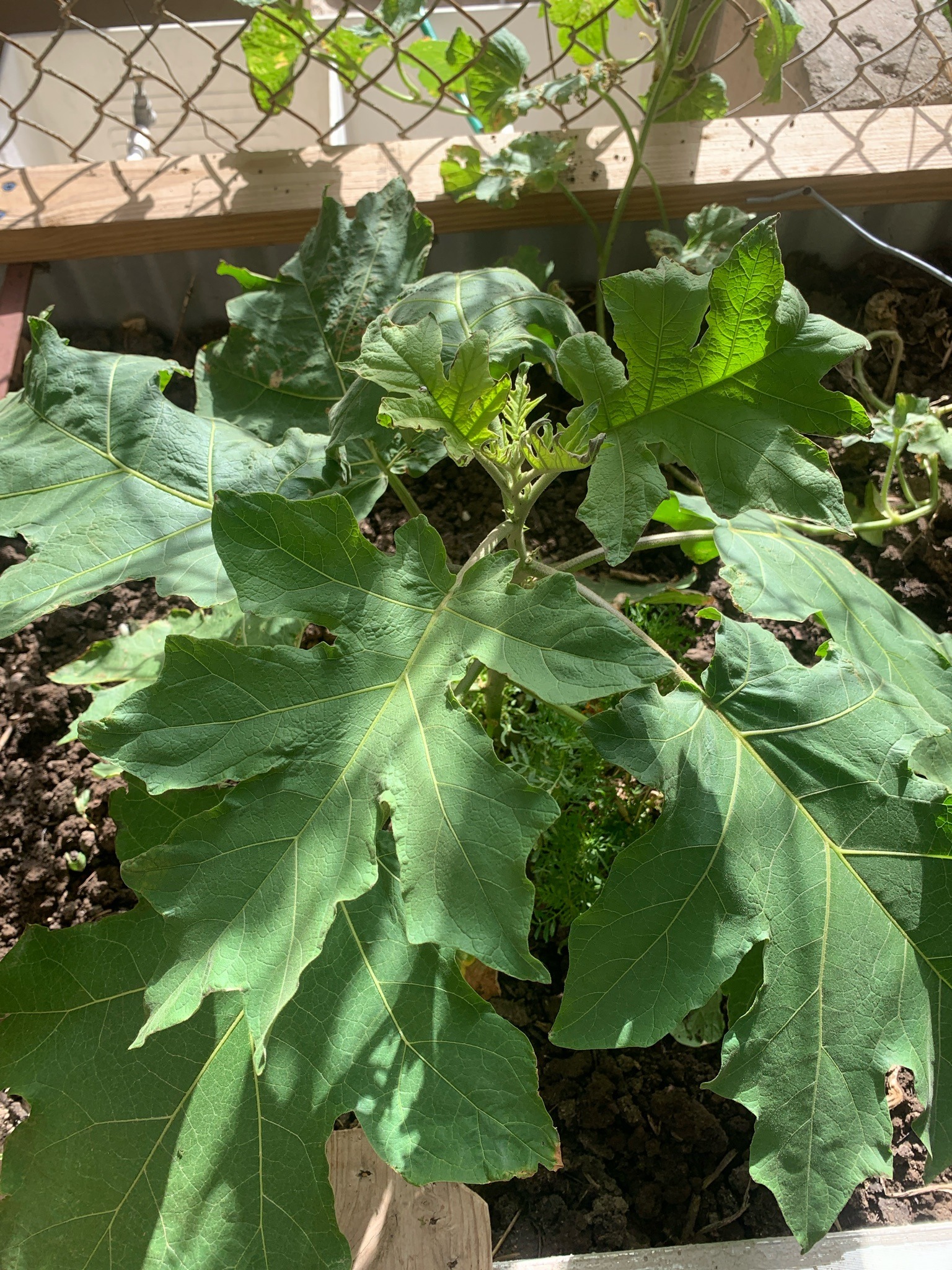
Eggplant
Solanum melongena
A bushy herbaceous perennial (usually grown as an annual) with large, fuzzy, lobed green leaves and stems that often possess small prickles. It produces pendulous edible fruits in various shapes and colors, most commonly deep purple.
- Light
- Full sun, requiring at least 6 to 8 hours of direct sunlight per day.
- Water
- Requires consistent watering to keep the soil moist but not waterlogged. About 1 inch of water per week is standard; drought can cause bitter fruit or blossom drop.
- Growth
- Upright, bushy herb; typically grows 2 to 4 feet tall and wide at a moderate to fast rate.
Care instructions
Requires full sun and warm temperatures to thrive. Plant in fertile, well-draining soil and keep consistently moist. Apply a balanced fertilizer every 2-4 weeks during the growing season. Use stakes or cages for support as the fruit becomes heavy.
Growing details
Sunlight
Full sun, requiring at least 6 to 8 hours of direct sunlight per day.
Watering
Requires consistent watering to keep the soil moist but not waterlogged. About 1 inch of water per week is standard; drought can cause bitter fruit or blossom drop.
Soil
Rich, well-drained loamy soil with a pH between 5.5 and 7.2.
Hardiness zone
Standardly grown as an annual; perennial in USDA zones 9-11.
Growth habit
Upright, bushy herb; typically grows 2 to 4 feet tall and wide at a moderate to fast rate.
Bloom season
Summer; produce star-shaped, 5-lobed flowers that are typically violet to purple with yellow centers.
Propagation
Most commonly by seed sown indoors 6-8 weeks before the last frost, or by stem cuttings in tropical climates.
Common pests & issues
Flea beetles are the most common pest, creating small holes in leaves. Other issues include aphids, Colorado potato beetles, and Verticillium wilt.
Similar species
Tomatoes and Peppers share similar leaf structures when young, but Eggplant leaves are larger, more lobed, and have a distinctive velvety or fuzzy texture.