
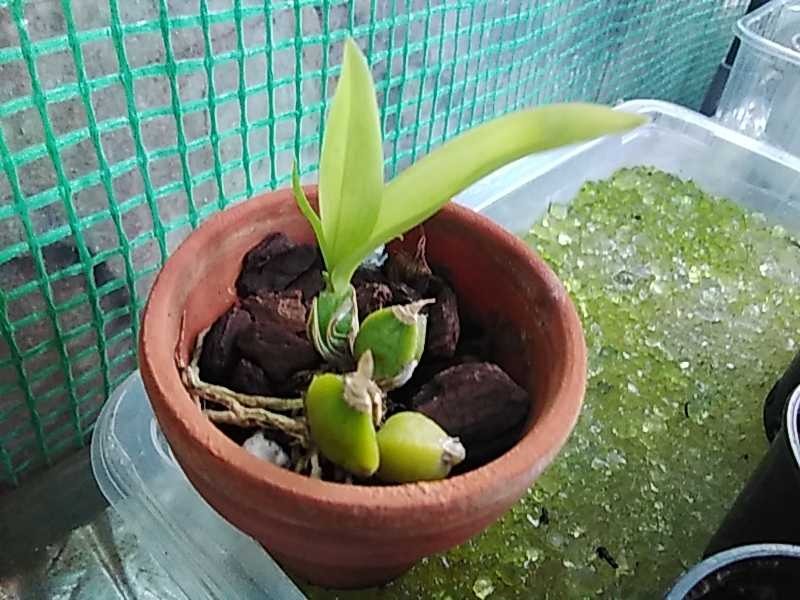
Encyclia Orchid
Encyclia spp.
An epiphytic orchid characterized by prominent, rounded pseudobulbs that look like small green onions or bulbs. Leaves are typically stiff, leathery, and strap-shaped, emerging from the top of the pseudobulbs.
- Light
- Bright indirect light; 2,000 to 3,000 foot-candles. Morning sun is ideal, but avoid direct midday sun to prevent leaf scorch.
- Water
- Water about once a week or when the bark medium feels completely dry. They are somewhat drought-tolerant due to their pseudobulbs but dislike soggy 'wet feet'.
- Growth
- Sympodial epiphyte; grows horizontally via a rhizome that produces new pseudobulbs. Mature height varies by species, typically 6-18 inches.
Care instructions
Provide bright indirect light with good air circulation. Water thoroughly when the potting medium (usually bark) is dry. Use a balanced orchid fertilizer weakly every two weeks during the growing season.
Growing details
Sunlight
Bright indirect light; 2,000 to 3,000 foot-candles. Morning sun is ideal, but avoid direct midday sun to prevent leaf scorch.
Watering
Water about once a week or when the bark medium feels completely dry. They are somewhat drought-tolerant due to their pseudobulbs but dislike soggy 'wet feet'.
Soil
Well-draining orchid bark mix, often containing fir bark, perlite, and charcoal. Prefers a pH between 5.5 and 6.5.
Hardiness zone
Zones 10-12 (USDA); usually kept as a houseplant in cooler climates as it cannot tolerate frost.
Growth habit
Sympodial epiphyte; grows horizontally via a rhizome that produces new pseudobulbs. Mature height varies by species, typically 6-18 inches.
Bloom season
Varies by species, but many bloom in late spring or summer. Flowers are often long-lasting and sometimes fragrant, featuring a distinct 'butterfly' or 'cockleshell' shape.
Propagation
Division of the rhizome, ensuring each division has at least three healthy pseudobulbs. Can also be grown from seed in a laboratory setting (flask).
Common pests & issues
Scale insects, mealybugs, and spider mites. Root rot can occur if overwatered or if the potting medium has decomposed and lost drainage.
Similar species
Prosthechea (formerly part of Encyclia, e.g., the Cockleshell Orchid) and Cattleya orchids, which have similar growth habits but different flower structures.