
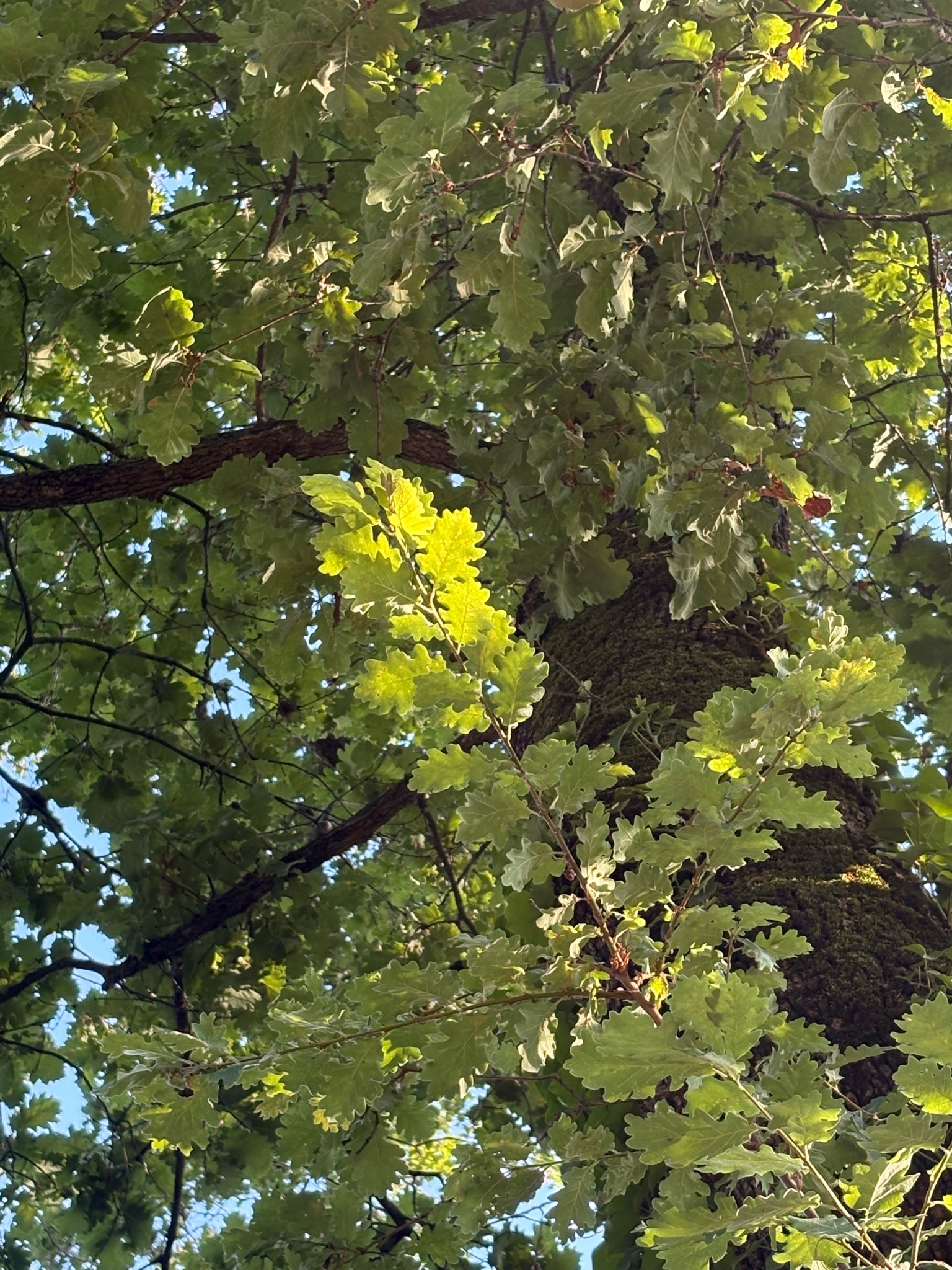
English Oak
Quercus robur
A large, long-lived deciduous tree characterized by deeply fissured bark and lobed leaves with very short stalks. It produces acorns in cups on long stems (peduncles).
- Light
- Full sun; requires at least 6-8 hours of direct sunlight per day for optimal growth.
- Water
- Moderate; young trees need deep weekly watering during dry spells. Mature trees are deeply rooted and generally only require supplemental water during extreme drought.
- Growth
- Perennial deciduous tree; slow to moderate growth rate. Can reach 70-100 feet tall and wide with a broad, spreading crown.
Care instructions
Requires full sun and plenty of space to grow. Young trees need regular watering to establish roots, but mature trees are quite drought-tolerant. Minimal pruning is needed except to remove dead wood.
Growing details
Sunlight
Full sun; requires at least 6-8 hours of direct sunlight per day for optimal growth.
Watering
Moderate; young trees need deep weekly watering during dry spells. Mature trees are deeply rooted and generally only require supplemental water during extreme drought.
Soil
Prefers deep, well-draining, fertile loams but is adaptable to clay and sandy soils. Prefers neutral to slightly acidic pH (5.0-7.5).
Hardiness zone
4 - 8
Growth habit
Perennial deciduous tree; slow to moderate growth rate. Can reach 70-100 feet tall and wide with a broad, spreading crown.
Bloom season
Late Spring; produces inconspicuous yellowish-green catkins (male) and small spikes (female).
Propagation
Primarily by seed (acorns) sown immediately after falling in autumn. Can also be propagated via grafting for specific cultivars.
Common pests & issues
Susceptible to powdery mildew, oak wilt, and pests like the oak processionary moth or aphids. Healthy trees are generally resilient.
Similar species
White Oak (Quercus alba) - distinguished by leaves with longer petioles (stems) and acorns on shorter stalks compared to the English Oak's long-stalked acorns.