Calibrachoa
Scientific Name: Calibrachoa x hybrida
Plant Family: Solanaceae (Nightshade family)
Native Region: South America (specifically Brazil, Argentina, and Uruguay)
Brief Description
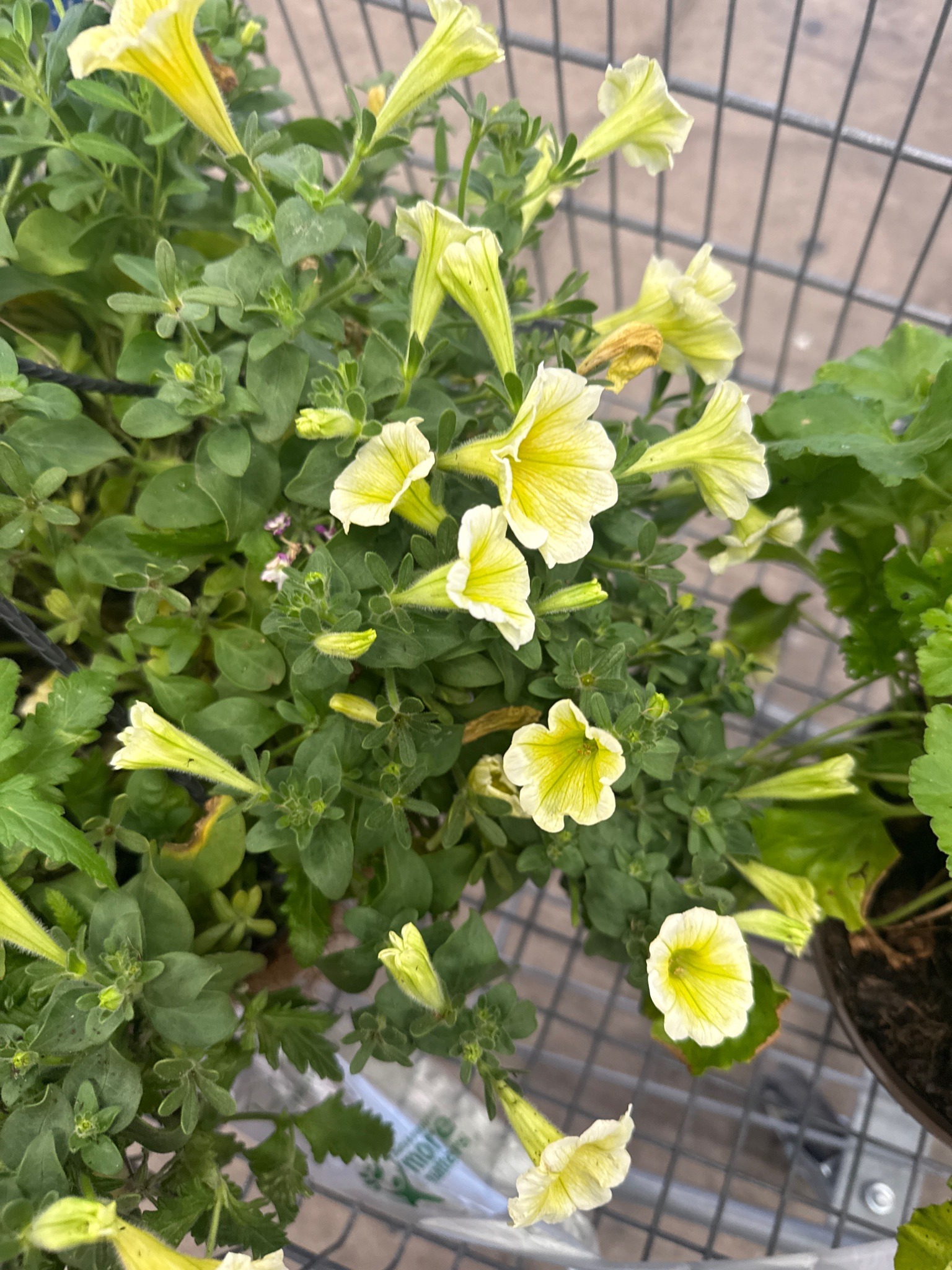
A popular bedding plant with small, petunia-like trumpet-shaped flowers and trailing green foliage. This specific variety features pale yellow to cream blossoms with darker yellow veins.
Care Instructions
Place in full sun and water when the top inch of soil feels dry. Use a high-quality potting mix with good drainage and feed regularly with a liquid fertilizer to support heavy blooming.
Medicinal Value
We do not currently provide medicinal value for plant identifications.
Sunlight
Full sun (at least 6-8 hours of direct light per day for best bloom production).
Watering
Medium. Water throughout the growing season, allowing the top soil to dry slightly between waterings. Sensitive to waterlogging.
Soil
Well-draining potting soil with a slightly acidic pH (5.5 - 5.8 to prevent iron deficiency).
Hardiness Zone
USDA zones 9-11 (grown as an annual in most other climates).
Growth Habit
Tender perennial grown as an annual. Features a trailing or mounding habit, typically reaching 6-12 inches high and spreading 12-24 inches.
Bloom Season
Spring through the first frost of autumn; free-flowering without needing deadheading.
Toxicity
Generally considered non-toxic to humans and pets, though it belongs to the nightshade family where foliage can sometimes cause mild stomach upset if ingested in large quantities.
Propagation
Most easily propagated by stem cuttings; seeds are often sterile in hybrid varieties.
Common Pests & Issues
Iron chlorosis (yellow leaves with green veins) if pH is too high; aphids, thrips, and root rot if kept too wet.
Similar Species
Petunia (larger flowers/sticky leaves), Surfinia (a type of petunia). Calibrachoa flowers are significantly smaller and the foliage is less sticky.
Interesting Facts
They are often called 'Million Bells', which was the first trademarked series of the plant hit the market in the 1990s.
Created At: 2026-04-30T14:31:00.847826