Sweet Basil
Scientific Name: Ocimum basilicum
Plant Family: Lamiaceae (Mint family)
Native Region: Central Africa to Southeast Asia; widely naturalized globally including Mediterranean regions
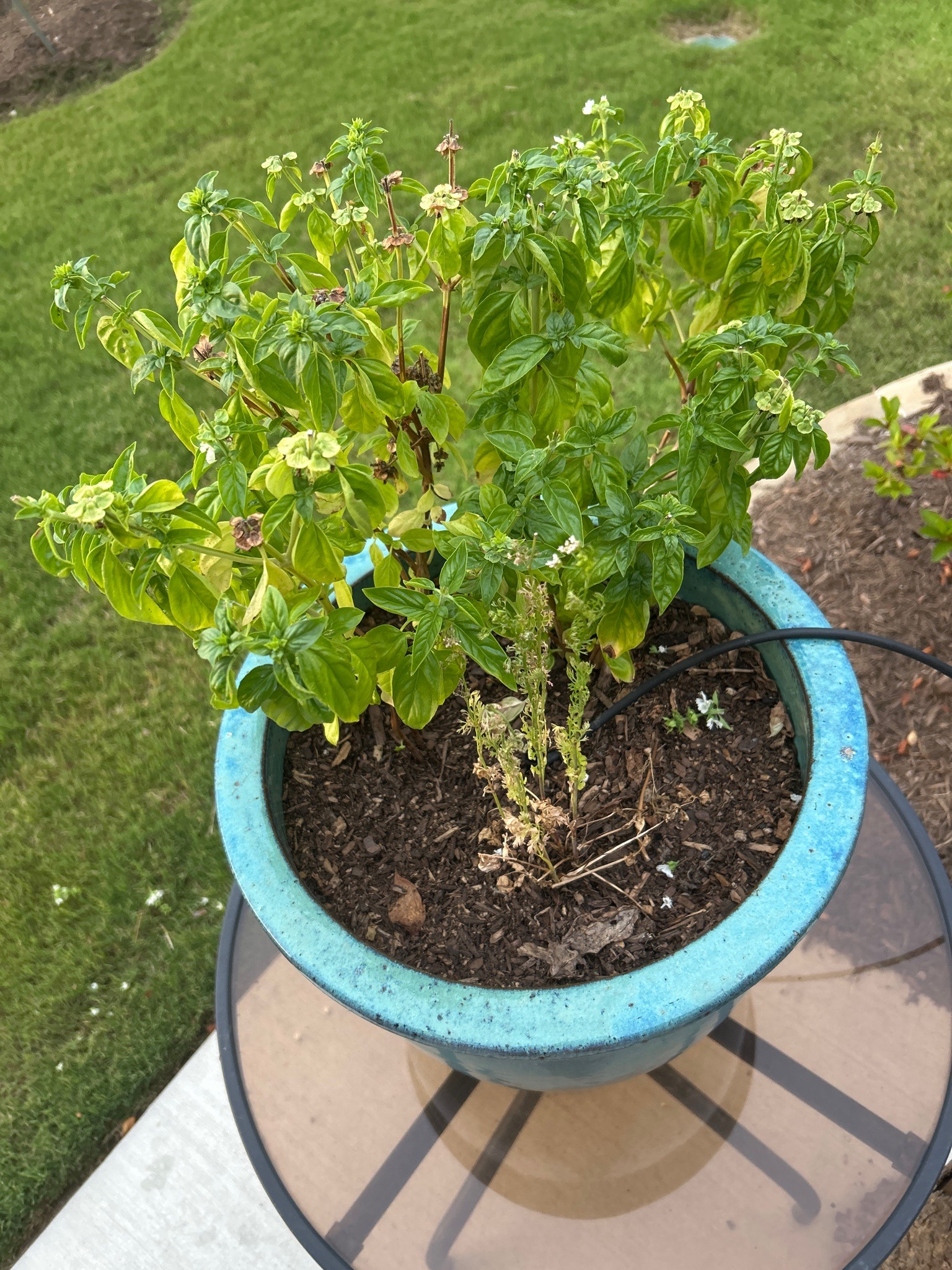
Brief Description
A fragrant annual herb with lush, bright green, ovate leaves that grow opposite each other. It produces small white flowers on terminal spikes when mature.
Care Instructions
Provide at least 6-8 hours of sunlight daily. Keep soil consistently moist but well-drained. Pinch off flower buds to encourage foliage growth and prevent the leaves from turning bitter. Fertilize lightly every 2-4 weeks with a balanced liquid fertilizer.
Medicinal Value
We do not currently provide medicinal value for plant identifications.
Sunlight
Full sun, requiring at least 6 to 8 hours of direct light daily for best oil production and leaf density.
Watering
Requires regular watering to keep the soil consistently moist but not waterlogged. It will wilt quickly if dry. Water at the base of the plant to avoid fungal issues on leaves.
Soil
Well-draining, rich loamy soil with a neutral pH between 6.0 and 7.5.
Hardiness Zone
USDA zones 10-11 as a perennial; grown as an annual in zones 2-9 as it is highly frost-sensitive.
Growth Habit
Bushy annual herb reaching approximately 12-24 inches in height and 12-18 inches in spread. Medium growth rate.
Bloom Season
Summer; produces small white or lavender flowers on spikes. Flowering often leads to a decline in leaf quality.
Toxicity
Non-toxic to humans, dogs, and cats. Safe for general consumption.
Propagation
Easily propagated from seeds sown in warm soil or by stem cuttings placed in water until roots develop.
Common Pests & Issues
Prone to Fusarium wilt, downy mildew, and root rot if overwatered. Common pests include aphids, slugs, and Japanese beetles. Yellowing leaves (as seen in the photo) can indicate nutrient deficiency or overwatering.
Similar Species
Thai Basil (purple stems and licorice scent), Holy Basil (hairy stems and spicy flavor), and Lemon Basil (distinct citrus aroma).
Interesting Facts
The name 'basil' comes from the Greek word 'basilikon' meaning 'royal'. It is a key ingredient in Italian cuisine and is considered a symbol of love in some cultures.
Created At: 2026-06-03T00:54:55.156143