Lamb's Quarters
Scientific Name: Chenopodium album
Plant Family: Amaranthaceae
Native Region: Europe and parts of Asia; currently naturalized globally in temperate and tropical regions.
Brief Description
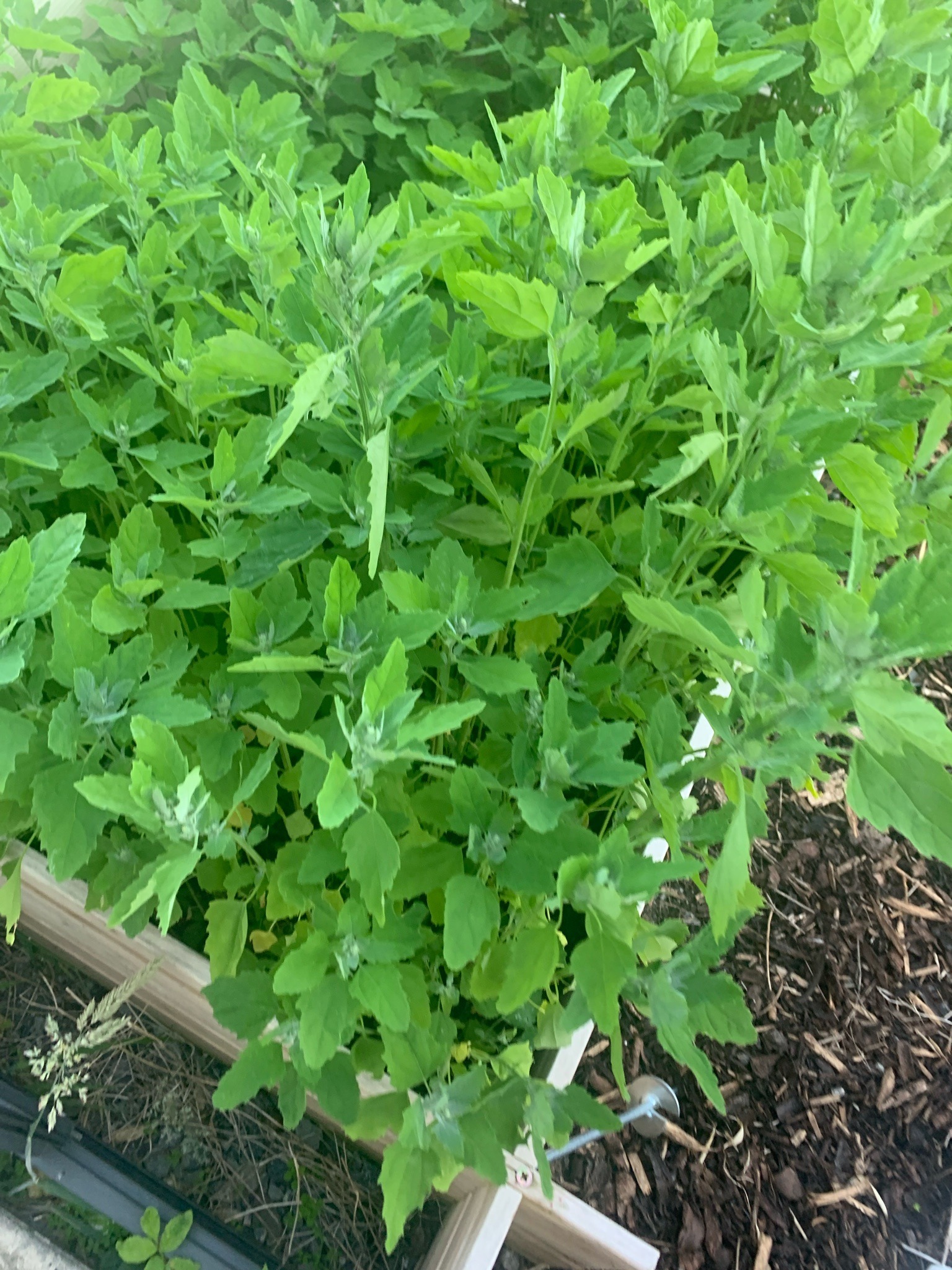
An edible annual weed with diamond-shaped, toothed leaves that are covered in a white, mealy powder (farinose) on the undersides and near the growing tips.
Care Instructions
Thrives in disturbed soil with full sun to partial shade. Requires minimal care once established, as it is a vigorous weed. Water moderately and provide nitrogen-rich soil for best leafy growth.
Medicinal Value
We do not currently provide medicinal value for plant identifications.
Sunlight
Full sun to partial shade; 6-8+ hours per day for optimal growth.
Watering
Moderate watering; once established, it is drought-tolerant. Over-watering can lead to root rot in poorly drained soil.
Soil
Well-draining, nutrient-rich soil is preferred; adaptable to a wide pH range (4.5 to 8.5) but thrives in neutral to slightly alkaline conditions.
Hardiness Zone
Grown as an annual; adaptable to USDA zones 2-11.
Growth Habit
Summer annual herb; can reach 3-5 feet in height and 2 feet in spread. Fast-growing and upright.
Bloom Season
Summer to early Autumn; inconspicuous, tiny green flowers in dense, grainy clusters. Non-fragrant.
Toxicity
Contains oxalates and nitrates; should be consumed in moderation, especially for individuals with kidney issues. Toxic to livestock (cattle, sheep) if consumed in very large quantities.
Propagation
Primarily by seed; a single plant can produce tens of thousands of seeds which can remain viable in the soil for decades.
Common Pests & Issues
Leaf miners are the most common pest; aphids and powdery mildew may also occur. Generally very resilient.
Similar Species
Orach (Atriplex hortensis) and Mexican Tea (Dysphania ambrosioides). Lamb's Quarters is distinguished by its mealy, white-gray powdery coating and lack of a strong resinous odor found in Mexican Tea.
Interesting Facts
One of the most common weeds in the world, it was historically a staple food in Europe before the arrival of spinach from Asia. Its seeds were also found in the stomachs of Iron Age bog bodies.
Created At: 2026-06-23T19:09:31.897412