Calla Lily
Scientific Name: Zantedeschia aethiopica
Plant Family: Araceae
Native Region: Southern Africa (South Africa, Swaziland, Lesotho)
Brief Description
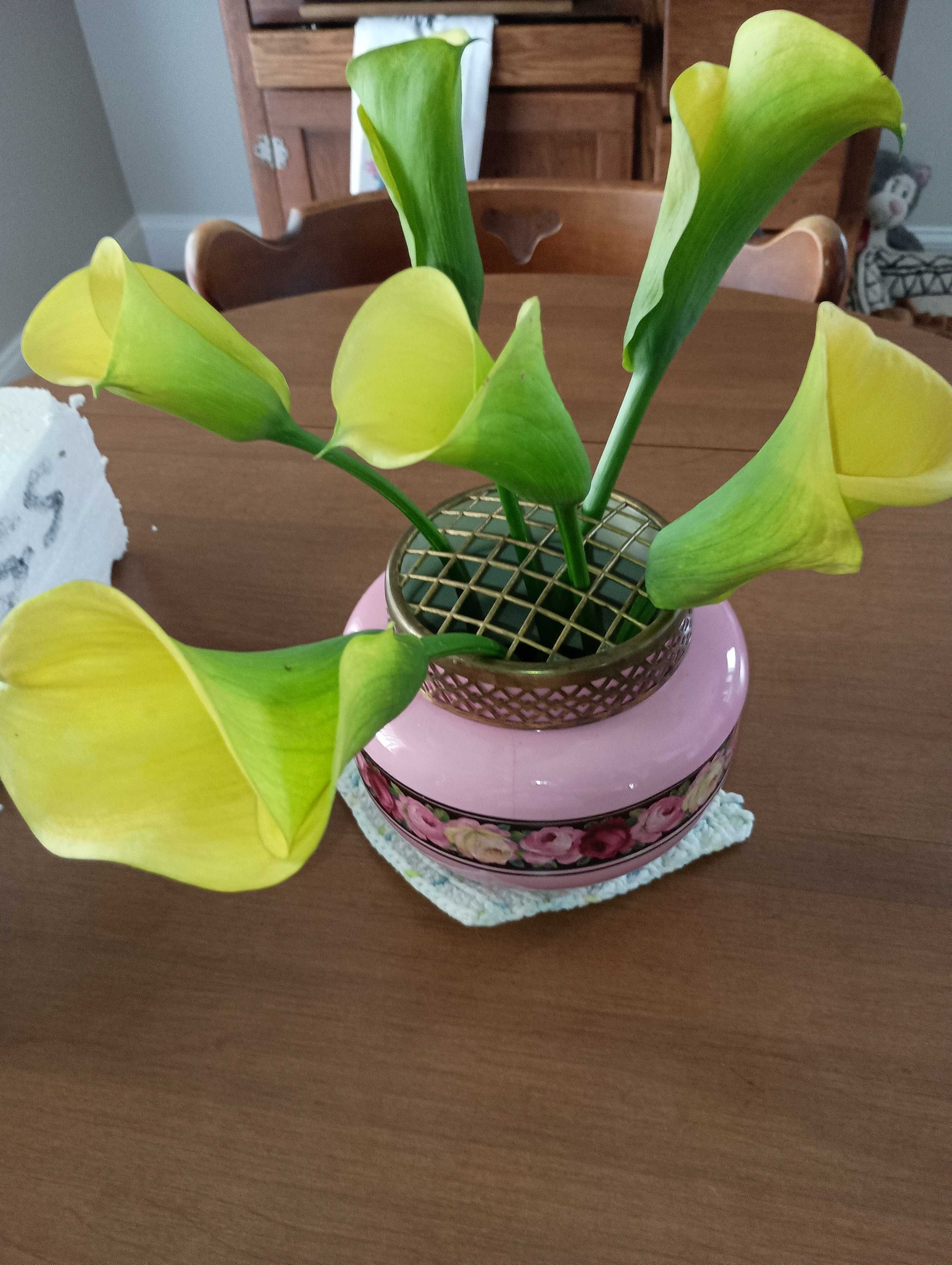
A clump-forming perennial known for its elegant, funnel-shaped spathes (modified leaves) surrounding a central yellow spadix, and its large, arrow-shaped dark green foliage.
Care Instructions
Thrives in bright, indirect light or full sun in cooler climates. Requires consistently moist, well-draining soil and regular fertilizing during the growing season. In cold climates, rhizomes should be dug up and stored for winter.
Medicinal Value
We do not currently provide medicinal value for plant identifications.
Sunlight
Full sun to partial shade; at least 6 hours of bright light daily is ideal for best blooming.
Watering
High water needs; soil should remain consistently moist but not waterlogged. In pots, water when the top inch of soil feels dry. Leaves will droop if underwatered.
Soil
Rich, organic-heavy, well-draining soil with a slightly acidic to neutral pH (6.0 to 7.5).
Hardiness Zone
USDA Zones 8-10; can be grown as an annual or houseplant in colder zones.
Growth Habit
Herbaceous perennial; grows from rhizomes to a height/width of about 2-3 feet. Upright and clumping growth habit.
Bloom Season
Spring to mid-summer; produces large, trumpet-like spathes usually in white, yellow, pink, or purple.
Toxicity
High toxicity to humans, dogs, and cats. Contains calcium oxalate crystals which cause severe mouth irritation, swelling, and digestive distress if ingested.
Propagation
Most commonly propagated by dividing the rhizomes during the dormant season or by seed.
Common Pests & Issues
Prone to bacterial soft rot and various viral infections. Pests include aphids, spider mites, and Japanese beetles. Yellowing leaves usually indicate overwatering or poor drainage.
Similar Species
Peace Lily (Spathiphyllum), which has thinner leaves and different flower structure, or Bog Arum (Calla palustris), which is a smaller wild relative.
Interesting Facts
Despite the name, calla lilies are not true lilies (family Liliaceae). They are widely used in bridal bouquets as a symbol of purity and rebirth.
Created At: 2026-06-10T18:26:06.762517