
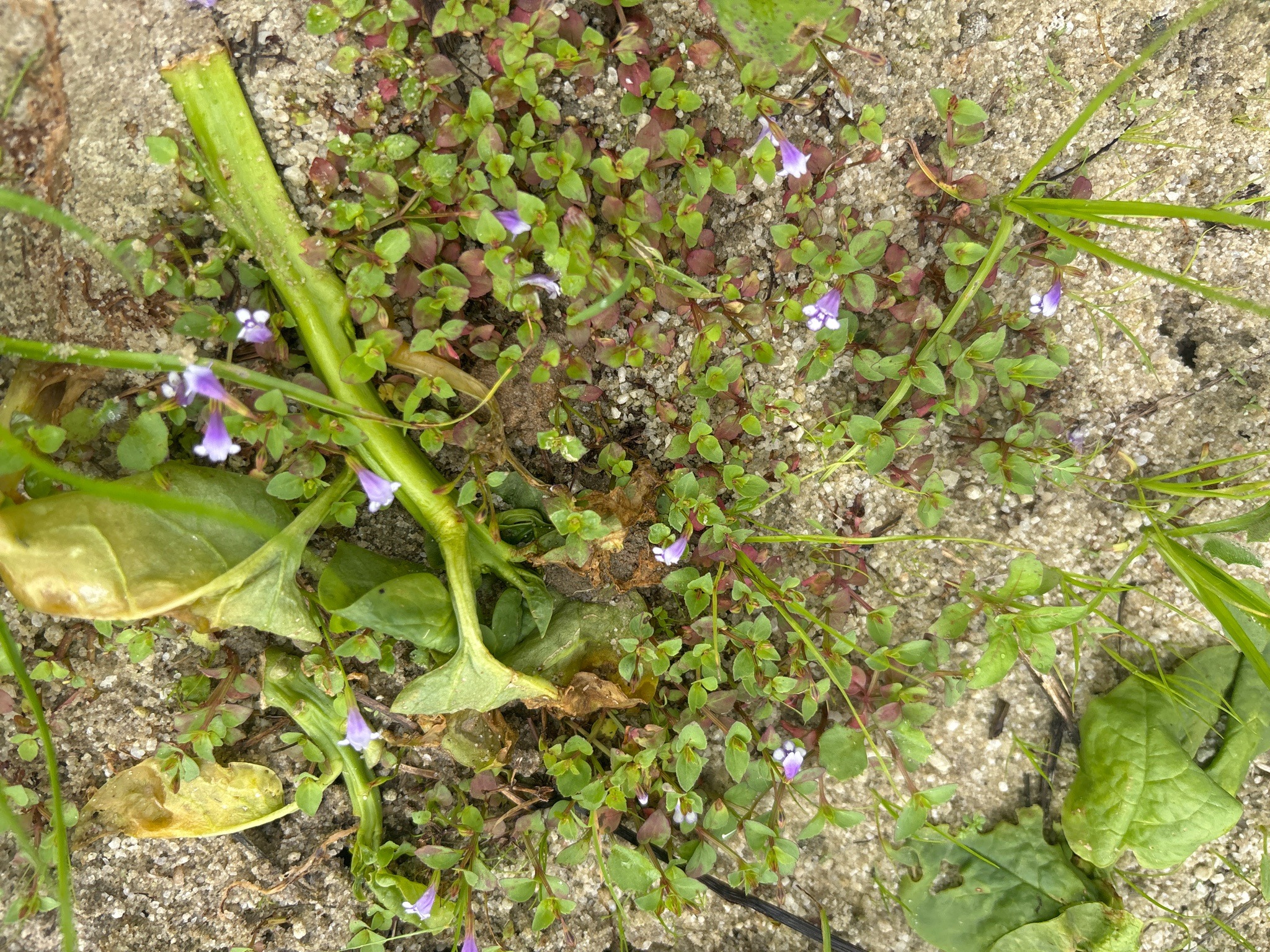
False Pimpernel
Lindernia dubia
A low-growing, moisture-loving herbaceous plant with small, opposite, sessile leaves and tiny, pale violet to white tubular flowers born on slender stalks.
- Light
- Full sun to partial shade; ideally 4-8 hours of sunlight per day.
- Water
- High; requires consistently wet or saturated soil. It is not drought-tolerant and will wilt quickly if the substrate dries out.
- Growth
- Annual or short-lived perennial; herbaceous forb. It typically grows 10-30 cm tall with a spreading or ascending form.
Care instructions
This plant thrives in saturated soils and full sun to partial shade. Keep the soil constantly moist or wet, as it is often found in boggy areas or wetlands. It requires minimal fertilization in its natural habitat.
Growing details
Sunlight
Full sun to partial shade; ideally 4-8 hours of sunlight per day.
Watering
High; requires consistently wet or saturated soil. It is not drought-tolerant and will wilt quickly if the substrate dries out.
Soil
Loamy, sandy, or muddy soils with poor drainage; prefers roughly neutral pH but is adaptable to various wet substrates.
Hardiness zone
USDA zones 3-11; very broad tolerance for temperature ranges during the growing season.
Growth habit
Annual or short-lived perennial; herbaceous forb. It typically grows 10-30 cm tall with a spreading or ascending form.
Bloom season
Mid-summer to early autumn; produces small, tubular, zygomorphic flowers that are usually pale lilac or white.
Propagation
Propagates via seeds that germinate in wet mud, or through stems that can root at the nodes if they remain in contact with damp soil.
Common pests & issues
Generally pest-free, but may be outcompeted by larger, more aggressive wetland species. Cultural problems include drying out of the soil.
Similar species
Lindernia procumbens (which has flowers on shorter stalks) and various species of Gratiola (Hedge-hyssops), which differ in petal arrangement and leaf venation.