
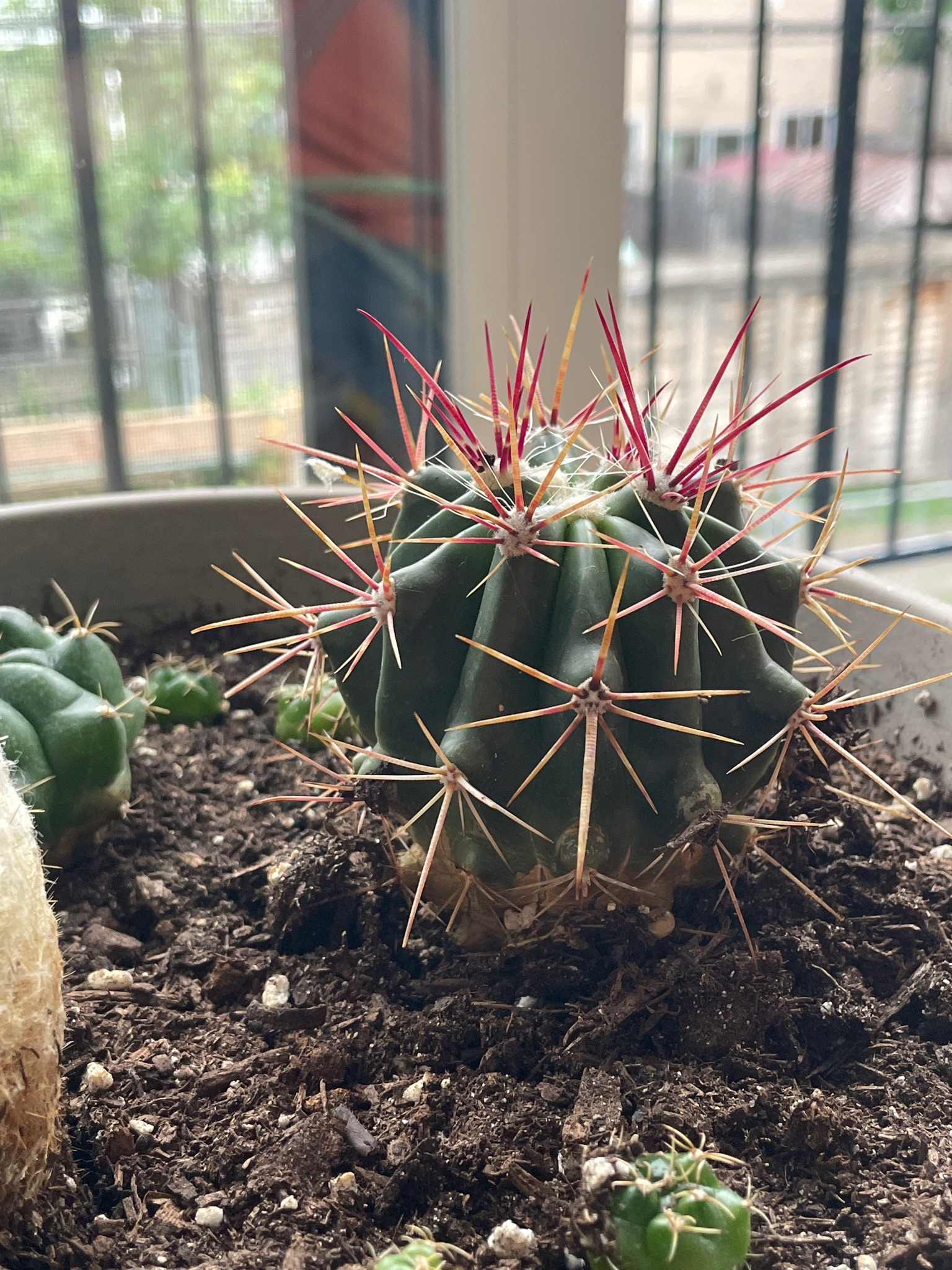
Ferocactus emoryi
Ferocactus emoryi
A barrel-shaped cactus with prominent ribs and strong, thick spines. The spines are typically reddish-pink when young, fading to grey or white as they age, with a distinct recurved or hooked central spine.
- Light
- Full sun; requires 6 to 8 hours of direct sunlight per day to maintain its spine color and compact shape.
- Water
- Low water requirements. Use the 'soak and dry' method, watering only when the soil is dry through its entire depth. Highly sensitive to damp soil during winter dormancy.
- Growth
- Perennial; solitary globose form that becomes cylindrical with age. Can reach a height of 3 to 8 feet and a diameter of 2 feet in the wild, though much smaller in cultivation.
Care instructions
Requires high light levels and very well-draining substrate. Water deeply only when the soil is completely dry, and provide a low-nitrogen fertilizer during the active growing season in spring and summer.
Growing details
Sunlight
Full sun; requires 6 to 8 hours of direct sunlight per day to maintain its spine color and compact shape.
Watering
Low water requirements. Use the 'soak and dry' method, watering only when the soil is dry through its entire depth. Highly sensitive to damp soil during winter dormancy.
Soil
Mineral-based, porous soil mix with high drainage capacity. A mix of pumice, perlite, and coarse sand with minimal organic matter is ideal. pH range should be 6.1 to 7.8.
Hardiness zone
USDA zones 9a to 11b; can tolerate brief periods of frost if kept dry, but prefers temperatures above 50°F (10°C).
Growth habit
Perennial; solitary globose form that becomes cylindrical with age. Can reach a height of 3 to 8 feet and a diameter of 2 feet in the wild, though much smaller in cultivation.
Bloom season
Late summer to early autumn; flowers are funnel-shaped, usually yellow, red, or mahogany, appearing at the top of the plant.
Propagation
Primarily through seeds sown in spring. Occasional offsets can be removed and rooted, though this species is mostly solitary.
Common pests & issues
Highly susceptible to root rot if overwatered. Mealybugs and scale insects may hide in the rib crevices and among spines.
Similar species
Ferocactus wislizeni (Fishhook Cactus) has more numerous and more curved/hooked spines. Ferocactus gracilis has much deeper red spines and more distinct radial spines.