
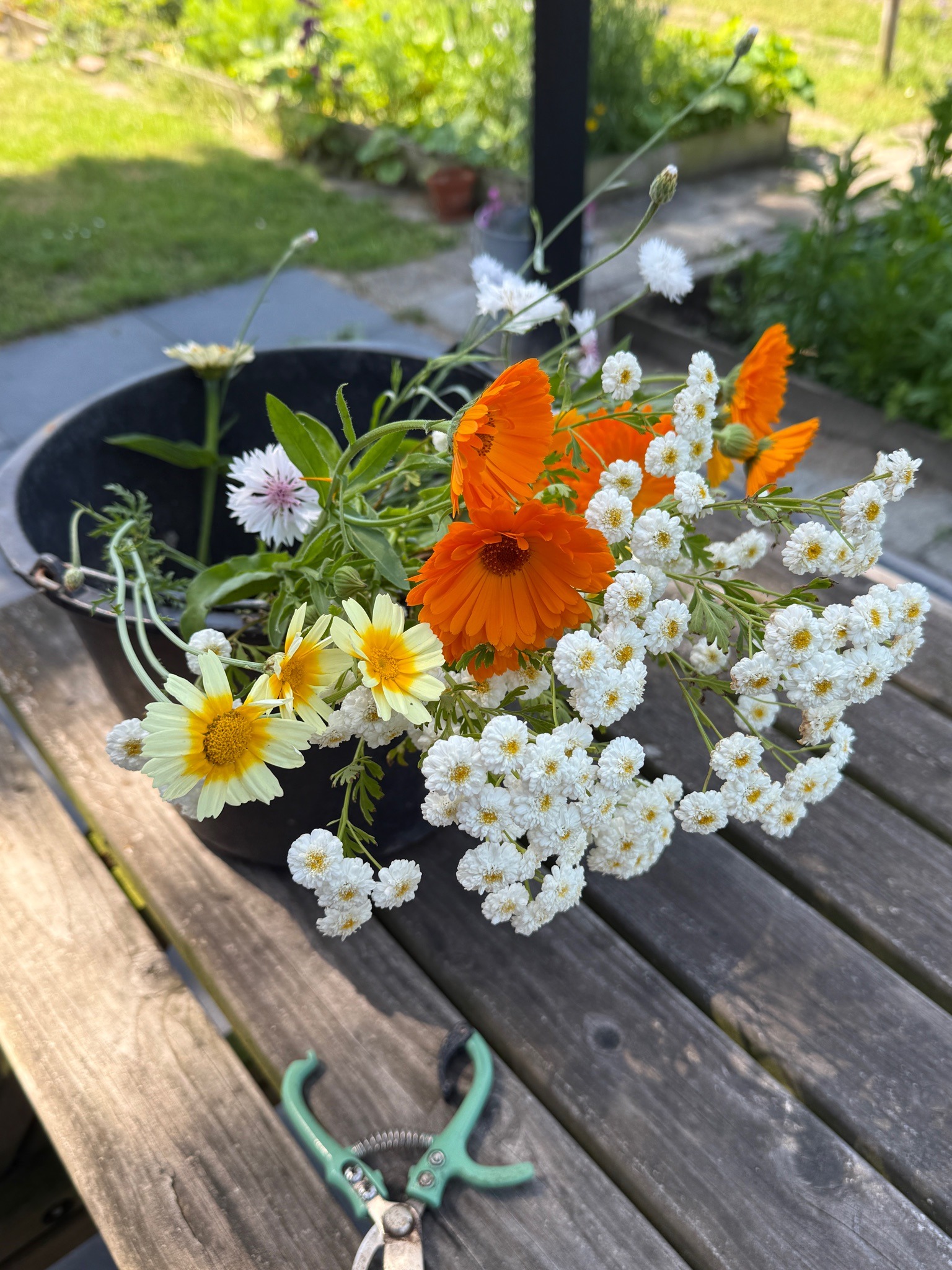
Feverfew
Tanacetum parthenium
A bushy herbaceous perennial featuring small, white, daisy-like flowers with yellow centers (or fully white double-petaled varieties like shown) and aromatic, feathery, lime-green foliage.
- Light
- Full sun (at least 6 hours of direct sunlight per day)
- Water
- Moderate; water when the top inch of soil feels dry. It is relatively drought-tolerant once mature but dislikes waterlogged soil.
- Growth
- Perennial herb with a clumping habit; typically grows 30-60 cm (1-2 ft) tall and wide.
Care instructions
Low-maintenance. Plant in full sun with well-draining soil. Water regularly until established, then it becomes fairly drought-tolerant. Cut back after flowering to encourage a second flush and prevent excessive self-seeding.
Growing details
Sunlight
Full sun (at least 6 hours of direct sunlight per day)
Watering
Moderate; water when the top inch of soil feels dry. It is relatively drought-tolerant once mature but dislikes waterlogged soil.
Soil
Well-drained, sandy or loamy soil with a neutral to slightly acidic pH (6.0 to 7.0).
Hardiness zone
USDA zones 5-10
Growth habit
Perennial herb with a clumping habit; typically grows 30-60 cm (1-2 ft) tall and wide.
Bloom season
Early summer to late summer; produces clusters of small white pom-pom or daisy-shaped flowers.
Propagation
Easily propagated by seed sown in spring, by stem cuttings in summer, or by division of the root clump in spring or fall.
Common pests & issues
Aphids and spider mites are common pests. Susceptible to powdery mildew if air circulation is poor.
Similar species
Chamomile (Matricaria chamomilla) which has more finely dissected leaves and a different scent, or common Daisies (Bellis perennis).
User notes
Welke witte plant is dit