
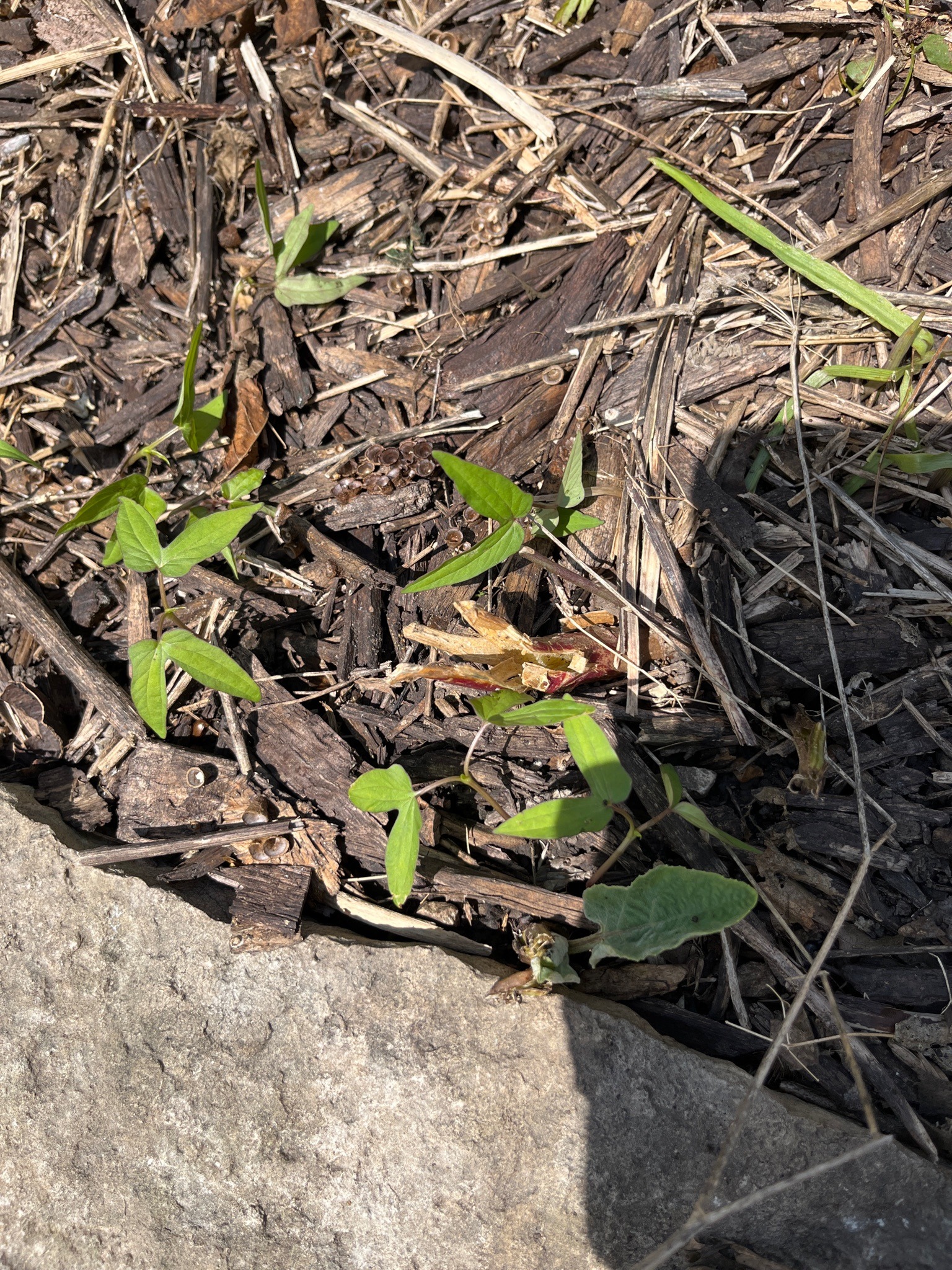
Field Bindweed seedling
Convolvulus arvensis
Small emerging seedlings displaying characteristic arrowhead-shaped or oblong cotyledons and early true leaves with a twining growth habit.
- Light
- Thrives in full sun, requiring 6 to 8 hours of direct sunlight daily.
- Water
- Highly drought-tolerant once established due to an extensive root system, requiring moderate watering only during prolonged dry spells.
- Growth
- Perennial herbaceous vine with a creeping and twining habit, capable of climbing surrounding vegetation or sprawling across the ground.
Care instructions
Typically managed as an unwanted weed in garden settings rather than cultivated. If observed, it requires consistent removal of the deep root system to prevent spread.
Growing details
Sunlight
Thrives in full sun, requiring 6 to 8 hours of direct sunlight daily.
Watering
Highly drought-tolerant once established due to an extensive root system, requiring moderate watering only during prolonged dry spells.
Soil
Adaptable to a wide range of soil types, preferring well-drained loamy or sandy soils with a neutral pH between 6.0 and 7.5.
Hardiness zone
USDA zones 3 through 9, demonstrating high resilience to varying climatic extremes.
Growth habit
Perennial herbaceous vine with a creeping and twining habit, capable of climbing surrounding vegetation or sprawling across the ground.
Bloom season
Flowers from late spring through autumn, producing funnel-shaped white or pale pink blossoms.
Propagation
Propagates aggressively through extensive underground rhizomes, root fragments, and abundant seed production.
Common pests & issues
Extremely persistent due to deep root reserves; highly resistant to superficial pulling, requiring persistent eradication methods.
Similar species
Hedge bindweed (Calystegia sepium), which features larger flowers and broader triangular leaves with truncate bases.