
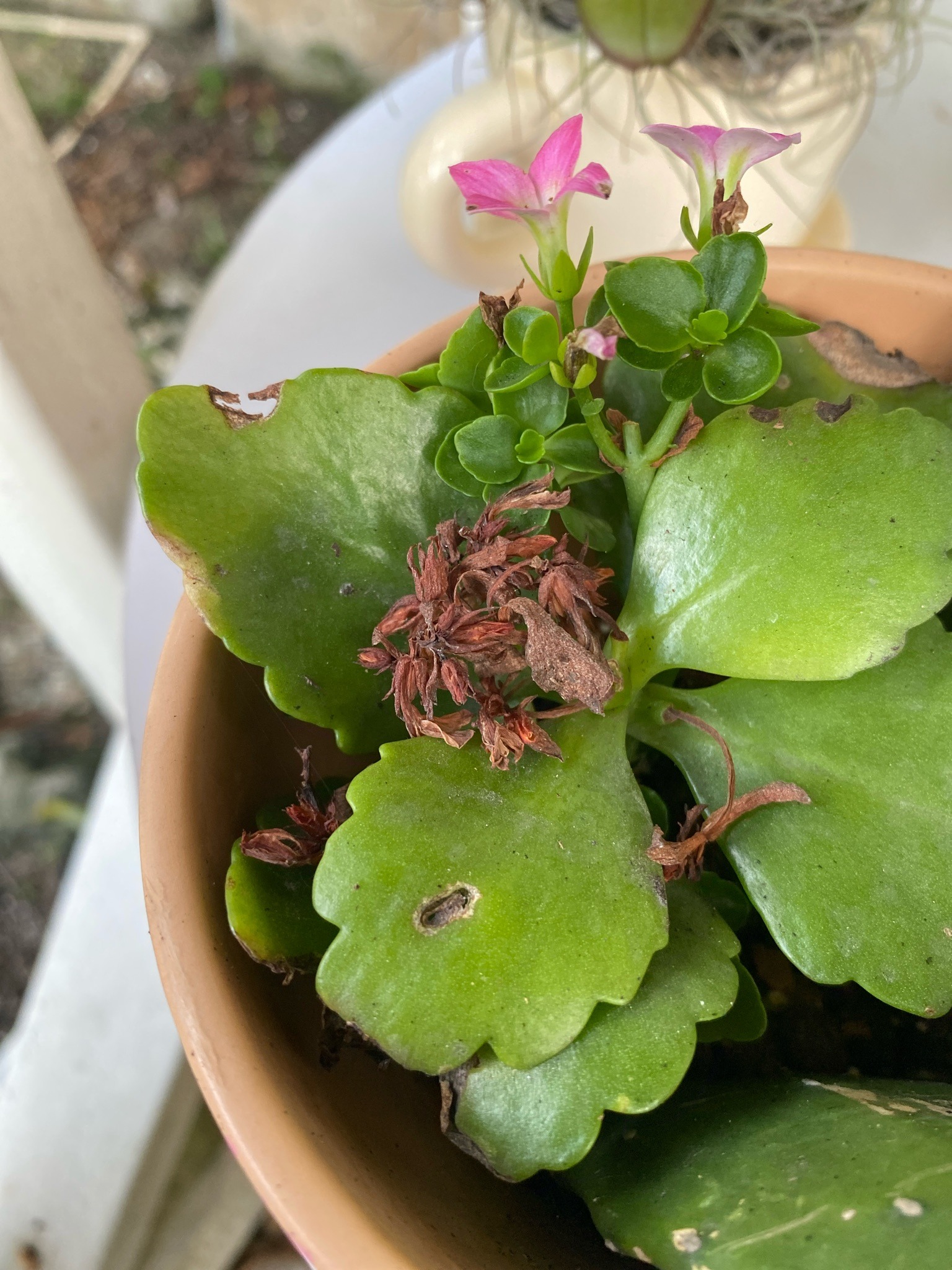
Florist's Kalanchoe
Kalanchoe blossfeldiana
A popular flowering succulent with thick, scalloped dark green leaves and clusters of small, four-petaled flowers that come in various bright colors like pink, red, orange, and yellow.
- Light
- Bright indirect light or partial sun; about 4-6 hours of light per day. Too much direct sun can scorch the leaves.
- Water
- Low water requirements. Water deeply only when the soil is completely dry. Overwatering easily leads to root rot.
- Growth
- Perennial succulent; upright and bushy. Reaches 12 inches in height and width.
Care instructions
Provide bright indirect light and allow the soil to dry out completely between waterings. Use well-draining succulent soil and fertilize sparingly during the growing season.
Growing details
Sunlight
Bright indirect light or partial sun; about 4-6 hours of light per day. Too much direct sun can scorch the leaves.
Watering
Low water requirements. Water deeply only when the soil is completely dry. Overwatering easily leads to root rot.
Soil
Well-draining cactus or succulent potting mix; slightly acidic to neutral pH (6.0-7.0).
Hardiness zone
USDA zones 10-11; it is frost-tender and usually kept as a houseplant in cooler climates.
Growth habit
Perennial succulent; upright and bushy. Reaches 12 inches in height and width.
Bloom season
Naturally blooms in late winter to late spring; can be induced to bloom year-round with controlled light cycles.
Propagation
Easily propagated via stem cuttings or leaf cuttings taken in spring or summer.
Common pests & issues
Susceptible to mealybugs, aphids, and powdery mildew. Leaf spotting often indicates overwatering or water sitting on the foliage.
Similar species
Kalanchoe manginii (similar leaves but bell-shaped flowers); Kalanchoe pinnata (Cathedral Bells, which has larger, lighter green leaves).