Philodendron Jungle Boogie
Scientific Name: Philodendron narrow-escape
Plant Family: Araceae
Native Region: Central and South America (cultivated hybrid)
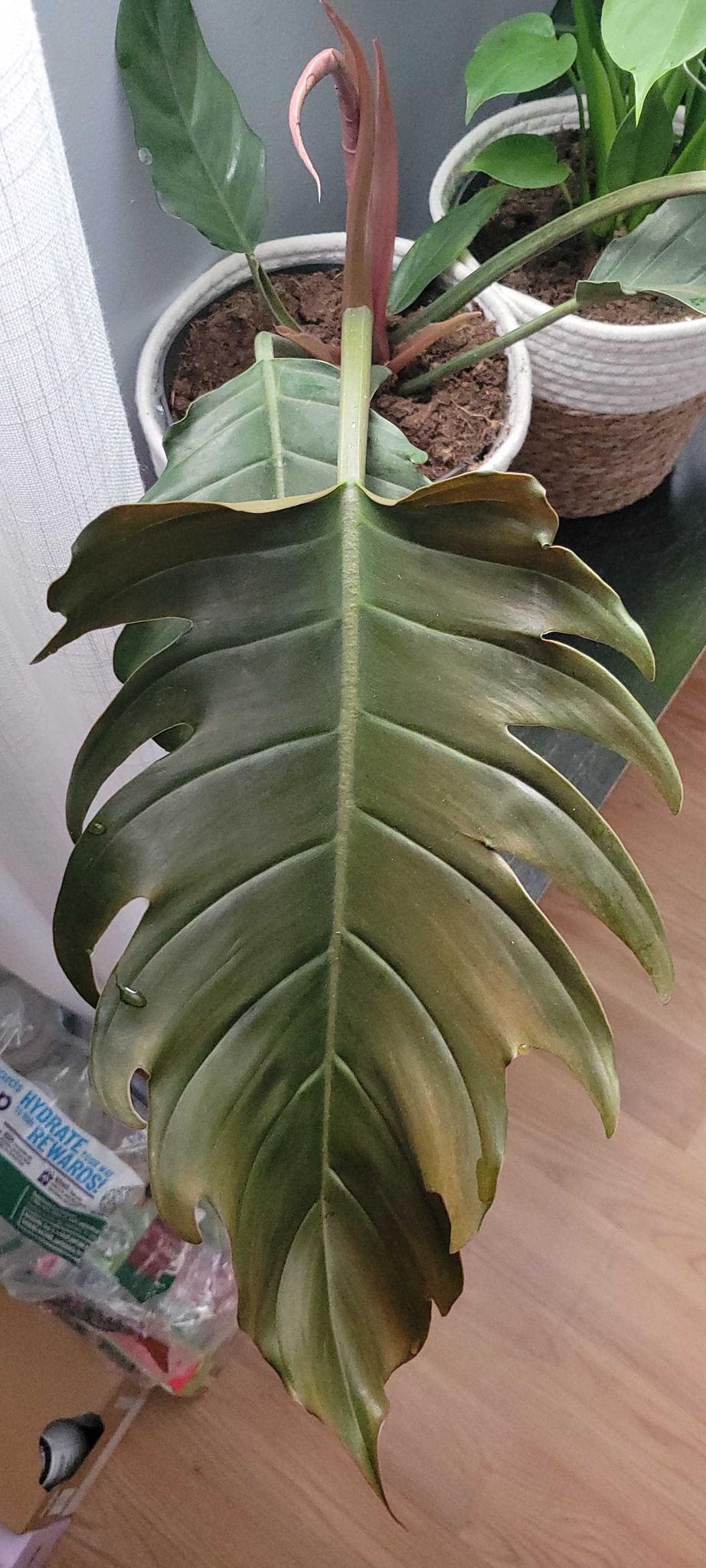
Brief Description
A striking houseplant known for its long, narrow, green leaves with deeply serrated or 'toothed' edges. New growth often emerges in reddish or orange tints and matures to a deep, glossy green.
Care Instructions
Provide bright indirect light and water only when the top half of the soil is dry. Use a well-draining potting mix and fertilize monthly during the growing season (spring/summer).
Medicinal Value
We do not currently provide medicinal value for plant identifications.
Sunlight
Bright indirect light is best (approx. 6-8 hours); avoid direct hot afternoon sun which can scorch the leaves.
Watering
Moderate; water when the top 50% of the soil feels dry. Overwatering can lead to root rot; yellowing leaves are a common sign of excess water.
Soil
Well-draining, chunky aroid mix (soil, perlite, orchid bark, charcoal) with a pH of 5.5 to 7.0.
Hardiness Zone
Zones 9-11; not frost tolerant, leaf damage occurs below 50°F (10°C).
Growth Habit
Clumping/Upright perennial; can reach 2-3 feet tall and 3-4 feet wide indoors with a moderate growth rate.
Bloom Season
Rarely flowers indoors; produce spathe and spadix flowers typical of aroids under ideal outdoor conditions.
Toxicity
Toxic to humans, dogs, and cats if ingested. Highly concentrated calcium oxalate crystals cause oral irritation, swelling, and digestive distress.
Propagation
Propagated via stem cuttings with at least one node, or by division of the root ball in older plants.
Common Pests & Issues
Susceptible to mealybugs, spider mites, and fungus gnats. Root rot is the most common cultural issue caused by poor drainage.
Similar Species
Philodendron 'Ring of Fire' (looks similar but has colorful variegation) and Philodendron 'Tiger Tooth'.
Interesting Facts
Also widely known as Philodendron 'Tiger Tooth', this plant is prized for its prehistoric look and was bred to be more compact than many other climbing philodendrons.
Created At: 2026-04-22T21:04:09.695957