
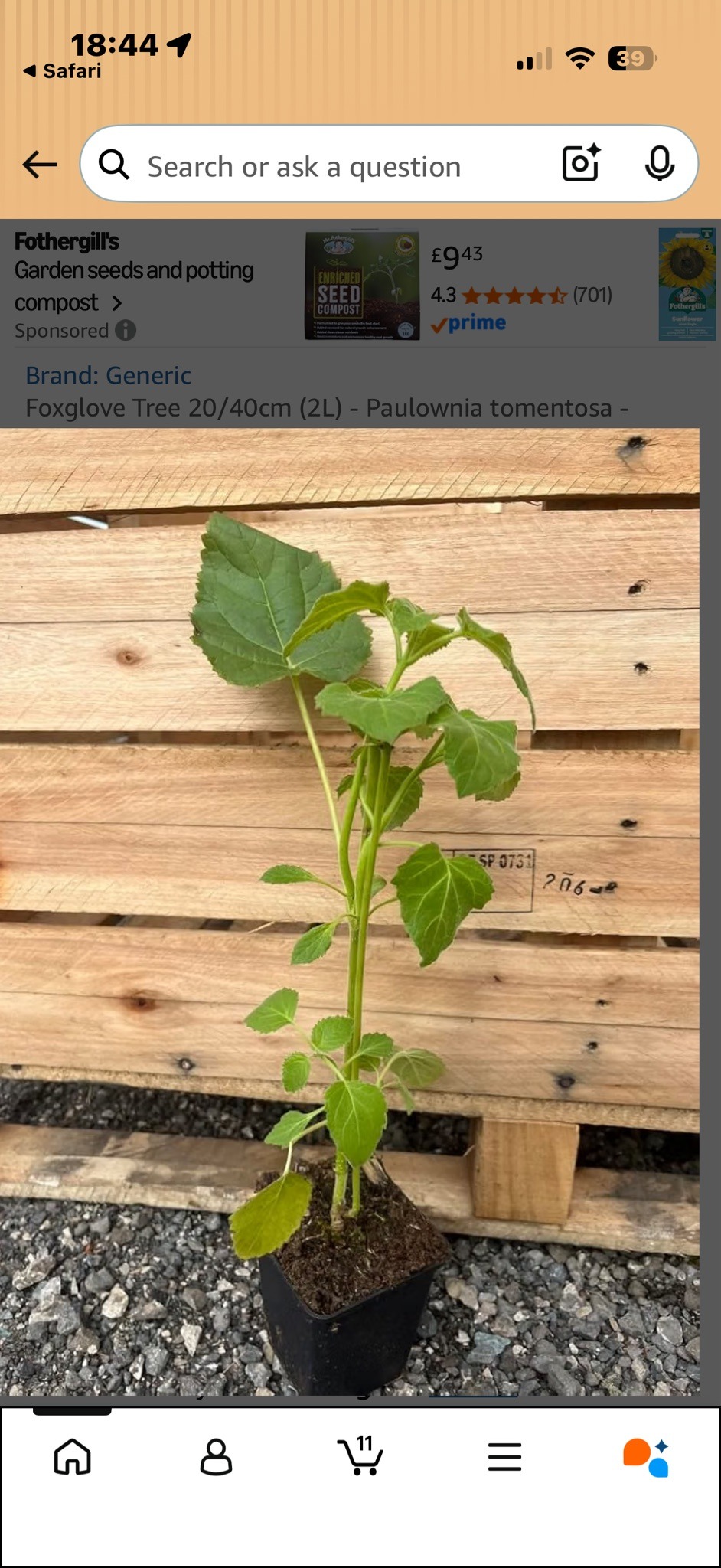
Foxglove Tree
Paulownia tomentosa
A fast-growing deciduous tree with extremely large, heart-shaped leaves covered in fine hairs, standing upright in a nursery pot.
- Light
- Full sun, requiring at least six hours of direct sunlight daily
- Water
- Moderate watering needs; water thoroughly when the top few inches of soil feel dry, ensuring good drainage to prevent waterlogging
- Growth
- Perennial deciduous tree with an upright, fast-growing habit, capable of reaching mature heights of 30 to 50 feet with an equally wide canopy under optimal conditions
Care instructions
Provide full sun, moderate watering allowing the soil to dry slightly between waterings, and well-draining soil. Apply a balanced fertilizer during the growing season.
Growing details
Sunlight
Full sun, requiring at least six hours of direct sunlight daily
Watering
Moderate watering needs; water thoroughly when the top few inches of soil feel dry, ensuring good drainage to prevent waterlogging
Soil
Well-draining loamy or sandy soil with a neutral to slightly acidic pH range between 6.0 and 7.0
Hardiness zone
USDA Hardiness Zones 5 to 9
Growth habit
Perennial deciduous tree with an upright, fast-growing habit, capable of reaching mature heights of 30 to 50 feet with an equally wide canopy under optimal conditions
Bloom season
Spring, producing large, upright panicles of tubular, pale violet to pinkish-purple, fragrant flowers before the leaves fully emerge
Propagation
Propagated primarily through hardwood or softwood cuttings, root cuttings, or seeds sown in well-draining medium
Common pests & issues
Generally resilient, but can occasionally be susceptible to fungal leaf spots, powdery mildew, and root rot in poorly draining soils
Similar species
Catalpa species (such as Catalpa bignonioides), which also have large heart-shaped leaves but can be distinguished by their long seed pods and whorled leaf arrangement compared to the opposite leaves of Paulownia