Bay Laurel
Scientific Name: Laurus nobilis
Plant Family: Lauraceae
Native Region: Mediterranean region
Brief Description
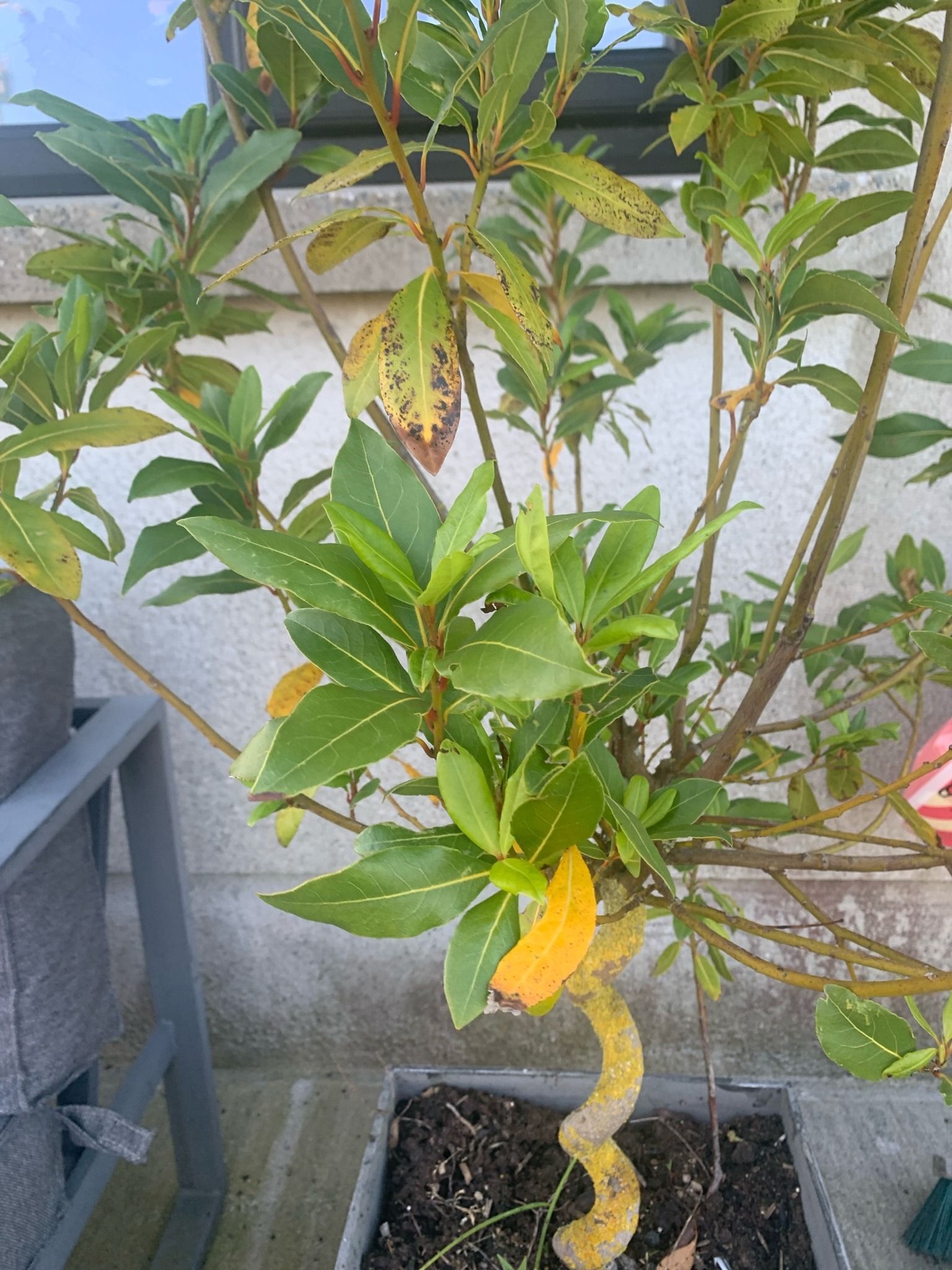
An evergreen shrub or small tree with leathery, glossy, dark green elliptic leaves that are highly aromatic. The stem in this image is notably gnarled and covered in yellow lichen.
Care Instructions
Provide full sun to partial shade and plant in well-draining soil. Water when the top inch of soil feels dry, but do not let it sit in water. Feed with a balanced fertilizer during the spring and summer growing season.
Medicinal Value
We do not currently provide medicinal value for plant identifications.
Sunlight
Full sun to partial shade (4-6+ hours of light per day).
Watering
Moderate watering. Drought tolerant once established, but container plants need regular watering. Over-watering can lead to root rot.
Soil
Well-drained, fertile soil. Tolerates a range of pH from 4.5 to 8.3.
Hardiness Zone
8-10 (USDA). It can be grown in pots and moved indoors in colder climates.
Growth Habit
Slow-growing evergreen shrub or tree; can reach 25-60 feet in the wild but is usually kept much smaller (4-10 feet) in gardens and containers.
Bloom Season
Spring (March to May). Small, inconspicuous pale yellow-green flowers followed by small black berries on female plants.
Toxicity
Generally safe for human consumption as a seasoning (though the leaf itself is tough and should be removed before eating). Toxic to dogs, cats, and horses due to eugenol and other essential oils, which can cause digestive upset.
Propagation
Propagated by semi-hardwood cuttings in summer or by layering. Seeds can be used but have a low germination rate.
Common Pests & Issues
Susceptible to scale insects, aphids, and bay sucker. Leaf spots can occur from fungal infections or poor drainage. In the image, yellowing leaves and black spots may indicate overwatering or an environmental stressor.
Similar Species
Portugal Laurel (Prunus lusitanica) which has similar leaves but lacks the characteristic culinary aroma. California Laurel (Umbellularia californica) has a much stronger, sometimes irritating scent.
Interesting Facts
In Ancient Greece, wreaths made of bay laurel leaves were used to crown victors in the Pythian Games, leading to the terms 'baccalaureate' and 'poet laureate.'
Created At: 2026-06-23T19:14:00.356638