Pot Marigold / Calendula
Scientific Name: Calendula officinalis
Plant Family: Asteraceae
Native Region: Southern Europe and Western Asia; now widely naturalized throughout temperate regions globally.
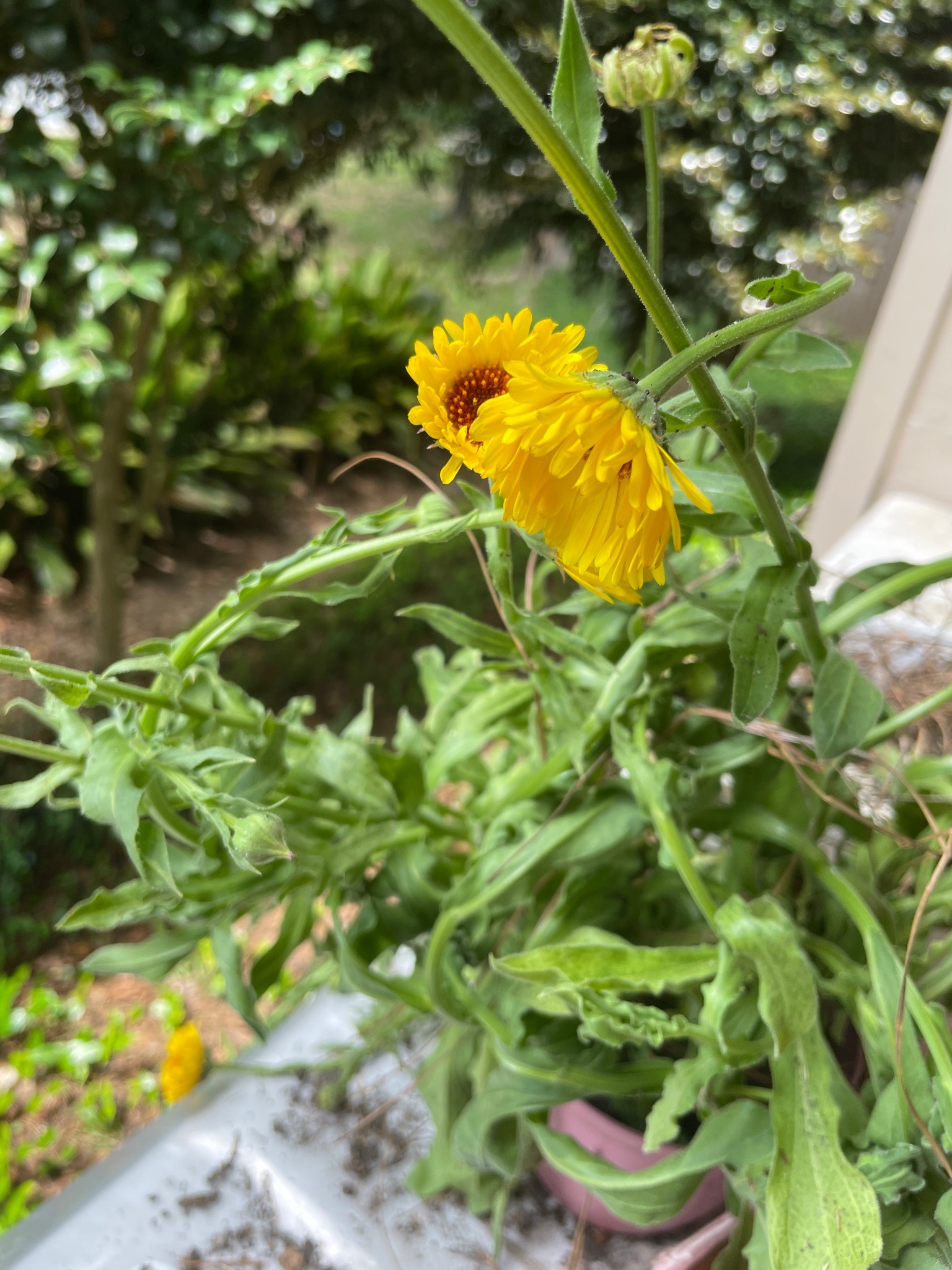
Brief Description
An aromatic herbaceous perennial or annual with bright yellow or orange daisy-like flowers and simple, slightly hairy, oblong leaves.
Care Instructions
Low-maintenance. Provide full sun and well-draining soil. Water regularly but do not overwater. Deadhead spent blooms to encourage continuous flowering and fertilizer lightly once a month.
Medicinal Value
We do not currently provide medicinal value for plant identifications.
Sunlight
Full sun preferred (6-8 hours), but can tolerate partial shade in hot summer climates.
Watering
Moderate watering; allow the top inch of soil to dry between waterings. Drought-tolerant once established but prefers consistent moisture for better blooming.
Soil
Well-drained, moderately fertile soil; adaptable to most soil types; pH between 6.0 and 7.0.
Hardiness Zone
2-11 (grown as an annual in most areas; perennial in zones 9-11).
Growth Habit
Short-lived perennial or hardy annual. Upright, bushy habit reaching 12-24 inches in height and width.
Bloom Season
Generally blooms from late spring until the first frost; flowers are yellow, orange, or cream with single or double petals.
Toxicity
Generally non-toxic to humans, dogs, and cats. Often used in pet skin care products. Some humans with allergies to the Asteraceae family may experience sensitivity.
Propagation
Easily propagated by seed. Sow directly in the garden after the last frost or start indoors 6-8 weeks prior.
Common Pests & Issues
Susceptible to powdery mildew if air circulation is poor. Pests include aphids and slugs. Avoid overhead watering to prevent leaf diseases.
Similar Species
French Marigold (Tagetes), which has finely divided, feathery foliage and a pungent smell, whereas Calendula has simple, entire leaves.
Interesting Facts
Historically called 'Poor Man's Saffron' because the dried petals were used to add color and flavor to dishes without the high cost of real saffron.
Created At: 2026-04-24T18:53:05.630389