
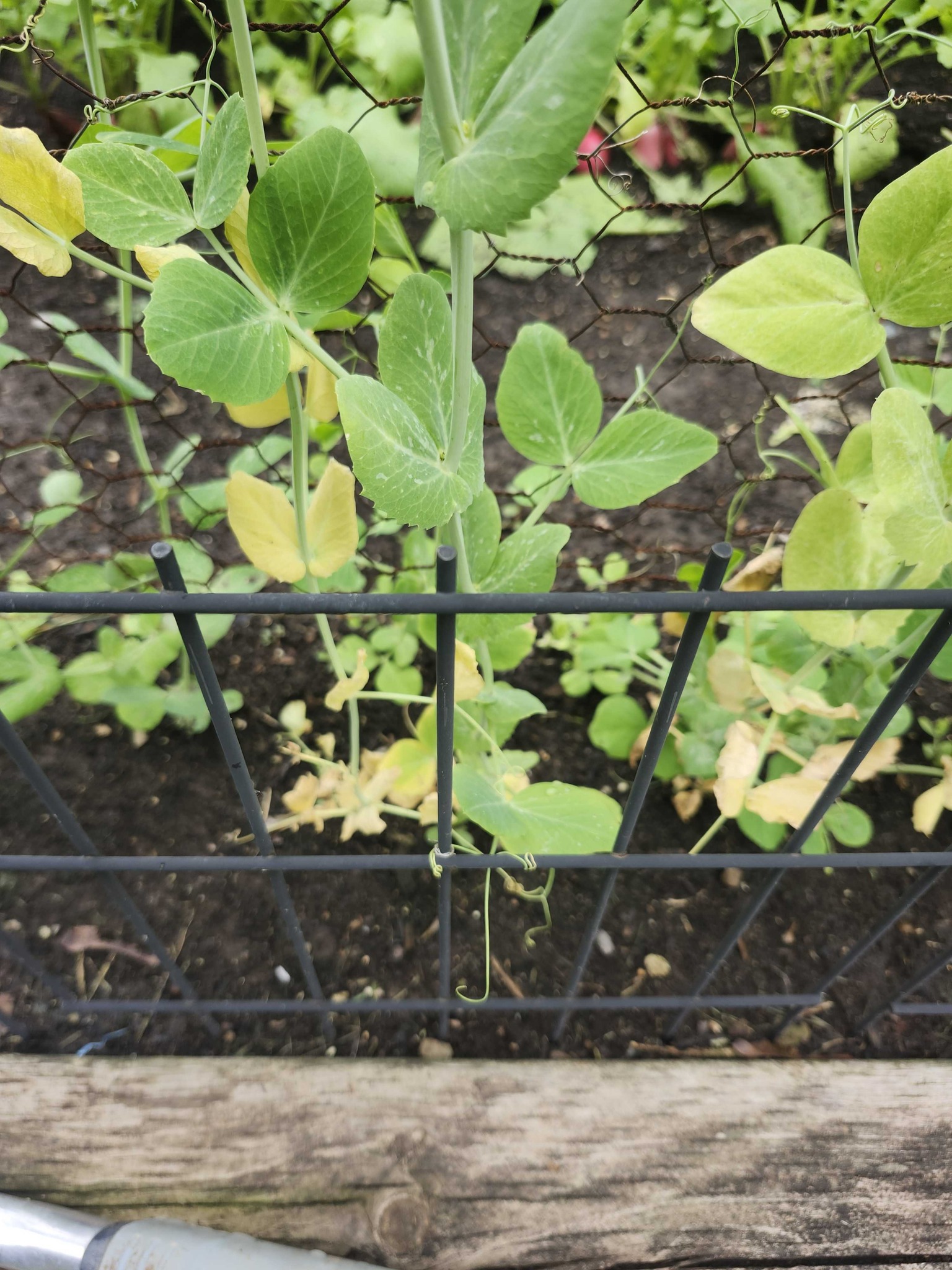
Garden Pea
Pisum sativum
A climbing annual herbaceous plant featuring glaucous green pinnate leaves, wiry tendrils for climbing, and characteristic papilionaceous flowers followed by oblong pods.
- Light
- Full sun, approximately 6 to 8 hours per day
- Water
- Requires regular watering to keep the soil consistently moist but not waterlogged. Thirsty during flowering and pod development. Yellowing lower leaves can indicate over-watering or poor drainage.
- Growth
- Annual climbing vine with a height ranging from 1 to 6 feet depending on variety, and a spread of about 1 foot.
Care instructions
Provide full sun and a support structure for climbing. Maintain consistent moisture in well-draining soil and avoid heavy nitrogen fertilization which may inhibit flowering.
Growing details
Sunlight
Full sun, approximately 6 to 8 hours per day
Watering
Requires regular watering to keep the soil consistently moist but not waterlogged. Thirsty during flowering and pod development. Yellowing lower leaves can indicate over-watering or poor drainage.
Soil
Prefers loamy, well-draining soil with a pH between 6.0 and 7.5.
Hardiness zone
Zones 2-11 as a cool-season annual
Growth habit
Annual climbing vine with a height ranging from 1 to 6 feet depending on variety, and a spread of about 1 foot.
Bloom season
Spring or autumn, producing white, pink, or purple pea-like flowers.
Propagation
Typically propagated by sowing seeds directly into the soil in early spring or late summer.
Common pests & issues
Susceptible to powdery mildew, aphids, root rot, and Fusarium wilt. Ensure good air circulation and avoid overhead watering to prevent fungal issues.
Similar species
Sweet Pea (Lathyrus odoratus), which has winged stems and more ornamental flowers, and Broad Beans (Vicia faba), which have thicker stems and no tendrils.