
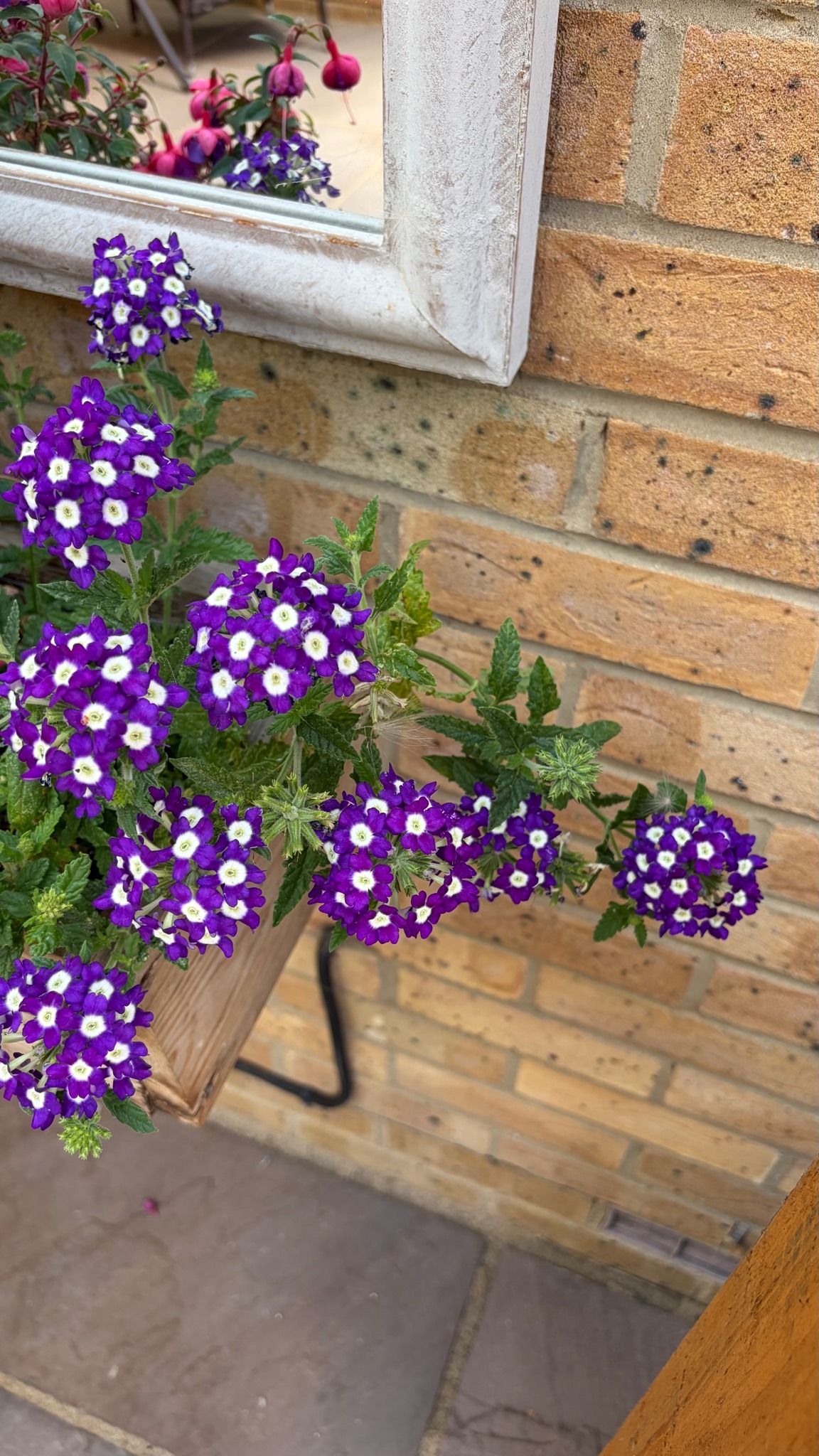
Garden Verbena
Verbena x hybrida
A popular ornamental bedding plant featuring clusters of small, brightly colored flowers, often with contrasting white eyes, and opposite, coarsely toothed dark green leaves.
- Light
- Full sun, requiring at least 6 to 8 hours of direct sunlight per day.
- Water
- Moderate water needs. Allow the soil to dry slightly between waterings; drought tolerant once established, but blooms best with consistent moisture.
- Growth
- Low-growing, spreading or trailing perennial grown often as an annual, reaching 6 to 12 inches in height with a spread of 12 to 18 inches.
Care instructions
Plant in full sun with well-draining soil. Water regularly when the top inch of soil becomes dry, avoiding excessive moisture. Apply a balanced liquid fertilizer monthly during the growing season to encourage continuous flowering.
Growing details
Sunlight
Full sun, requiring at least 6 to 8 hours of direct sunlight per day.
Watering
Moderate water needs. Allow the soil to dry slightly between waterings; drought tolerant once established, but blooms best with consistent moisture.
Soil
Well-draining, loamy or sandy soil with a neutral pH ranging from 6.0 to 7.0.
Hardiness zone
USDA zones 8 through 11, frequently grown as an annual in cooler climates.
Growth habit
Low-growing, spreading or trailing perennial grown often as an annual, reaching 6 to 12 inches in height with a spread of 12 to 18 inches.
Bloom season
Blooms from late spring through the first autumn frosts, producing dense, rounded clusters of small flowers in shades of purple, pink, red, blue, or white.
Propagation
Propagated easily from stem cuttings taken in spring or by starting seeds indoors 8 to 10 weeks before the last frost date.
Common pests & issues
Susceptible to powdery mildew in humid environments or with poor air circulation. Root rot can occur if soil remains waterlogged.
Similar species
Lantana, which features similar rounded flower clusters but has distinctively textured, aromatic foliage and woodier stems.