Prostrate Spurge
Scientific Name: Euphorbia prostrata
Plant Family: Euphorbiaceae
Native Region: Native to the Caribbean and Central America; now naturalized worldwide in warm-temperate and tropical regions.
Brief Description
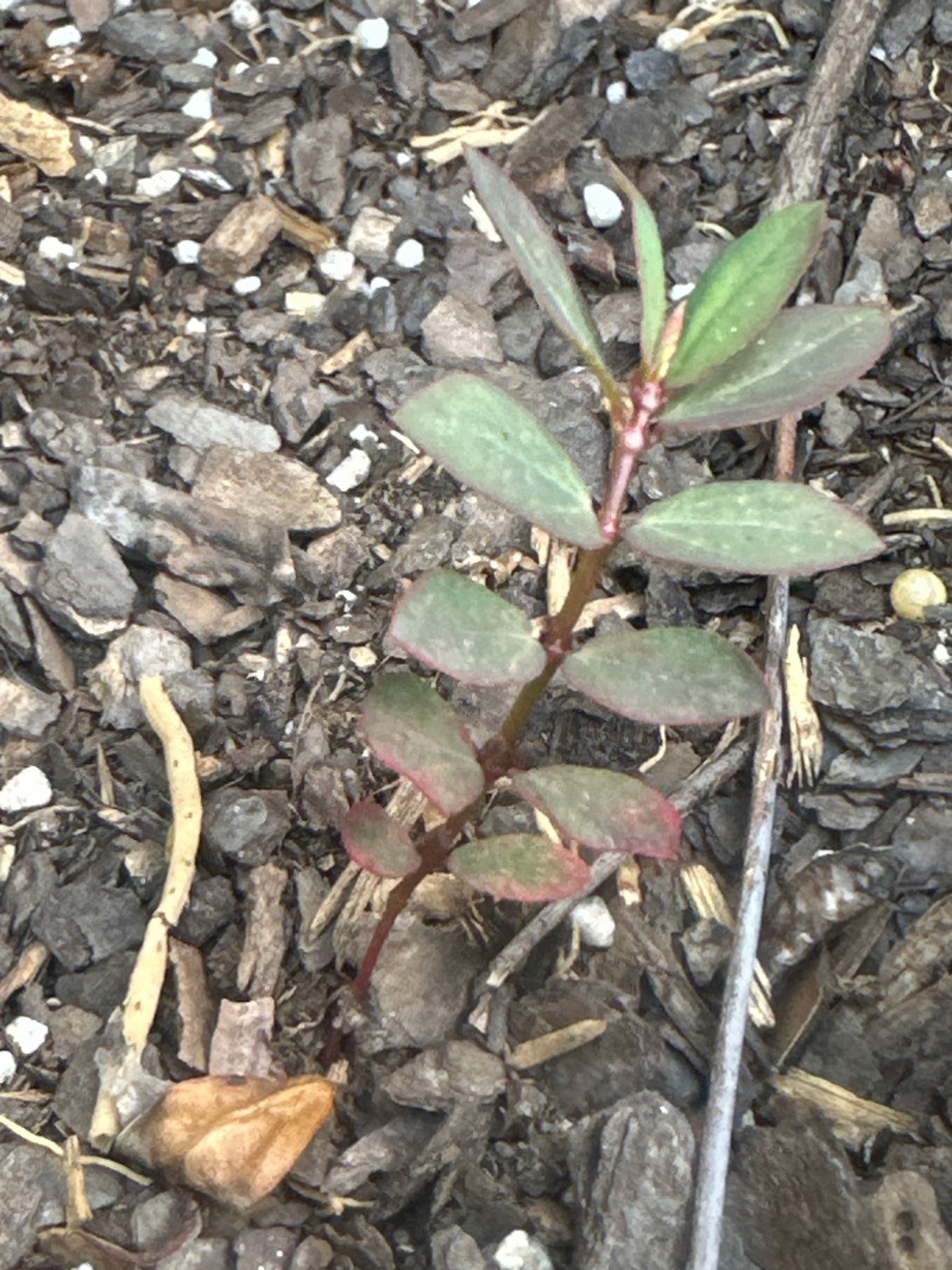
A low-growing, mat-forming annual herb with reddish-purple stems and small, oval, opposite green leaves that often feature a purple spot in the center.
Care Instructions
Generally considered a weed, it requires very little care. It thrives in full sun and disturbed soils. It is drought-tolerant but can be controlled by regular weeding and maintaining a thick lawn to prevent germination.
Medicinal Value
We do not currently provide medicinal value for plant identifications.
Sunlight
Full sun, requiring 6 to 8 hours of direct light per day for optimal growth.
Watering
Low watering needs; very drought-tolerant. It grows best in dry to moderately moist conditions; overwatering can lead to root rot.
Soil
Adaptable to various soils but prefers dry, sandy, or gravelly well-draining soils with a pH between 6.0 and 7.5.
Hardiness Zone
8 to 11 (grown as a summer annual in cooler zones).
Growth Habit
Annual; prostrate or creeping growth form, forming dense mats up to 12 inches wide and about 1-2 inches high.
Bloom Season
Mid-summer to early autumn; produces tiny, inconspicuous clustered flowers (cyathia) without petals.
Toxicity
Contains a milky white sap (latex) that is toxic if ingested and a skin/eye irritant to humans, dogs, and cats. May cause gastrointestinal upset if eaten.
Propagation
Propagates primarily by seeds, which are produced in large quantities and can remain viable in the soil for several years.
Common Pests & Issues
Mainly considered a pest in lawns and gardens; can be difficult to remove once established because stems break easily, leaving taproots in the ground.
Similar Species
Spotted Spurge (Euphorbia maculata), which usually has more hair on the stems and leaves, and Purslane (Portulaca oleracea), which has thick, succulent leaves and edible parts without milky sap.
Interesting Facts
The seeds of many spurge species are known to be 'explosively' discharged from the seed pods when ripe, helping them spread quickly across garden beds.
Created At: 2026-05-12T21:20:53.448837