Chinese Fringe Flower
Scientific Name: Loropetalum chinense var. rubrum
Plant Family: Hamamelidaceae
Native Region: China, Southeast Asia, and Japan
Brief Description
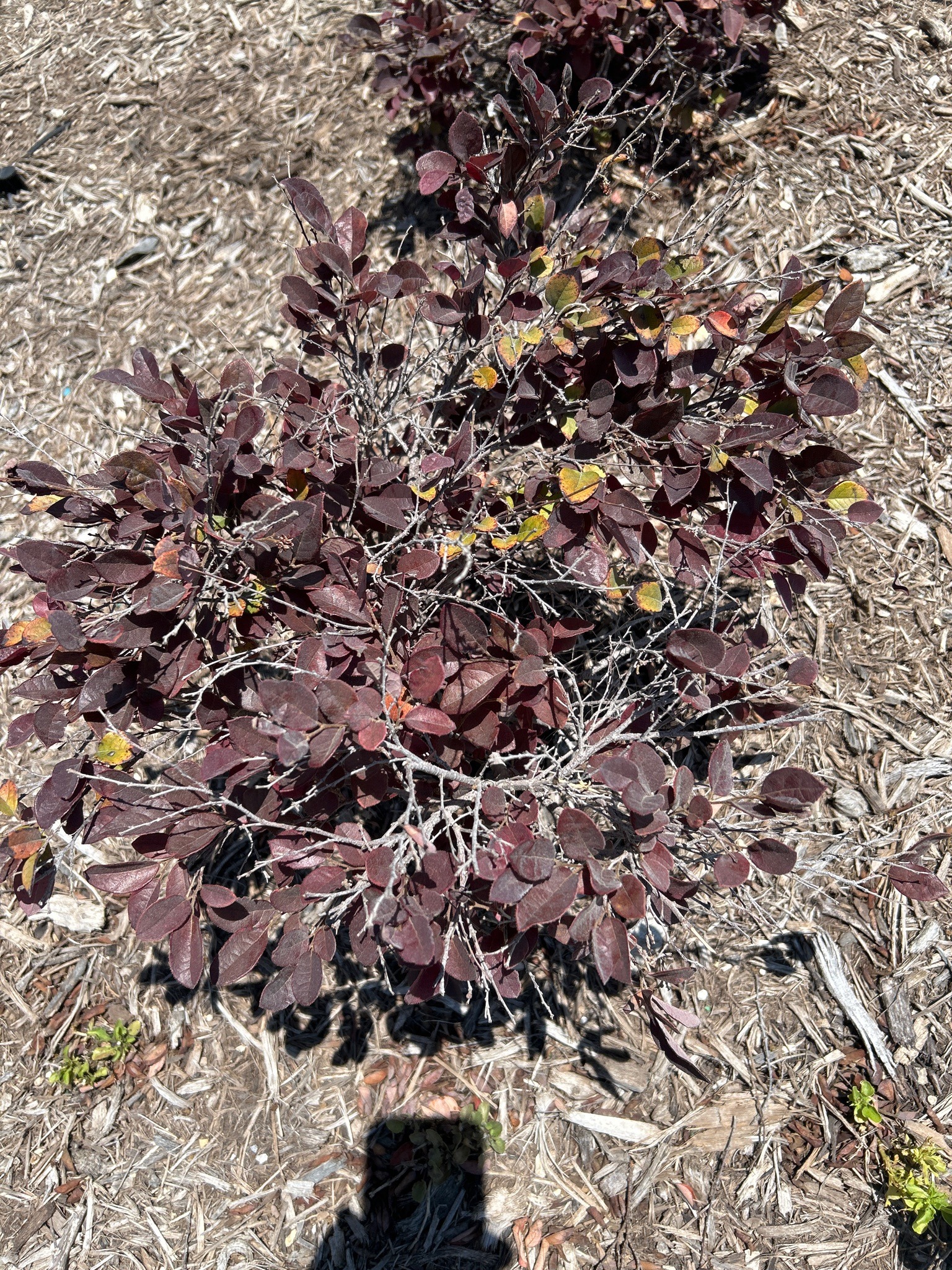
An evergreen shrub characterized by its arching branches and oval, burgundy-to-purple leaves. It produces spider-like, frilly pink to red flowers.
Care Instructions
Thrives in well-draining, acidic soil with rich organic matter. Prefers partial shade in hot climates but can handle full sun. Requires regular moisture but cannot tolerate standing water.
Medicinal Value
We do not currently provide medicinal value for plant identifications.
Sunlight
Full sun to partial shade (4-6+ hours). Deepest purple foliage develops in more sun, though filtered light is best in very hot regions.
Watering
Intermediate moisture needs; water once or twice a week depending on temperature. Drought-tolerant once established but prefers consistent moisture.
Soil
Well-drained, acidic, loamy soil; pH 5.0 to 6.5. Iron chlorosis (yellowing) occurs in alkaline soils.
Hardiness Zone
USDA zones 7 through 10
Growth Habit
Evergreen perennial shrub; typically reaches 6-10 feet high and wide, though dwarf cultivars exist; moderate to fast growth rate.
Bloom Season
Primary bloom in early spring (March-April) with occasional sporadic flowering throughout the summer; frilly, ribbon-like pink or fuchsia petals.
Toxicity
Generally considered non-toxic to humans, dogs, and cats, though ingestion of any ornamental plant can cause mild stomach upset.
Propagation
Commonly propagated by semi-hardwood cuttings in summer or by seeds (though cultivars may not come true from seed).
Common Pests & Issues
Aphids and spider mites; susceptible to root rot if soil is poorly drained, and powdery mildew in humid environments.
Similar Species
Hamamelis (Witch Hazel) has similar flowers but is deciduous; Physocarpus (Ninebark) has similar dark foliage but different flower clusters.
Interesting Facts
The name 'Loropetalum' is derived from Greek words for 'strap' and 'petal', referring to its ribbon-like flower shape.
Created At: 2026-05-12T18:11:19.232296