Common Mugwort
Scientific Name: Artemisia vulgaris
Plant Family: Asteraceae
Native Region: Europe, Asia, and North Africa; naturalized in North America
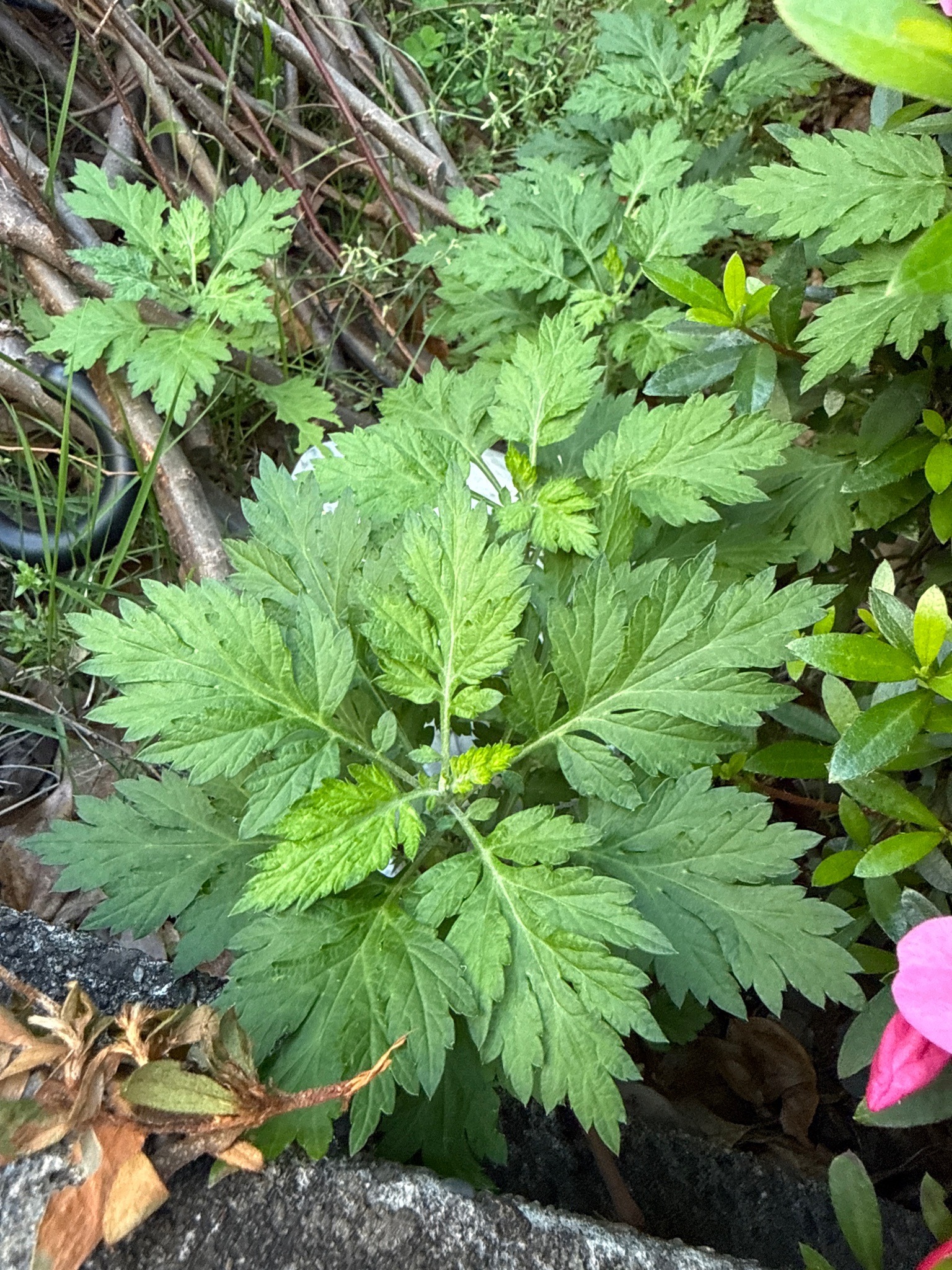
Brief Description
A hardy perennial herb with deeply lobed, dark green leaves that have a distinctive silvery-white, downy underside and a strong aromatic scent when crushed.
Care Instructions
Thrives in well-drained soil with full sun to partial shade. It is very hardy and can become invasive, so it requires little maintenance other than pruning to control spread.
Medicinal Value
We do not currently provide medicinal value for plant identifications.
Sunlight
Full sun to partial shade; at least 6 hours of direct sunlight is ideal.
Watering
Low to moderate. It is drought-tolerant once established; water when the top inch of soil feels dry. Over-watering can lead to root rot.
Soil
Well-drained, sandy or loamy soil; prefers a neutral to slightly alkaline pH (6.5 to 7.5).
Hardiness Zone
USDA zones 3 through 9
Growth Habit
Herbaceous perennial with an upright, bushy growth habit; typically grows 2 to 4 feet tall and wide.
Bloom Season
Late summer to autumn; produces small, inconspicuous reddish-brown or yellow flowers in terminal panicles.
Toxicity
Generally safe in small amounts for humans but can cause allergic reactions (dermatitis) or uterine contractions (avoid during pregnancy). Toxic to cats and dogs if ingested in large quantities.
Propagation
Easily propagated by root division in spring or autumn, or by seeds sown in the spring.
Common Pests & Issues
Relatively pest-free but can be affected by powdery mildew if air circulation is poor. Known for its aggressive spreading via rhizomes.
Similar Species
Common Wormwood (Artemisia absinthium), which has more silvery foliage on both sides, and Ragweed (Ambrosia artemisiifolia), which lacks the silvery-white leaf underside.
Interesting Facts
Mugwort was known as the 'mother of herbs' in the Middle Ages and was often used to flavor beer before the widespread use of hops.
Created At: 2026-05-10T20:43:22.320748