
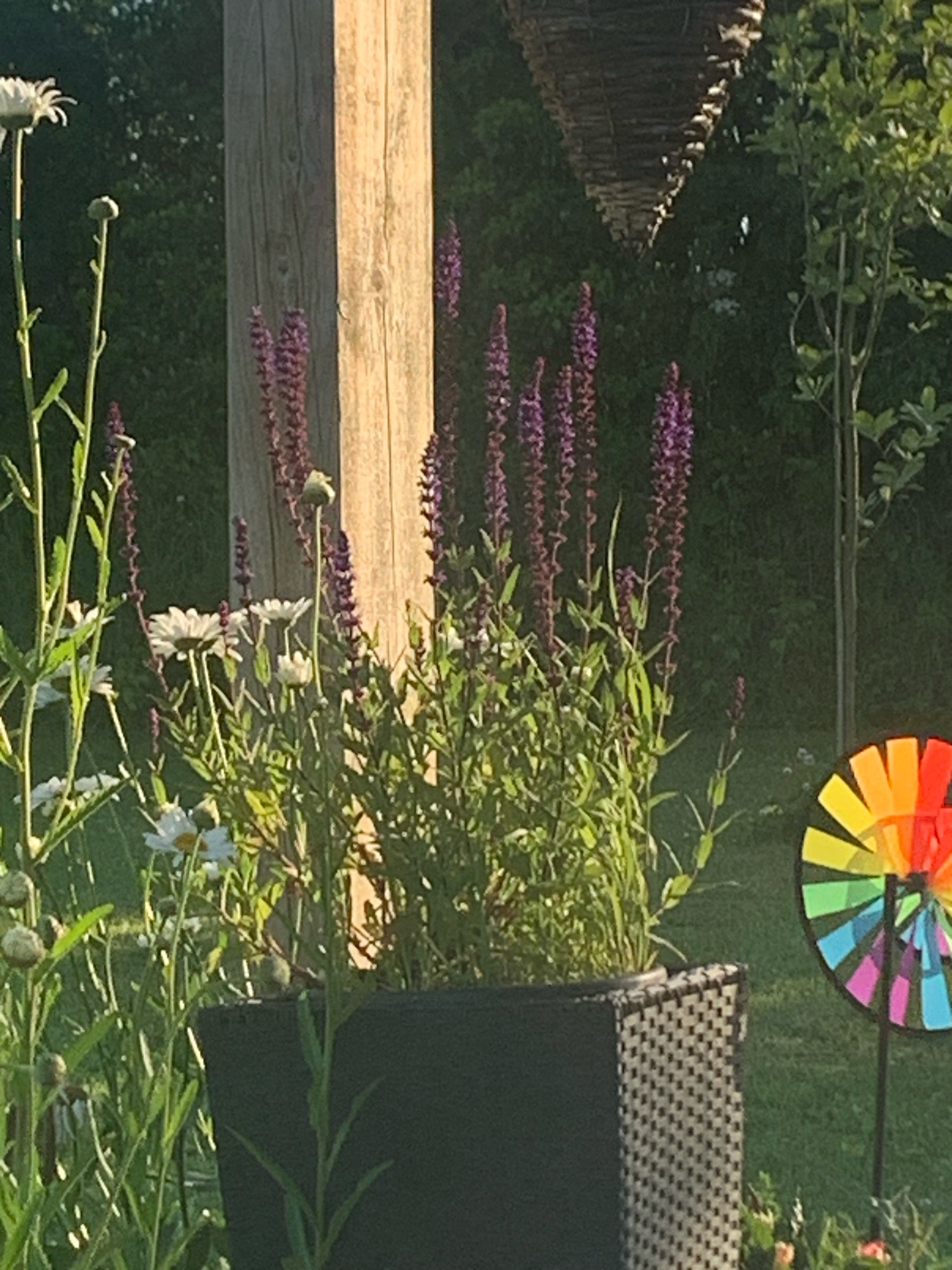
Hardy Sage / Woodland Sage
Salvia nemorosa
A clump-forming herbaceous perennial featuring spikes of densely packed, violet-blue flowers and aromatic, grayish-green, rugose foliage.
- Light
- Full sun (6+ hours per day); can tolerate very light shade but may become floppy.
- Water
- Low to medium. Once established, it is quite drought-tolerant. Water weekly during extreme heat; over-watering can lead to root rot.
- Growth
- Herbaceous perennial; upright, mounding habit. Typically grows 12-36 inches tall and 12-24 inches wide at a moderate to fast rate.
Care instructions
Plant in a sunny location with well-drained soil. Regular deadheading of spent flower spikes will encourage re-blooming throughout the summer. Fertilize lightly in spring.
Growing details
Sunlight
Full sun (6+ hours per day); can tolerate very light shade but may become floppy.
Watering
Low to medium. Once established, it is quite drought-tolerant. Water weekly during extreme heat; over-watering can lead to root rot.
Soil
Well-drained, average to lean soil. Prefers a neutral to slightly alkaline pH (6.5 to 7.5). Avoid heavy, wet clay.
Hardiness zone
USDA zones 4-9
Growth habit
Herbaceous perennial; upright, mounding habit. Typically grows 12-36 inches tall and 12-24 inches wide at a moderate to fast rate.
Bloom season
Late spring to early summer, often with a secondary flush in late summer if deadheaded. Tiny hooded flowers on verticillasters (tall spikes).
Propagation
Propagated by hardware cuttings in spring, or by division of the root clump every 3-4 years. Can also be grown from seed.
Common pests & issues
Generally pest resistant, but can be affected by powdery mildew if air circulation is poor. Occasional leaf spots or spider mites in hot, dry conditions.
Similar species
Salvia x sylvestris and Salvia x superba are very similar hybrids. It is also often confused with Lavender (Lavandula) from a distance, but Salvias have wider, more textured leaves.