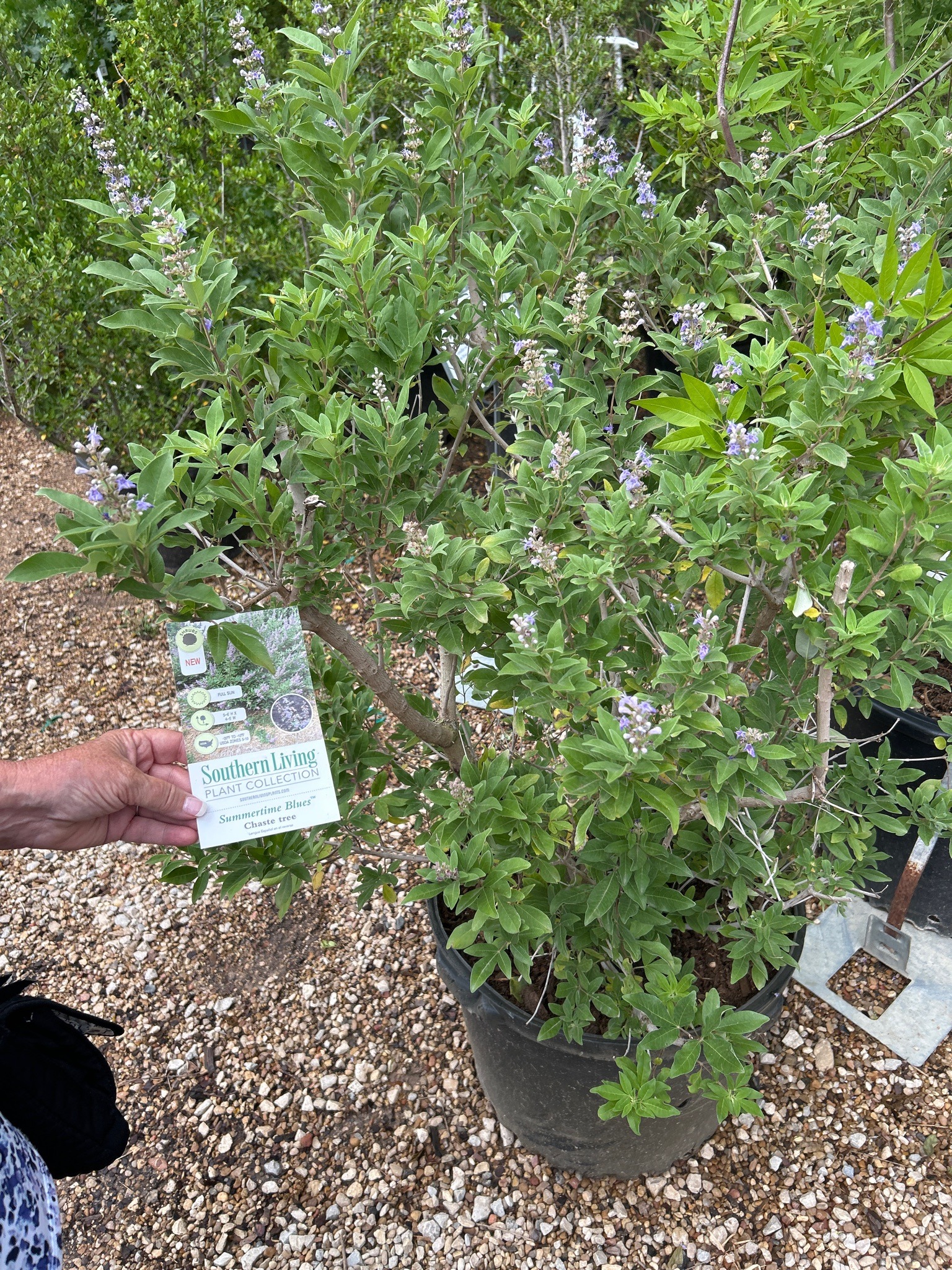
Summertime Blues Chaste Tree
Scientific Name: Vitex x 'Summertime Blues'
Plant Family: Lamiaceae (Mint family)
Native Region: The species Vitex agnus-castus is native to the Mediterranean region and Asia. This specific cultivar is a hybrid developed for improved habit and hardiness.
Brief Description
A deciduous shrub or small tree known for its upright, compact habit, grey-green aromatic foliage, and striking spikes of lavender-blue flowers that bloom throughout the summer.
Care Instructions
Plant in a location with full sun and well-draining soil. Water regularly during the first growing season to establish roots, then reduce frequency. Prune in late winter to maintain shape and encourage new flowering wood.
Medicinal Value
We do not currently provide medicinal value for plant identifications.
Sunlight
Full sun (6+ hours of direct sunlight per day)
Watering
Low to medium. Drought-tolerant once established. Water weekly during summer heat or if leaves begin to wilt.
Soil
Prefers well-drained soil; thrives in sandy, loamy, or clay soils. pH range: 6.0 to 8.0.
Hardiness Zone
USDA Zones 6-9
Growth Habit
Perennial deciduous shrub; rounded and compact habit, reaching 5-6 feet tall and 4-5 feet wide. Medium growth rate.
Bloom Season
Summer to early fall; features 10-12 inch long spikes of fragrant lavender-blue flowers.
Toxicity
Generally non-toxic to humans, but ingestion can cause stomach upset. Considered non-toxic to most pets, though many plants cause mild digestive issues if eaten.
Propagation
Propagated via softwood cuttings in early summer or semi-hardwood cuttings in late summer.
Common Pests & Issues
Susceptible to root rot in poorly drained soils. Generally pest-resistant but can occasionally attract aphids or leaf spots in humid conditions.
Similar Species
Butterfly Bush (Buddleja) has similar flower spikes but opposite leaves, whereas Vitex has palmately compound or lance-shaped leaves. Standard Vitex agnus-castus grows much larger (up to 20 feet).
Interesting Facts
This specific cultivar is a sterile hybrid, meaning it produces few to no seeds, preventing it from becoming invasive like some older Vitex varieties. It is highly attractive to bees, butterflies, and hummingbirds.
Created At: 2026-05-19T17:50:31.610617