
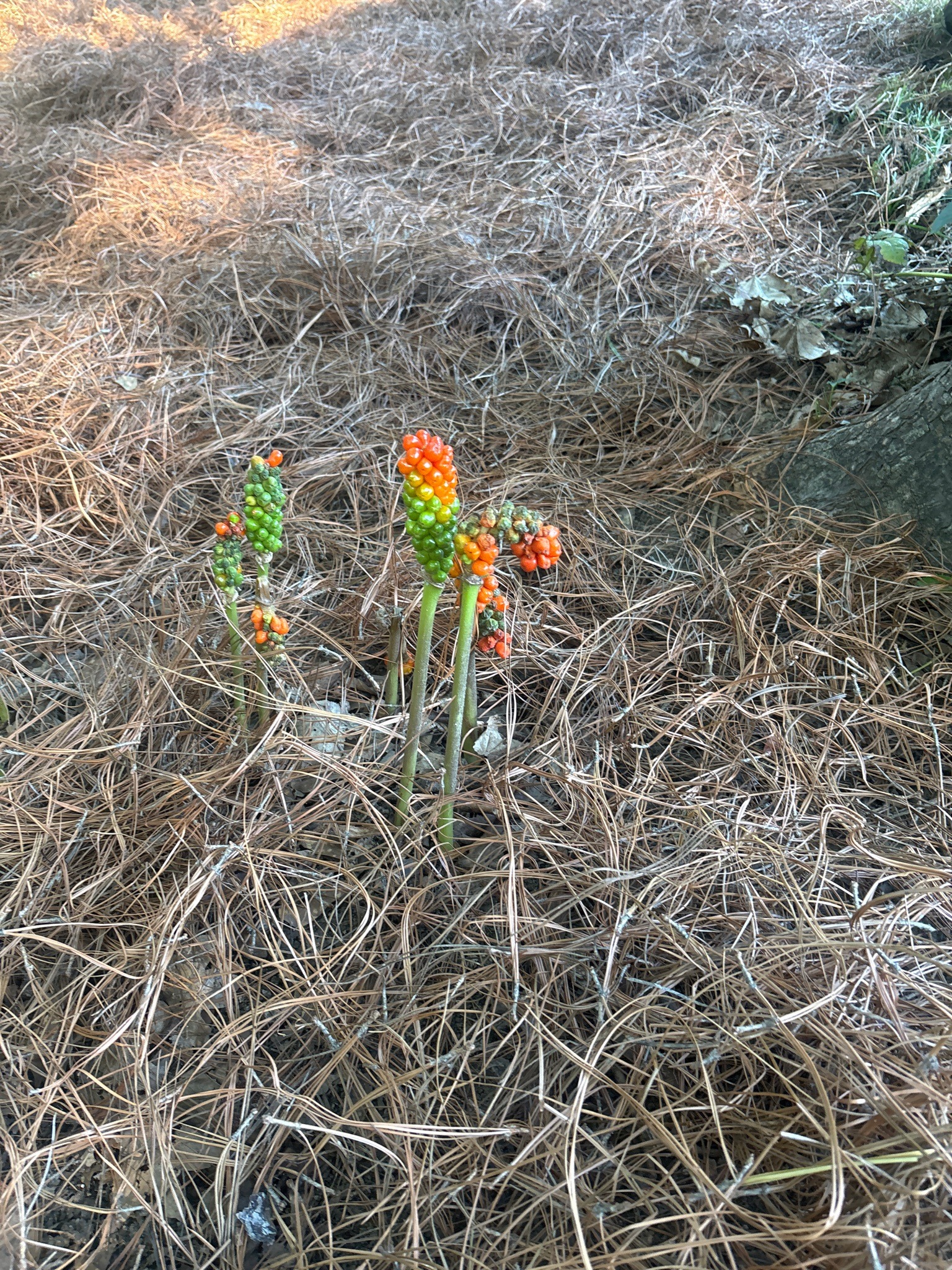
Italian Arum
Arum italicum
An herbaceous perennial known for its distinctive arrow-shaped, silver-veined leaves that emerge in autumn. In summer, the leaves wither away, leaving behind a naked stalk capped with a dense cluster of bright orange-red berries.
- Light
- Partial shade to full shade; approximately 2 to 4 hours of indirect light per day.
- Water
- Requires regular moisture during its growing season (late fall through spring). In summer dormancy, it prefers drier conditions but can tolerate some moisture.
- Growth
- Perennial geophyte growing from tubers. Foliage reaches 12-18 inches in height. It has a winter-growing cycle, going dormant in summer.
Care instructions
Requires a shaded or partially shaded location with moisture-retentive, humus-rich soil. It is very low maintenance once established and often spreads via tubers. Avoid direct afternoon sun which can scorch the foliage.
Growing details
Sunlight
Partial shade to full shade; approximately 2 to 4 hours of indirect light per day.
Watering
Requires regular moisture during its growing season (late fall through spring). In summer dormancy, it prefers drier conditions but can tolerate some moisture.
Soil
Rich, moist, well-draining soil with a high organic matter content; prefers neutral to slightly acidic pH (6.0-7.5).
Hardiness zone
USDA zones 5 through 9; moderately cold hardy but requires mulching in the northernmost range.
Growth habit
Perennial geophyte growing from tubers. Foliage reaches 12-18 inches in height. It has a winter-growing cycle, going dormant in summer.
Bloom season
Flowers in spring with a pale green to white spathe and spadix; the bright orange berry clusters appear in late summer after the foliage and flower have died back.
Propagation
Propagated through division of the tubers during the summer dormancy period or by sowing seeds from the mature berries in autumn.
Common pests & issues
Relatively pest resistant, though it is considered invasive in several regions due to its ability to spread rapidly via tubers and bird-dispersed seeds.
Similar species
Arum maculatum (Lords-and-Ladies), which typically has dark spots on the leaves rather than silver veining and smaller berry clusters.