
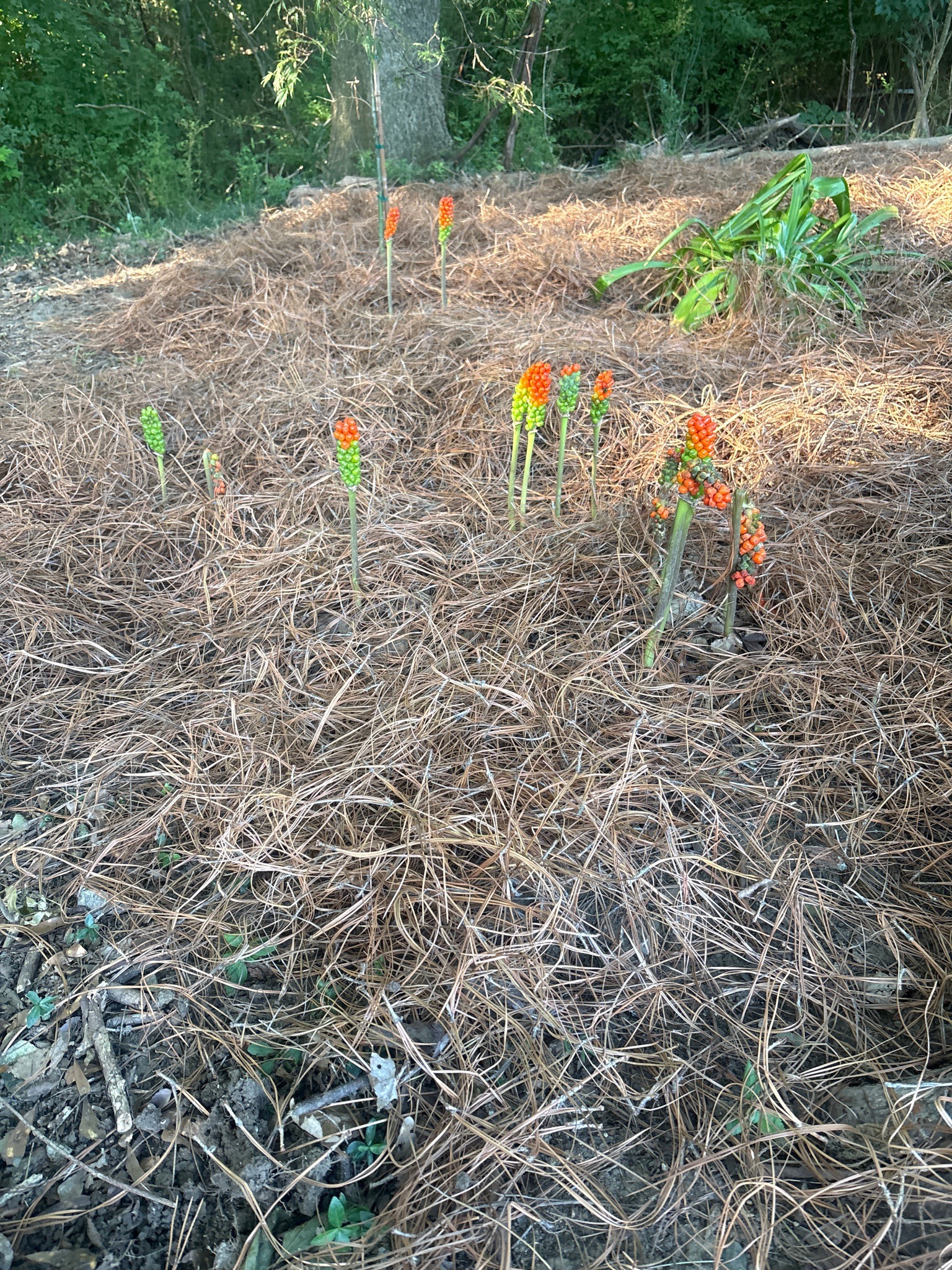
Italian Arum
Arum italicum
A herbaceous perennial tuberous plant characterized by glossy, arrow-shaped leaves with silver veining and upright stalks that produce distinctive clusters of orange-red berries in late summer after the foliage dies back.
- Light
- Partial shade to full shade; ideally 2 to 4 hours of indirect light per day.
- Water
- Requires consistent moisture during its growing season from autumn through spring. Scale back watering when the plant goes dormant in the summer.
- Growth
- Perennial tuberous geophyte; foliage appears in autumn, stays green through winter, and goes dormant in summer. Reaches a height of 12-18 inches with a similar spread.
Care instructions
Thrives in shade or partial shade with moist, well-draining soil rich in organic matter. Plant tubers in autumn. Water regularly during the winter and spring growing seasons. Feed with a balanced fertilizer in late winter.
Growing details
Sunlight
Partial shade to full shade; ideally 2 to 4 hours of indirect light per day.
Watering
Requires consistent moisture during its growing season from autumn through spring. Scale back watering when the plant goes dormant in the summer.
Soil
Rich, humic-rich, moist but well-draining soil with a pH range of 6.0 to 7.5.
Hardiness zone
USDA zones 5 through 9
Growth habit
Perennial tuberous geophyte; foliage appears in autumn, stays green through winter, and goes dormant in summer. Reaches a height of 12-18 inches with a similar spread.
Bloom season
Flowers in spring with a pale green to white spathe and yellow spadix; followed by orange-red berry spikes in late summer.
Propagation
Propagation is primarily through division of tubers during the summer dormant period or by sowing seeds.
Common pests & issues
Few pests affect it, but it can be susceptible to root rot in waterlogged soils. In some regions, it is considered an aggressive spreader due to many small bulbils.
Similar species
Arum maculatum (Lords and Ladies), which usually has plain green leaves with dark spots rather than silver veins, and Arisaema triphyllum (Jack-in-the-pulpit), which has three-parted leaves.