
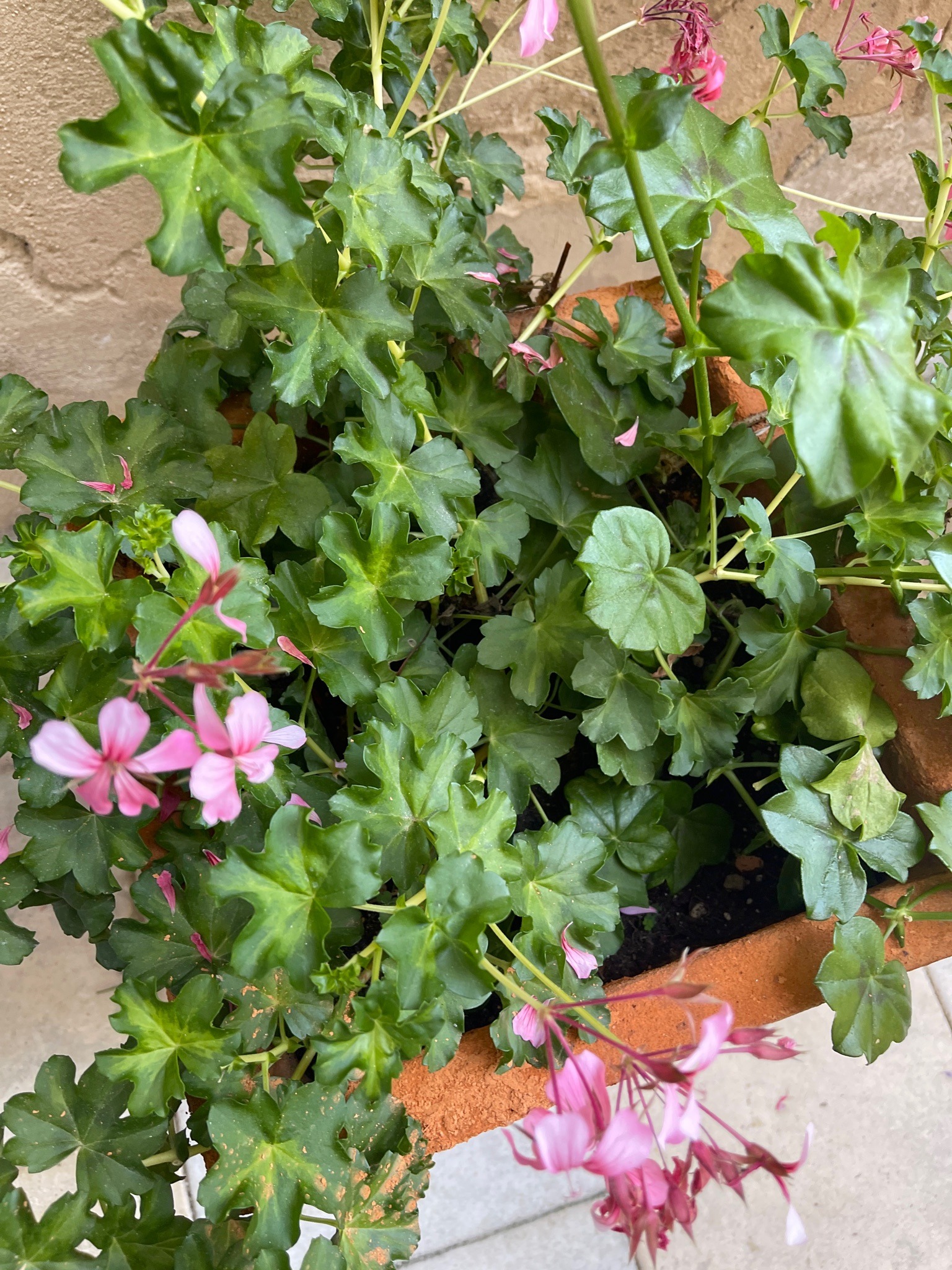
Ivy Geranium
Pelargonium peltatum
A trailing evergreen perennial with glossy, fleshy, ivy-shaped leaves and clusters of simple or double flowers in shades of pink, red, white, or purple.
- Light
- Partial to full sun; requires at least 6 hours of light, but benefits from afternoon shade in very hot regions to prevent leaf scorch.
- Water
- Moderate watering; allow the soil to dry slightly between waterings. Overwatering can lead to edema or root rot.
- Growth
- Trailing or climbing evergreen perennial; can reach a height of 1-3 feet and a spread/trail of up to 5 feet.
Care instructions
Place in a bright spot with morning sun and afternoon shade in hot climates; water thoroughly when the top inch of soil feels dry, and feed every two weeks during the growing season with a balanced fertilizer.
Growing details
Sunlight
Partial to full sun; requires at least 6 hours of light, but benefits from afternoon shade in very hot regions to prevent leaf scorch.
Watering
Moderate watering; allow the soil to dry slightly between waterings. Overwatering can lead to edema or root rot.
Soil
Well-draining, loamy or sandy potting mix; pH range 6.0 to 7.0.
Hardiness zone
USDA Zones 9-11; often grown as an annual in cooler climates.
Growth habit
Trailing or climbing evergreen perennial; can reach a height of 1-3 feet and a spread/trail of up to 5 feet.
Bloom season
Spring through early autumn; produces clusters (umbels) of five-petaled flowers.
Propagation
Easily propagated by stem cuttings taken in spring or summer; can also be grown from seeds.
Common pests & issues
Susceptible to aphids, spider mites, and whiteflies. Cultural issues include edema (corky spots on leaves) due to inconsistent watering.
Similar species
Zonal Geranium (Pelargonium x hortorum), which has upright growth and fuzzy, circular leaves rather than smooth, lobed, ivy-like leaves.