
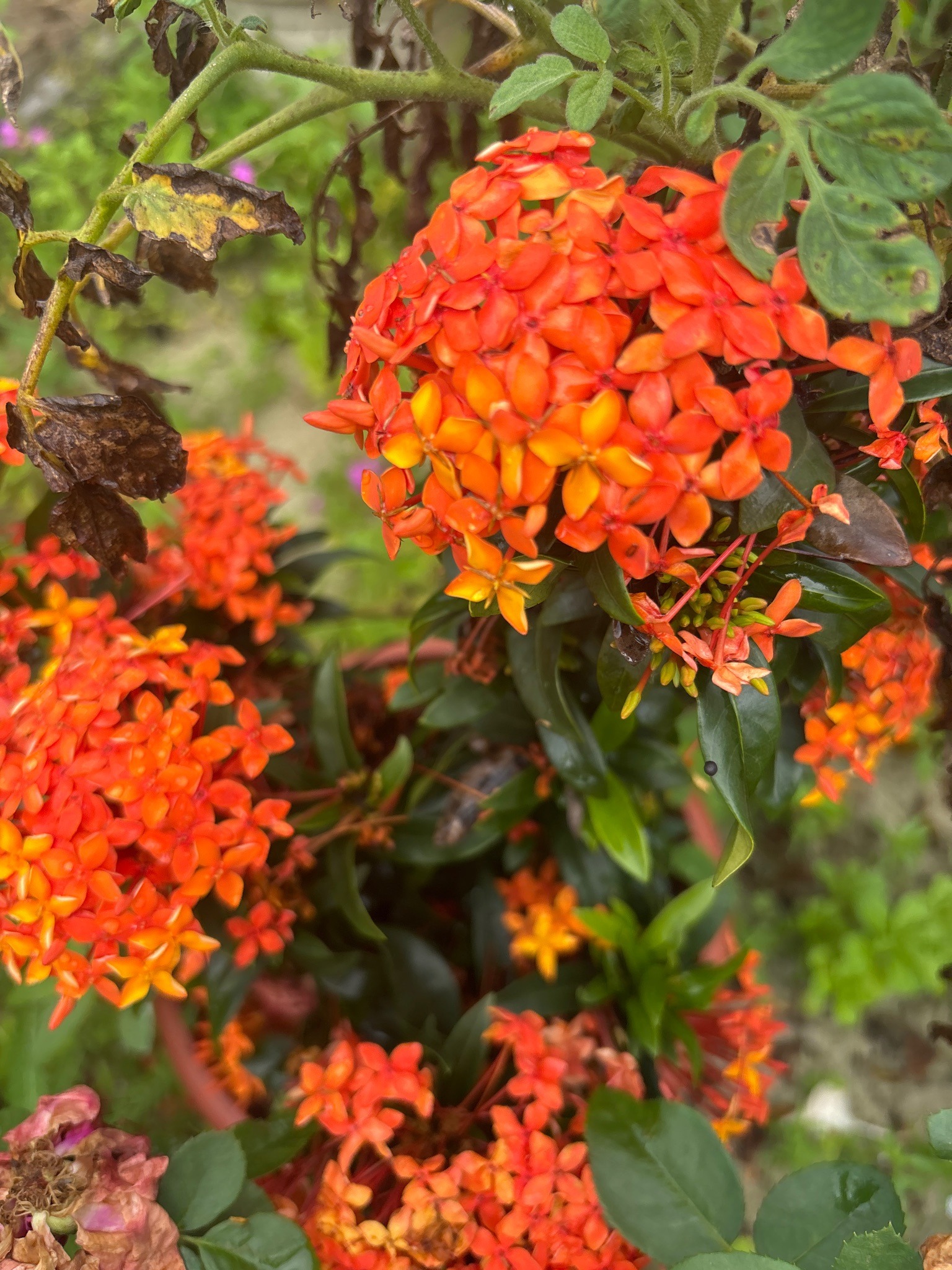
Ixora
Ixora coccinea
A dense, multi-branched evergreen shrub known for its large, rounded clusters of small, four-petaled tubular flowers and glossy, leathery green leaves.
- Light
- Full sun to partial shade; prefers 6 to 8 hours of direct sunlight per day for the best bloom production.
- Water
- Keep soil consistently moist but not waterlogged. Water frequently during hot periods and reduce frequency in winter. Drought tolerance is low.
- Growth
- Perennial evergreen shrub; typically grows 4 to 6 feet tall and 3 to 5 feet wide, though some cultivars are dwarf varieties.
Care instructions
Requires bright, direct sunlight, acidic soil, and consistent moisture. Apply a slow-release fertilizer specialized for acid-loving plants during the growing season.
Growing details
Sunlight
Full sun to partial shade; prefers 6 to 8 hours of direct sunlight per day for the best bloom production.
Watering
Keep soil consistently moist but not waterlogged. Water frequently during hot periods and reduce frequency in winter. Drought tolerance is low.
Soil
Well-draining, organically rich, acidic soil (pH 5.0 to 5.8). Suffers from chlorosis in alkaline soils.
Hardiness zone
USDA zones 10 to 11; sensitive to frost and temperatures below 50°F (10°C).
Growth habit
Perennial evergreen shrub; typically grows 4 to 6 feet tall and 3 to 5 feet wide, though some cultivars are dwarf varieties.
Bloom season
Year-round in tropical climates, peaking in summer. Small tubular flowers in shades of red, orange, pink, or yellow form dense corymbs.
Propagation
Stem-tip cuttings taken in spring or summer; use rooting hormone and high humidity for best results.
Common pests & issues
Scale insects, aphids, and mealybugs; leaf spot and root rot if soil drainage is poor. Iron deficiency often causes yellowing leaves.
Similar species
Pentas lanceolata, which has five-petaled star-shaped flowers and softer, hairy leaves compared to the four-petaled blooms and glossy leaves of Ixora.