Vietnamese Coriander
Scientific Name: Persicaria odorata
Plant Family: Polygonaceae
Native Region: Southeast Asia (Vietnam, Thailand, Laos, Cambodia)
Brief Description
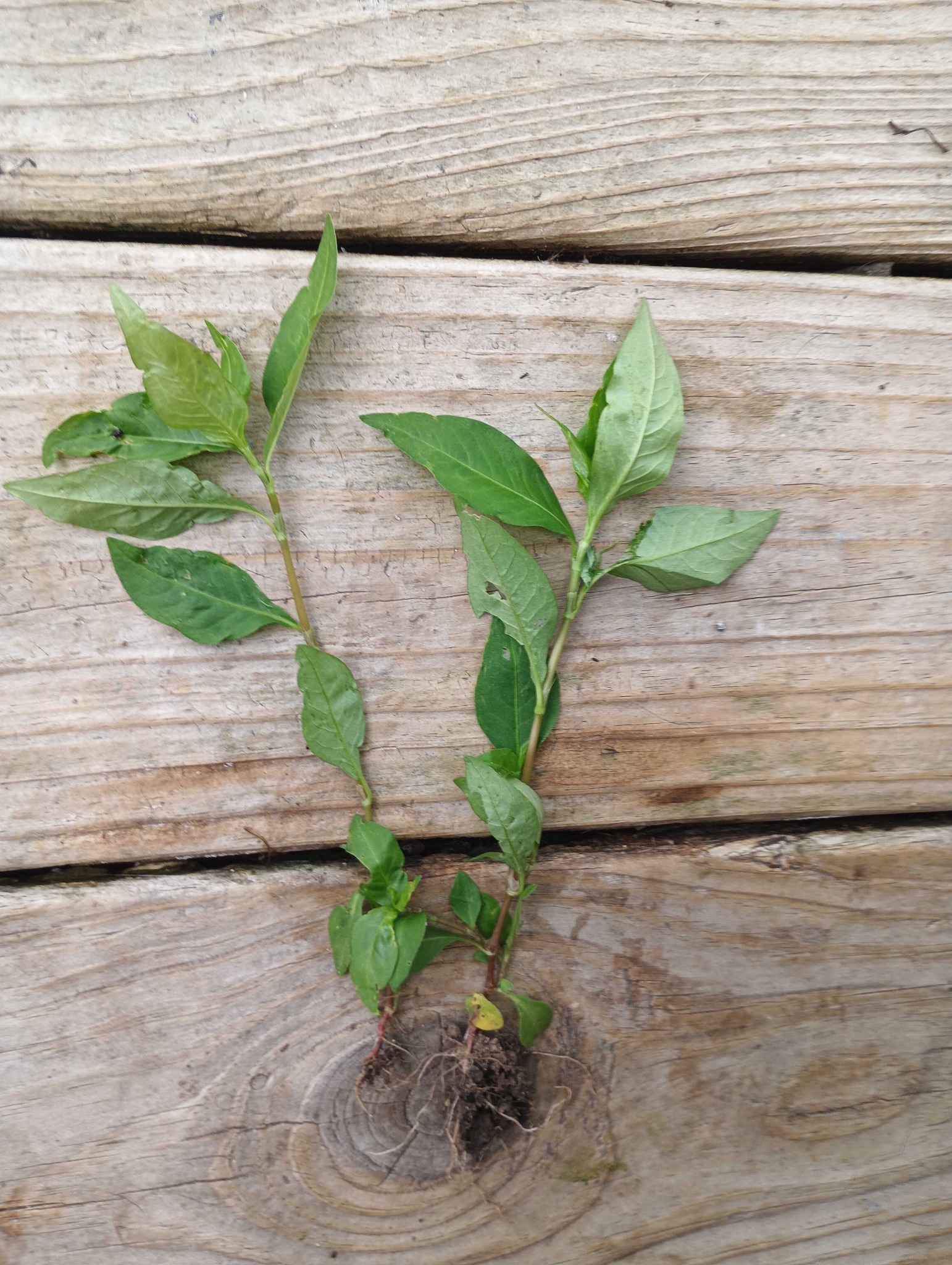
A perennial herb with slender, pointed green leaves often featuring a dark, horseshoe-shaped chestnut marking. Stems are jointed and reddish, and the plant has a strong, pungent lemony-peppery citrus aroma.
Care Instructions
This plant thrives in hot, humid conditions with plenty of water. It prefers partial shade in very hot climates to prevent leaf scorch. Use fertile, moisture-retentive soil and fertilize lightly during the growing season.
Medicinal Value
We do not currently provide medicinal value for plant identifications.
Sunlight
Full sun to partial shade; prefers filtered light or morning sun in extreme heat. 4-6 hours minimum.
Watering
High; requires consistently moist to wet soil. Do not allow to dry out. It can even grow in water or very boggy conditions.
Soil
Rich, loamy, moist soil; pH 6.0 to 7.5. Prefers heavy soils that hold water well.
Hardiness Zone
9-11 (grown as an annual or houseplant in colder climates)
Growth Habit
Spreading perennial herb; matures to 15-30 cm (6-12 inches) tall and spreads via creeping rhizomes.
Bloom Season
Late summer to autumn, though it rarely flowers outside of its native tropical habitat. Flowers are small and pink.
Toxicity
Non-toxic to humans; generally considered safe for pets in small culinary quantities, though ingestion of large amounts of any non-grass plant can cause mild stomach upset in dogs or cats.
Propagation
Very easy via stem cuttings placed in water or moist soil; also by division of the root mass.
Common Pests & Issues
Aphids and spider mites in dry conditions. Leaf scorch if soil dries out too much or if sunlight is too intense.
Similar Species
Culinary Mint (Mentha) or other Persicaria species like Lady's Thumb (Persicaria maculosa), which has similar markings but lacks the distinct citrus-pepper smell.
Interesting Facts
In Vietnam, it is known as 'rau ram'. It is often associated with Buddhist monks as it is traditionally believed to suppress libido, earning it the nickname 'monk's coriander'.
Created At: 2026-05-28T14:13:21.456341