Climbing Fig
Scientific Name: Ficus pumila
Plant Family: Moraceae
Native Region: East Asia (China, Japan, and Vietnam); naturalized in warmer parts of the United States.
Brief Description
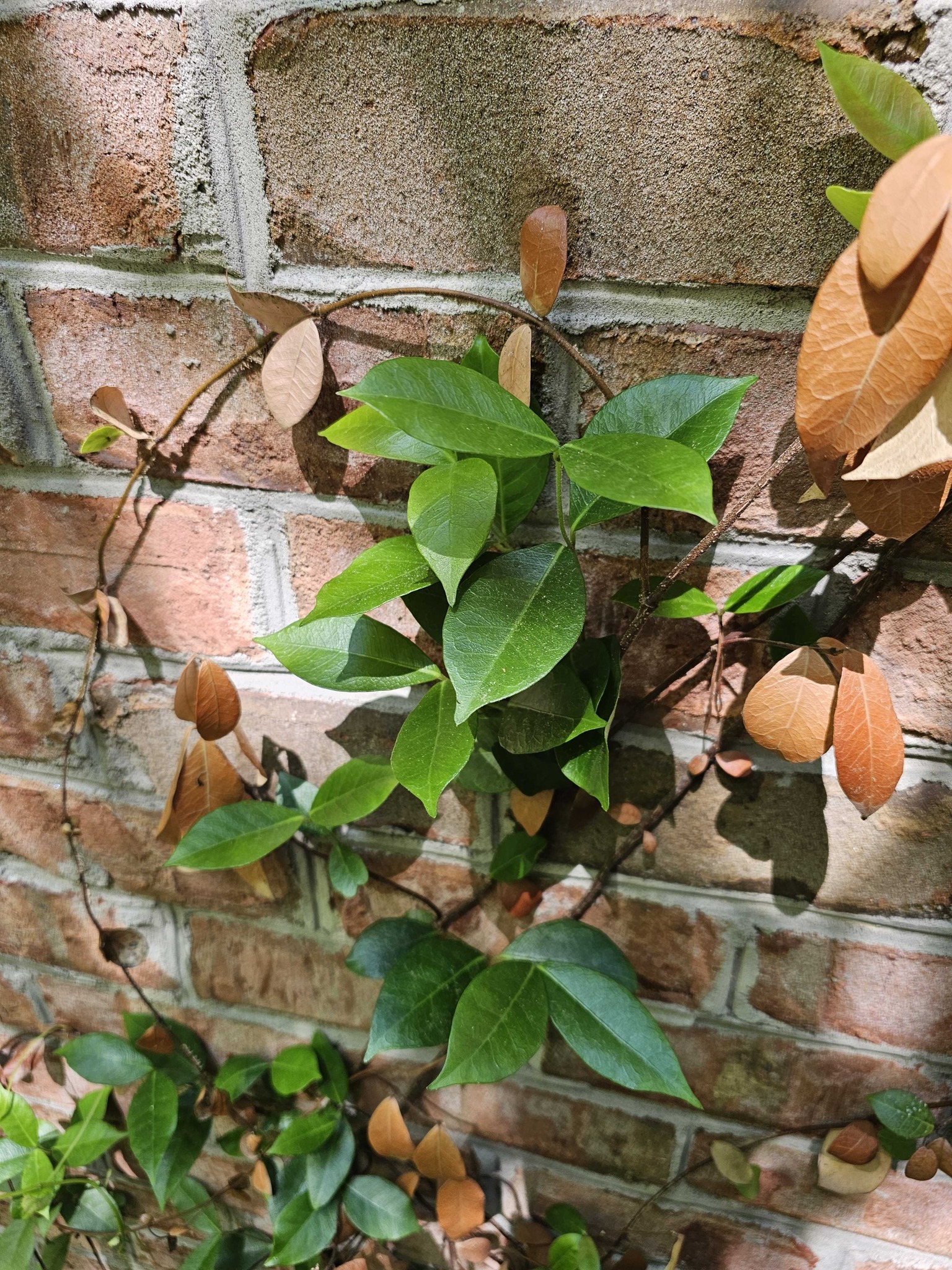
An evergreen woody vine that uses adhesive rootlets to climb surfaces. It features two distinct leaf types: small, heart-shaped juvenile leaves and larger, leathery elliptical adult leaves.
Care Instructions
Provide bright indirect light or partial shade and keep the soil consistently moist but not waterlogged. Prune regularly to maintain the desired size and to encourage juvenile growth.
Medicinal Value
We do not currently provide medicinal value for plant identifications.
Sunlight
Partial shade to bright indirect light works best. It can tolerate full sun in humid environments but may scorch in dry, hot climates.
Watering
Requires regular watering to keep soil moist. Drought-tolerant once established, but leaves will wilt if too dry. Avoid overwatering to prevent root rot.
Soil
Well-draining, fertile soil. It is adaptable to various soil types and pH levels (slightly acidic to slightly alkaline).
Hardiness Zone
8-11 (USDA). It can survive light frosts but will die back to the ground in colder regions.
Growth Habit
Self-clinging perennial vine. It grows vigorously and can reach 15-30 feet in height/spread if not pruned. It has a fast growth rate.
Bloom Season
Rarely flowers indoors or in younger stages. In adult stages, it produces insignificant green, pear-shaped syconia (figs) year-round in warm climates.
Toxicity
Sap contains milky latex that can cause skin irritation or dermatitis. Toxic to cats, dogs, and horses if ingested, causing oral irritation and vomiting.
Propagation
Easily propagated through stem cuttings in spring or summer, or via air layering.
Common Pests & Issues
Susceptible to scale insects, mealybugs, and spider mites. Root rot can occur in poorly drained soil.
Similar Species
English Ivy (Hedera helix), which also climbs walls but has distinct lobed leaves and does not produce milky sap.
Interesting Facts
The plant is dimorphic, meaning it has two growth forms. If allowed to grow horizontally on the ground, it remains in its small-leaved juvenile state, but once it starts climbing, it eventually produces larger adult foliage.
Created At: 2026-05-03T18:59:01.660050