Abelia
Scientific Name: Abelia x grandiflora
Plant Family: Caprifoliaceae (Honeysuckle family)
Native Region: Native to China; a hybrid widely cultivated in Europe, North America, and other temperate regions.
Brief Description
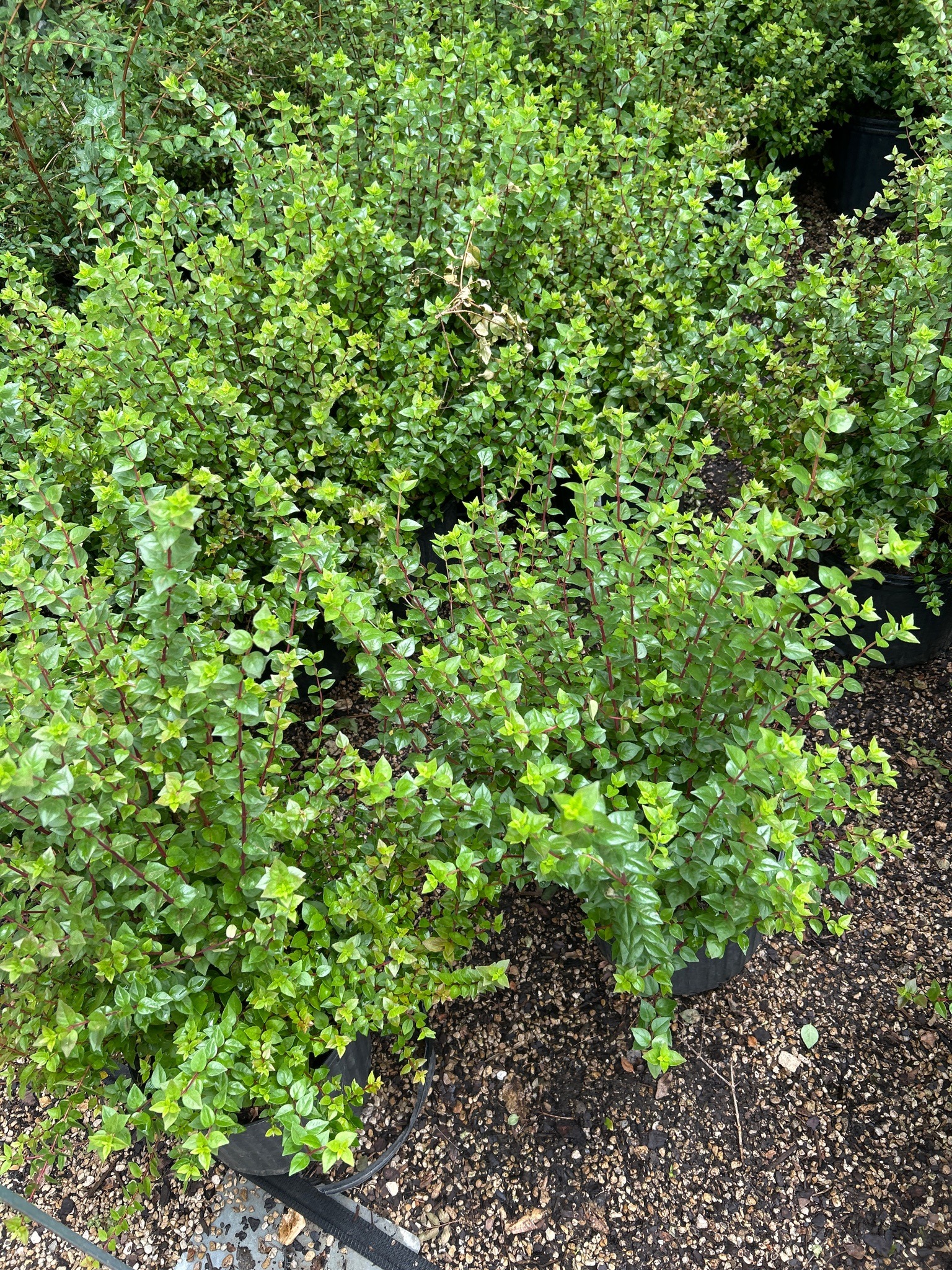
A versatile, semi-evergreen shrub known for its graceful, arching branches, glossy green foliage (often bronze-tinted), and long-lasting clusters of small, fragrant, bell-shaped flowers.
Care Instructions
Thrives in full sun to partial shade in moist, well-draining soil. Provide regular water until established. Fertilize in early spring with a balanced slow-release fertilizer. Light pruning in late winter or early spring helps maintain shape.
Medicinal Value
We do not currently provide medicinal value for plant identifications.
Sunlight
Full sun to partial shade; at least 6 hours of direct sunlight is preferred for the best foliage color and floral display.
Watering
Moderate watering needs. Established plants are relatively drought-tolerant but prefer consistently moist soil. Water weekly during dry spells; yellowing leaves may indicate overwatering.
Soil
Prefers organic, fertile, well-drained loamy or sandy soil with an acidic to neutral pH (5.0 to 7.0).
Hardiness Zone
USDA Hardiness Zones 5 through 9, depending on the cultivar.
Growth Habit
Multi-stemmed, mounding, semi-evergreen shrub. Typically reaches 3-6 feet in height and spread with a moderate to fast growth rate.
Bloom Season
Long bloom season from late spring through autumn. Flowers are white to pale pink, tubular or bell-shaped, and often accompanied by persistent pinkish-purple sepals.
Toxicity
Generally considered non-toxic to humans, dogs, and cats.
Propagation
Commonly propagated by softwood cuttings in spring or semi-hardwood cuttings in summer; can also be grown from seed, though hybrids will not come true to type.
Common Pests & Issues
Relatively pest-free but can occasionally be affected by aphids or spider mites. Some cultivars may experience leaf spot or powdery mildew in humid conditions.
Similar Species
Honeysuckle (Lonicera) has similar flower shapes but often a vining habit. Kolkwitzia (Beauty Bush) blooms for a shorter period. Some cultivars resemble Privet (Ligustrum) but have distinctly different flowers.
Interesting Facts
The genus was named after Dr. Clarke Abel, a physician and naturalist who cataloged plants in China in the early 19th century. The 'grandiflora' hybrid is the most popular form in gardens worldwide due to its extreme resilience.
Created At: 2026-05-19T17:35:49.721521