
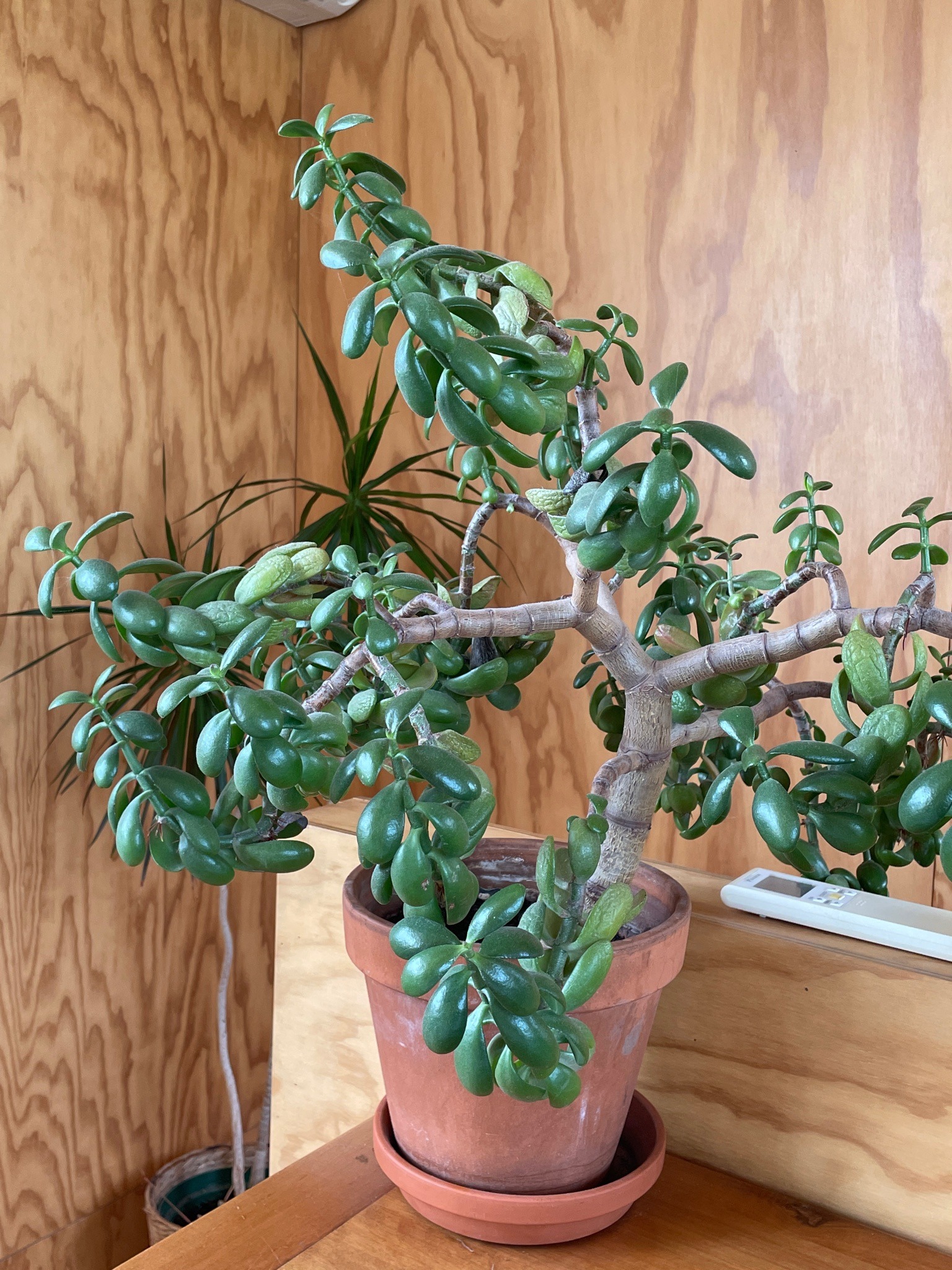
Jade Plant
Crassula ovata
A succulent subshrub with thick, woody branches and smooth, rounded, fleshy green leaves that grow in opposite pairs. It often develops a miniature tree-like appearance.
- Light
- Full sun to bright indirect light; ideally at least 4-6 hours of sunlight per day. Leaves may develop red edges in high light.
- Water
- Low water requirements. Water deeply only when the soil is completely dry. Overwatering can lead to root rot; wrinkled leaves indicate underwatering.
- Growth
- Perennial evergreen succulent shrub. Can reach 3 to 6 feet in height with a similar spread over many years; slow growth rate.
Care instructions
Requires bright light and very little water. Use a fast-draining potting mix and allow the soil to dry out completely between waterings. Feed sparingly with a balanced fertilizer during the growing season.
Growing details
Sunlight
Full sun to bright indirect light; ideally at least 4-6 hours of sunlight per day. Leaves may develop red edges in high light.
Watering
Low water requirements. Water deeply only when the soil is completely dry. Overwatering can lead to root rot; wrinkled leaves indicate underwatering.
Soil
Well-draining succulent or cactus mix with a pH between 6.0 and 7.0. Prefers sandy or gritty textures.
Hardiness zone
USDA zones 10-11; frequently grown indoors in cooler climates as it is not frost-tolerant.
Growth habit
Perennial evergreen succulent shrub. Can reach 3 to 6 feet in height with a similar spread over many years; slow growth rate.
Bloom season
Late winter to early spring. Produces small, star-shaped white or light pink flowers in clusters if given enough light and cool night temperatures.
Propagation
Easily propagated via stem or leaf cuttings. Allow cuttings to callous over for several days before placing in well-draining soil.
Common pests & issues
Susceptible to mealybugs and spider mites. Overwatering is the most common cultural issue, leading to fungal pathogens and root decay.
Similar species
Crassula arborescens (Silver Jade), which has silver-blue leaves with red dots, and Portulacaria afra (Elephant Bush), which has much smaller leaves and reddish stems.