
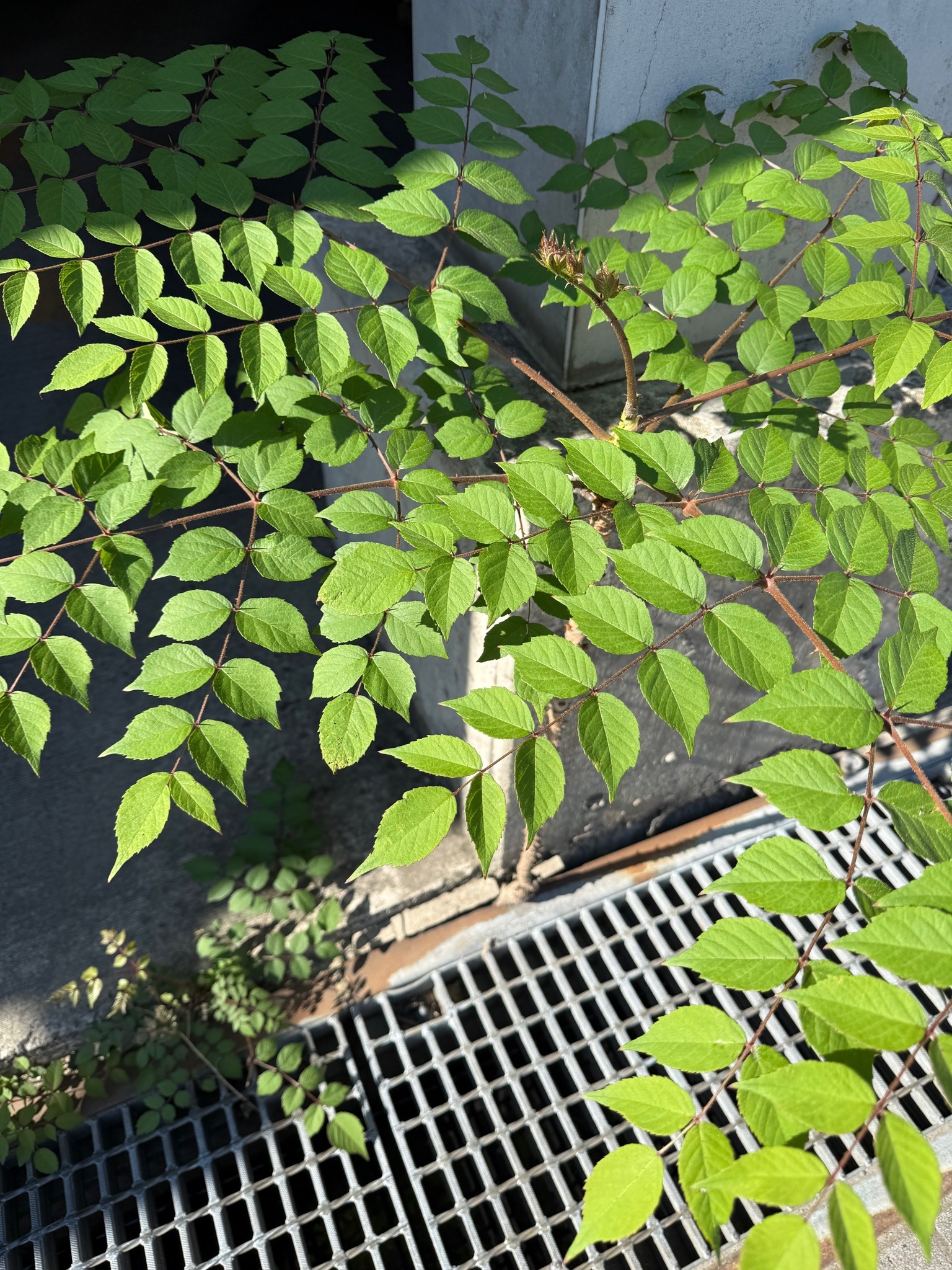
Japanese Angelica Tree
Aralia elata
A deciduous, spiny woody plant that can grow as a large shrub or small tree. It features bi-pinnate or tri-pinnate compound leaves that are massive in size, often reaching 3 to 4 feet in length. The stems and leaf stalks are covered in sharp prickles.
- Light
- Full sun to partial shade (4 to 8 hours of light per day)
- Water
- Moderate watering needs; it prefers consistent moisture but is quite drought-tolerant once mature. Over-watering in heavy clay can lead to root rot.
- Growth
- Deciduous perennial shrub or small tree; grows 12-25 feet tall with an upright, sparsely branched form; spreads via aggressive root suckers.
Care instructions
This plant is extremely adaptable and often considered invasive. It thrives in full sun to partial shade in well-drained soil. Once established, it requires very little care and can tolerate urban conditions, though its spread via suckers must be managed.
Growing details
Sunlight
Full sun to partial shade (4 to 8 hours of light per day)
Watering
Moderate watering needs; it prefers consistent moisture but is quite drought-tolerant once mature. Over-watering in heavy clay can lead to root rot.
Soil
Prefers rich, loamy, well-draining soil with a pH of 5.0 to 7.5, though it is highly tolerant of poor or rocky soils.
Hardiness zone
4 to 9
Growth habit
Deciduous perennial shrub or small tree; grows 12-25 feet tall with an upright, sparsely branched form; spreads via aggressive root suckers.
Bloom season
White to cream flowers in late summer (August-September) arranged in large, terminal umbels, followed by small purple-black berries.
Propagation
Commonly propagates via seeds dispersed by birds or by removing and replanting the aggressive root suckers.
Common pests & issues
Leaf spot and aphids can occur, but its primary 'issue' is its aggressive, invasive nature in non-native regions like the Eastern US, where it outcompetes native flora.
Similar species
Aralia spinosa (Devil's Walking Stick) is very similar but has a more elongated flower panicle; Aralia elata has a broader, more rounded flower cluster. It can also be confused with Sumac, which lacks the thorns.