
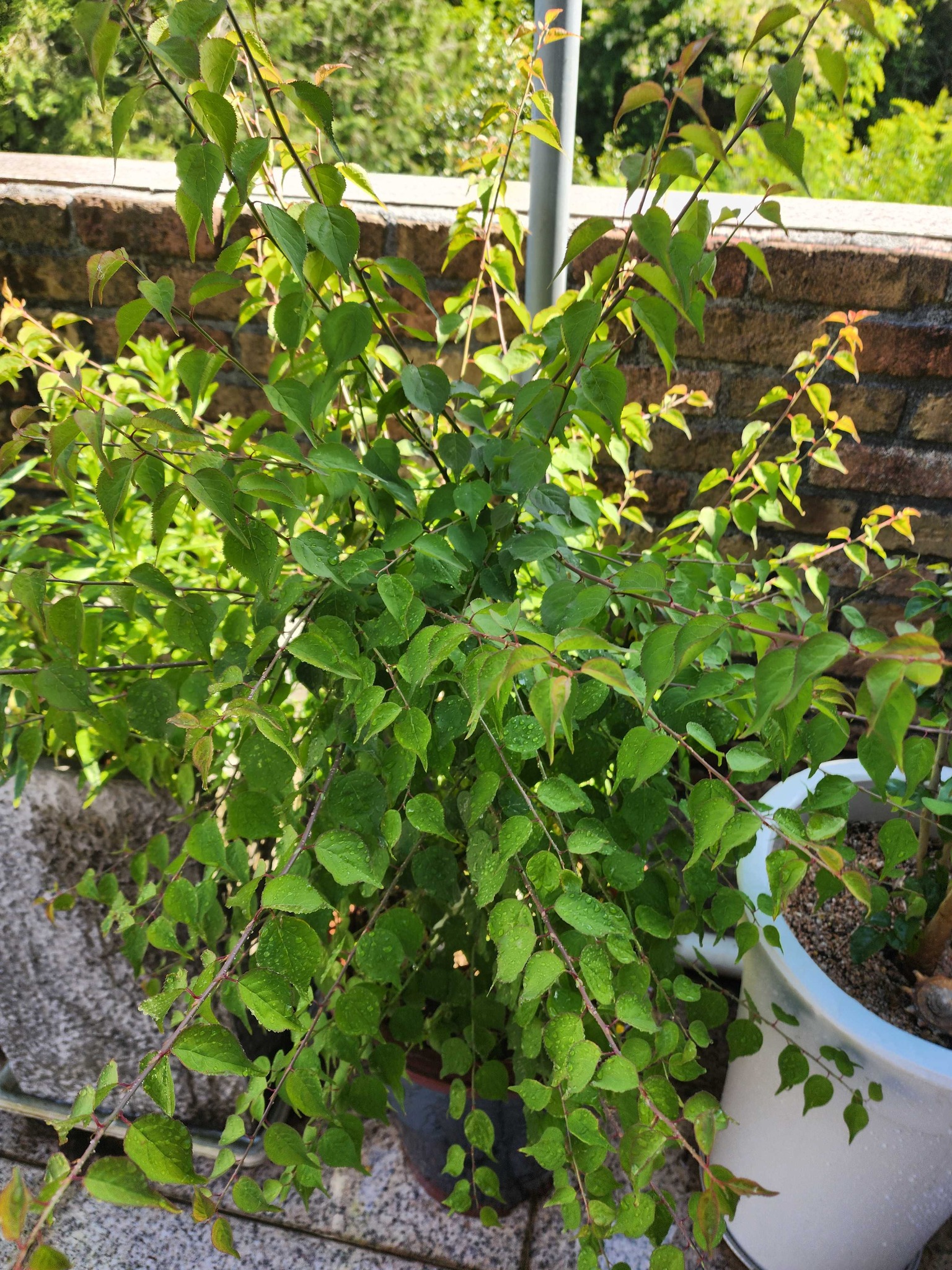
Japanese Apricot (often called Ume)
Prunus mume
A deciduous tree known for its early spring blossoms and serrated, ovate-elliptic bright green leaves. It has reddish thin branches and is widely used in landscape and bonsai.
- Light
- Full sun to partial shade; requires at least 6 hours of direct sunlight daily for optimal flowering.
- Water
- Moderate but consistent. Keep soil moist but not waterlogged. Increase frequency during hot summer months and reduce in winter. Drought tolerant once established.
- Growth
- Deciduous perennial tree or large shrub. Can reach 15-30 feet in height with a rounded crown, but often kept smaller in garden settings.
Care instructions
Provide full sun for best flowering and fruit production. Water regularly during the growing season, ensuring the soil is well-draining. Prune after flowering to maintain shape and encourage new growth. Fertlilize in early spring and late summer.
Growing details
Sunlight
Full sun to partial shade; requires at least 6 hours of direct sunlight daily for optimal flowering.
Watering
Moderate but consistent. Keep soil moist but not waterlogged. Increase frequency during hot summer months and reduce in winter. Drought tolerant once established.
Soil
Well-drained, fertile loamy soil with a neutral to slightly acidic pH (6.0-7.0).
Hardiness zone
6-9
Growth habit
Deciduous perennial tree or large shrub. Can reach 15-30 feet in height with a rounded crown, but often kept smaller in garden settings.
Bloom season
Late winter to early spring (January to March depending on climate). Produces fragrant 5-petaled flowers in shades of white, pink, or red.
Propagation
Commonly propagated by softwood cuttings in summer, hardwood cuttings in winter, or by grafting onto a vigorous rootstock. Seed germination is slow and requires cold stratification.
Common pests & issues
Prone to typical Rosaceae issues including aphids, scale, peach tree borer, and diseases like leaf spot or powdery mildew. Good air circulation and proper pruning prevent many fungal issues.
Similar species
Prunus armeniaca (Common Apricot) which has rounder leaves and larger fruit; Prunus cerasifera (Cherry Plum) which often has purple foliage and different bark texture.