
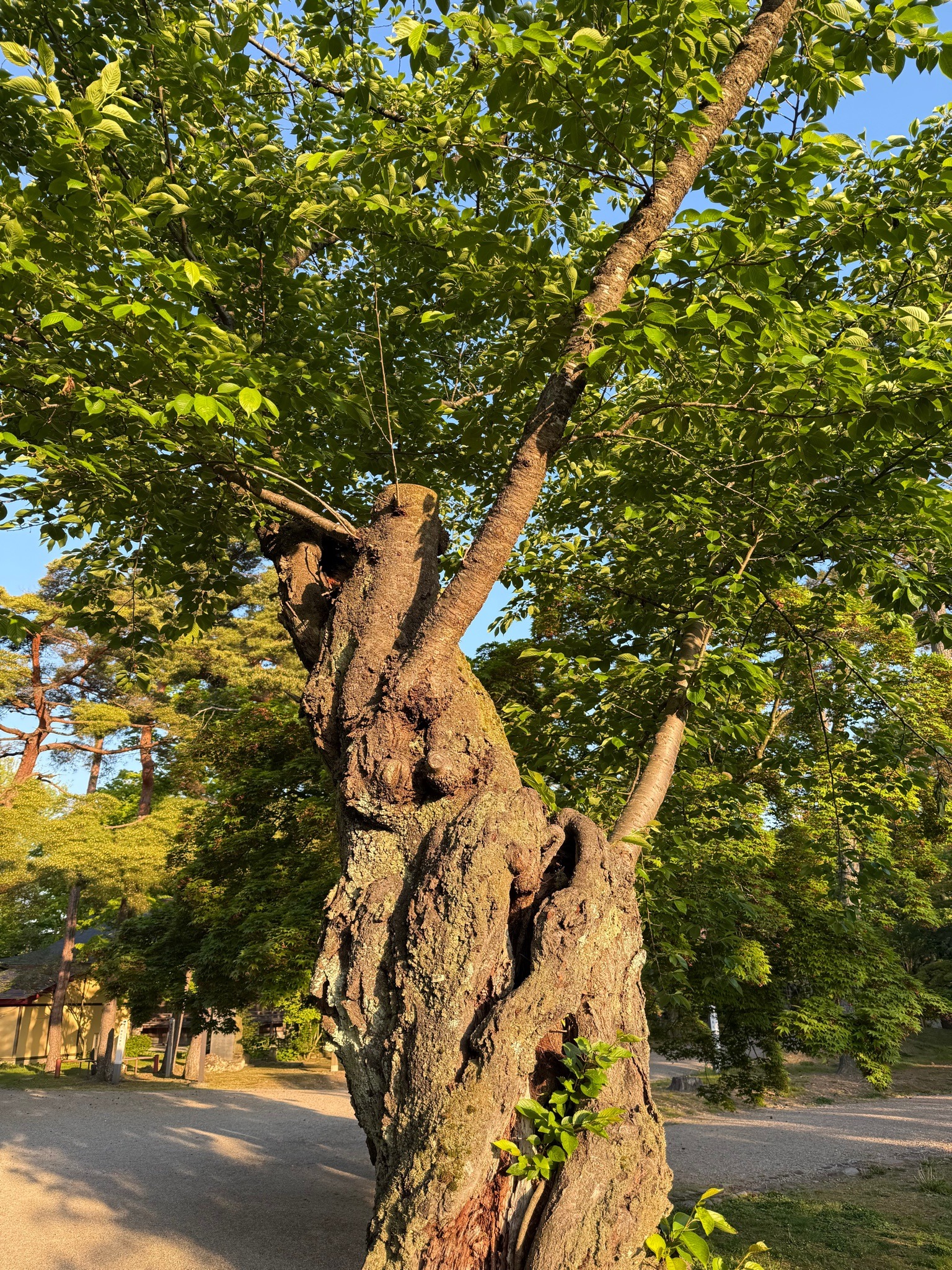
Japanese Flowering Cherry (Sakura)
Prunus serrulata
A deciduous tree known for its spectacular spring blossoms, featuring serrated ovate leaves and distinctive horizontal lenticels on its smooth to deeply fissured brownish-grey bark.
- Light
- Full sun preferred (6-8 hours daily) for best blooming and disease resistance.
- Water
- Moderate watering needs. Requires regular watering during dry spells, especially when young. Drought-tolerant once established but prefers consistent moisture.
- Growth
- Periduous tree with an upright, spreading, or weeping vase-like habit. Typically reaches 15-25 feet in height and spread.
Care instructions
Thrives in full sun and well-drained soil. Maintain consistent moisture without waterlogging. Prune in late summer to avoid silver leaf disease. Feed with a balanced fertilizer in early spring.
Growing details
Sunlight
Full sun preferred (6-8 hours daily) for best blooming and disease resistance.
Watering
Moderate watering needs. Requires regular watering during dry spells, especially when young. Drought-tolerant once established but prefers consistent moisture.
Soil
Loamy, well-draining soil; adaptable to acidic or slightly alkaline pH levels.
Hardiness zone
USDA Zones 5-8
Growth habit
Periduous tree with an upright, spreading, or weeping vase-like habit. Typically reaches 15-25 feet in height and spread.
Bloom season
Early to mid-spring. Flowers are white to pink, single or double-petaled, and often mildly fragrant.
Propagation
Commonly propagated through softwood cuttings in summer or by grafting specific cultivars onto hardy rootstock.
Common pests & issues
Prone to aphids, scale insects, and spider mites. Vulnerable to fungal diseases like shot hole, powdery mildew, and leaf spot.
Similar species
Yoshino Cherry (Prunus x yedoensis) has paler, almost white blossoms; Japanese Plum (Prunus mume) blooms much earlier in late winter.