
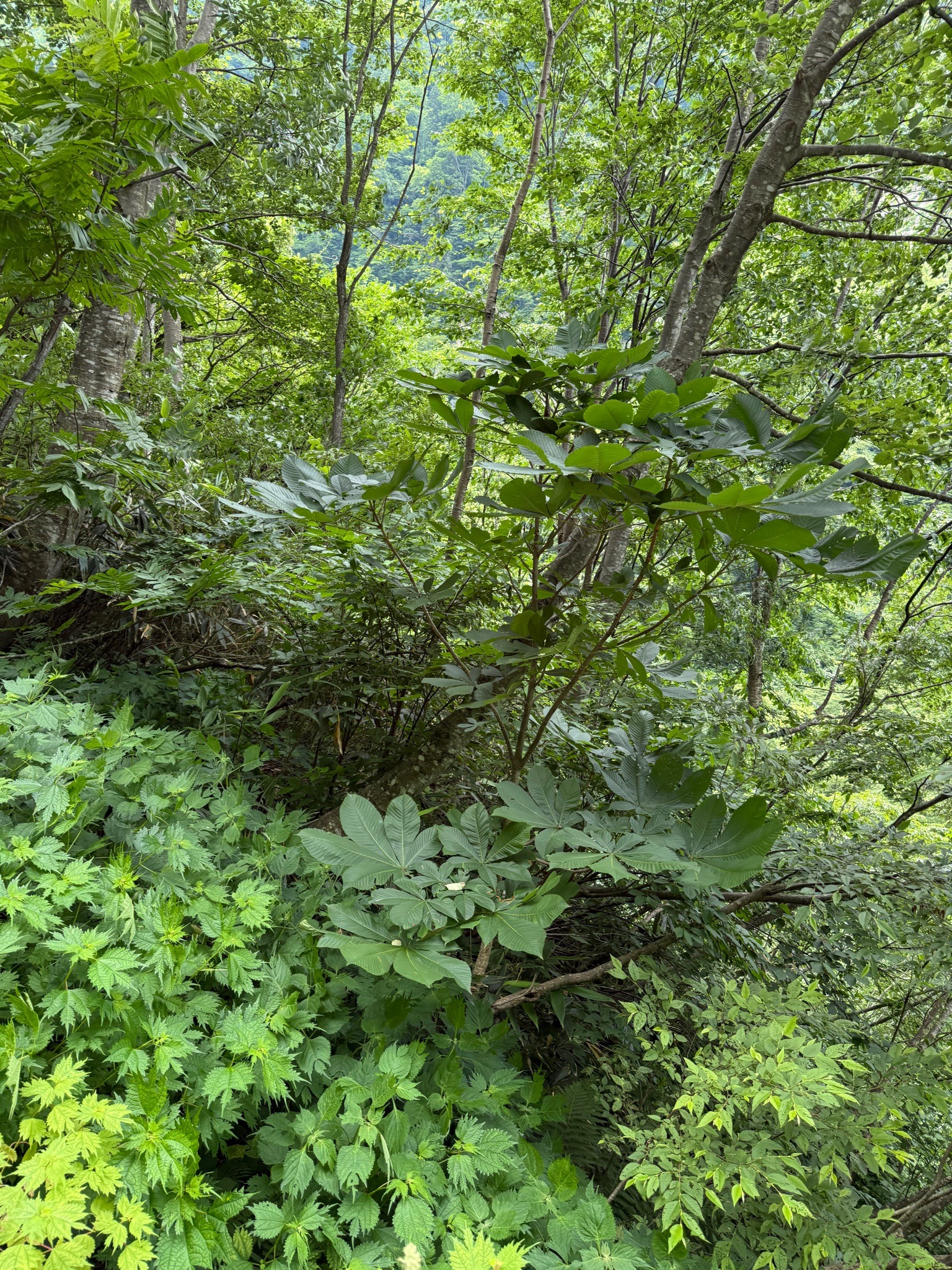
Japanese Horse Chestnut
Aesculus turbinata
A large deciduous tree known for its massive, palmately compound leaves typically consisting of 5-7 leaflets. It features upright, cone-shaped clusters of creamy-white flowers and large, thick-walled seed pods.
- Light
- Full sun to partial shade; prefers approximately 6 hours of light per day for optimal flowering.
- Water
- Regular watering is required to keep the soil moist, especially during dry spells. It has low drought tolerance and may show leaf scorch if allowed to dry out.
- Growth
- Large deciduous perennial tree; reaching height of 20-30 meters with a broad, rounded canopy. Growth rate is moderate.
Care instructions
Provide ample space for growth in full sun to partial shade. Keep the soil consistently moist but well-drained. Mulch to retain moisture and protect the root zone from heat.
Growing details
Sunlight
Full sun to partial shade; prefers approximately 6 hours of light per day for optimal flowering.
Watering
Regular watering is required to keep the soil moist, especially during dry spells. It has low drought tolerance and may show leaf scorch if allowed to dry out.
Soil
Rich, moist, loamy, and well-drained soil with a slightly acidic to neutral pH (6.0-7.0).
Hardiness zone
USDA Zones 6 - 8
Growth habit
Large deciduous perennial tree; reaching height of 20-30 meters with a broad, rounded canopy. Growth rate is moderate.
Bloom season
Late spring to early summer; produces large upright panicles of pale yellow to white flowers with red spots.
Propagation
Primarily via seeds (large nuts) sown immediately after falling in autumn, or through grafting for specific cultivars.
Common pests & issues
Susceptible to leaf blotch, powdery mildew, and leaf scorch in hot, dry conditions. Pests can include scale insects and leaf miners.
Similar species
Aesculus hippocastanum (Common Horse Chestnut), which has slightly smaller leaflets and distinctively sticky winter buds, whereas A. turbinata has less sticky buds and larger foliage.