
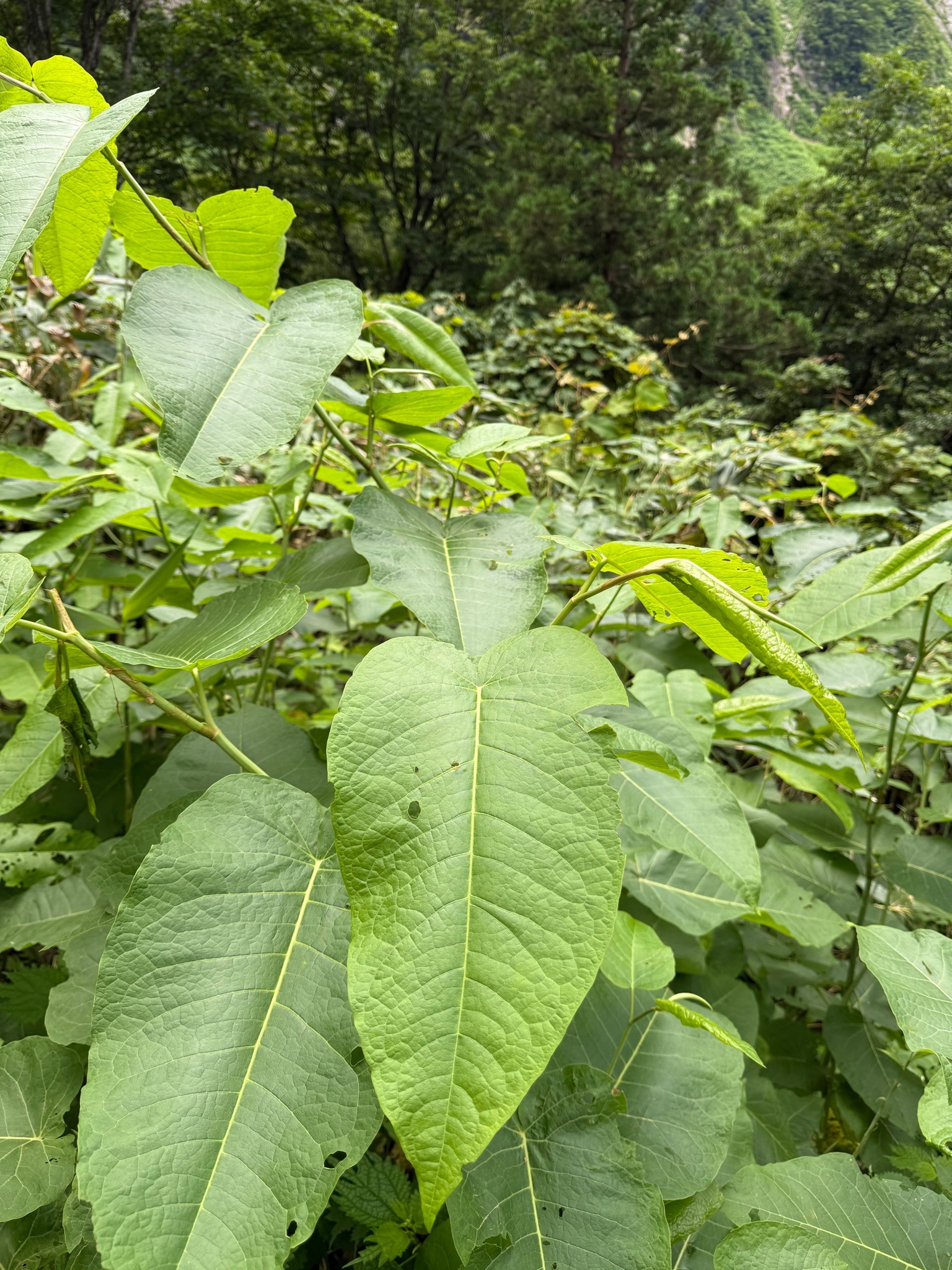
Japanese Knotweed
Reynoutria japonica
A vigorous herbaceous perennial with bamboo-like hollow stems and large, spade-shaped to heart-shaped green leaves. It is known for its rapid, dense growth and persistence.
- Light
- Full sun to partial shade; highly adaptable to various light levels but grows most vigorously in full sun (6+ hours per day).
- Water
- Moist to wet soil preferred. It is highly drought-tolerant once established due to its extensive rhizome system, but wilting may occur in extreme heat without moisture.
- Growth
- Rhizomatous perennial forming dense thickets. Can reach heights of 3 to 10 feet (1 to 3 meters) with a spread that expands rapidly via underground rhizomes.
Care instructions
This plant is extremely aggressive and typically not recommended for intentional cultivation. It thrives in almost any environment but prefers moist soil and bright light. Due to its invasive nature, it often requires strict containment or professional eradication efforts.
Growing details
Sunlight
Full sun to partial shade; highly adaptable to various light levels but grows most vigorously in full sun (6+ hours per day).
Watering
Moist to wet soil preferred. It is highly drought-tolerant once established due to its extensive rhizome system, but wilting may occur in extreme heat without moisture.
Soil
Highly adaptable; grows in silt, loam, clay, and sand. Prefers a pH range of 4.5 to 7.5.
Hardiness zone
USDA zones 3 through 9
Growth habit
Rhizomatous perennial forming dense thickets. Can reach heights of 3 to 10 feet (1 to 3 meters) with a spread that expands rapidly via underground rhizomes.
Bloom season
Late summer to early autumn; produces small, creamy-white flowers in branched clusters (panicles) from the leaf axils.
Propagation
Primarily through rhizome fragmentation or stem cuttings; even a tiny piece of root can regenerate into a new plant. Also spreads by seed in some regions.
Common pests & issues
Highly resistant to most pests and diseases. The primary 'issue' is its invasiveness, which can cause damage to infrastructure, foundations, and local ecosystems through its powerful root system.
Similar species
Giant Knotweed (Reynoutria sachalinensis) has much larger leaves with heart-shaped bases and hairs on the leaf underside; Bohemian Knotweed (Reynoutria x bohemica) is a hybrid with intermediate leaf sizes.