
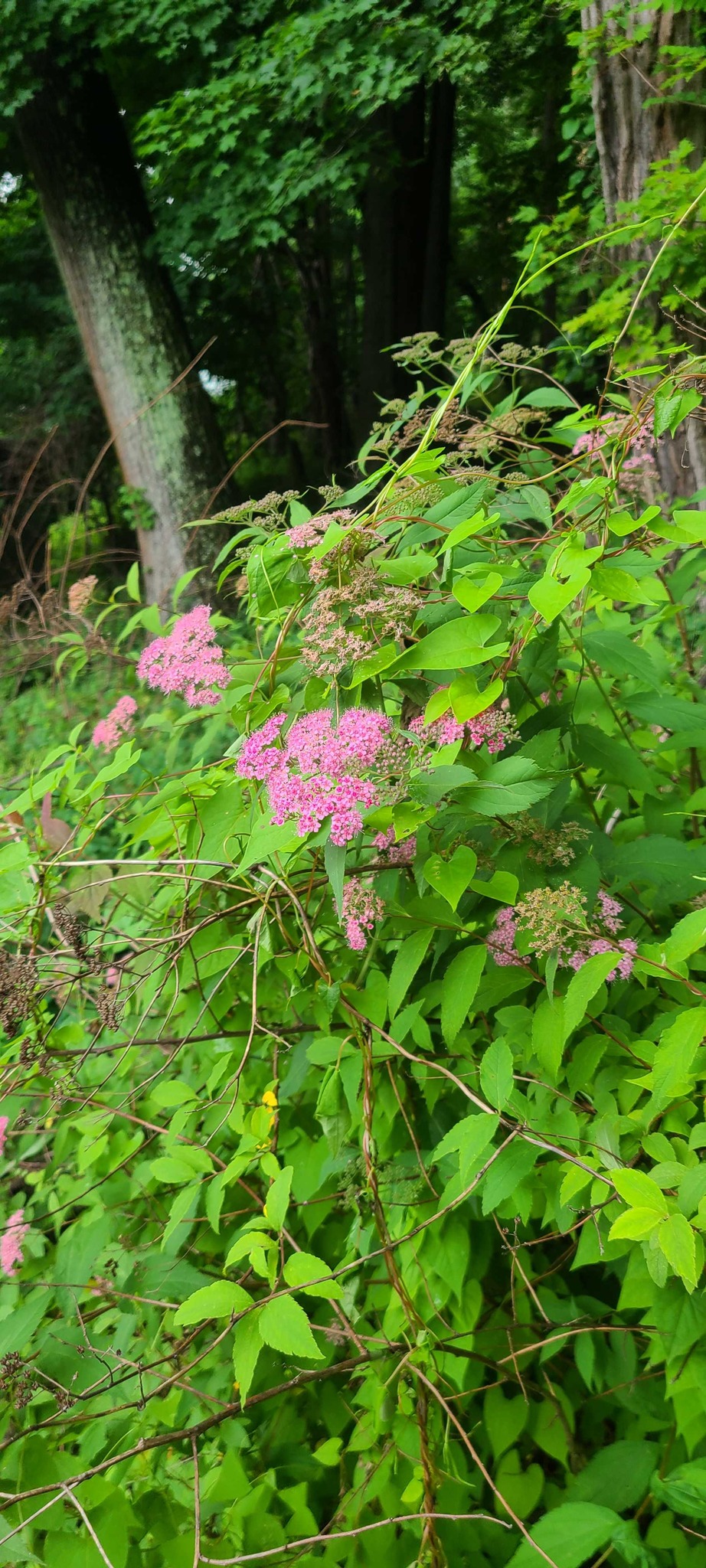
Japanese Spiraea
Spiraea japonica
A deciduous shrub known for its flat-topped clusters of tiny pink or rosy-red flowers and serrated, lance-shaped green leaves. It often has a dense, mounded growth habit.
- Light
- Full sun to partial shade; prefers at least 6 hours of direct sunlight for best flowering.
- Water
- Average water needs; water weekly or more often in extreme heat. Once established, it is moderately drought-tolerant.
- Growth
- Perennial shrub with a mounded, multi-stemmed growth habit. Typically reaches 4-6 feet in height and spread, though many cultivars are smaller.
Care instructions
Low-maintenance. Provide full sun to partial shade in well-draining soil. Water regularly until established, and prune after flowering to maintain shape and encourage re-blooming.
Growing details
Sunlight
Full sun to partial shade; prefers at least 6 hours of direct sunlight for best flowering.
Watering
Average water needs; water weekly or more often in extreme heat. Once established, it is moderately drought-tolerant.
Soil
Adaptable to various soil types including clay, but prefers moist, well-draining loamy soil with a neutral to slightly acidic pH (6.0-7.0).
Hardiness zone
3 to 8
Growth habit
Perennial shrub with a mounded, multi-stemmed growth habit. Typically reaches 4-6 feet in height and spread, though many cultivars are smaller.
Bloom season
Late spring to mid-summer; produces flat-topped clusters (corymbs) of pink or white flowers.
Propagation
Easily propagated through softwood cuttings in summer or by seed in the autumn.
Common pests & issues
Susceptible to aphids, leaf spots, and powdery mildew. Can be invasive in certain natural woodland areas of the Eastern US.
Similar species
Spiraea douglasii (Western Spiraea) which has steeple-shaped flower clusters, and Spiraea alba (Meadowsweet) which typically has white flowers.