Japanese Zelkova
Scientific Name: Zelkova serrata
Plant Family: Ulmaceae
Native Region: Japan, Korea, eastern China, and Taiwan
Brief Description
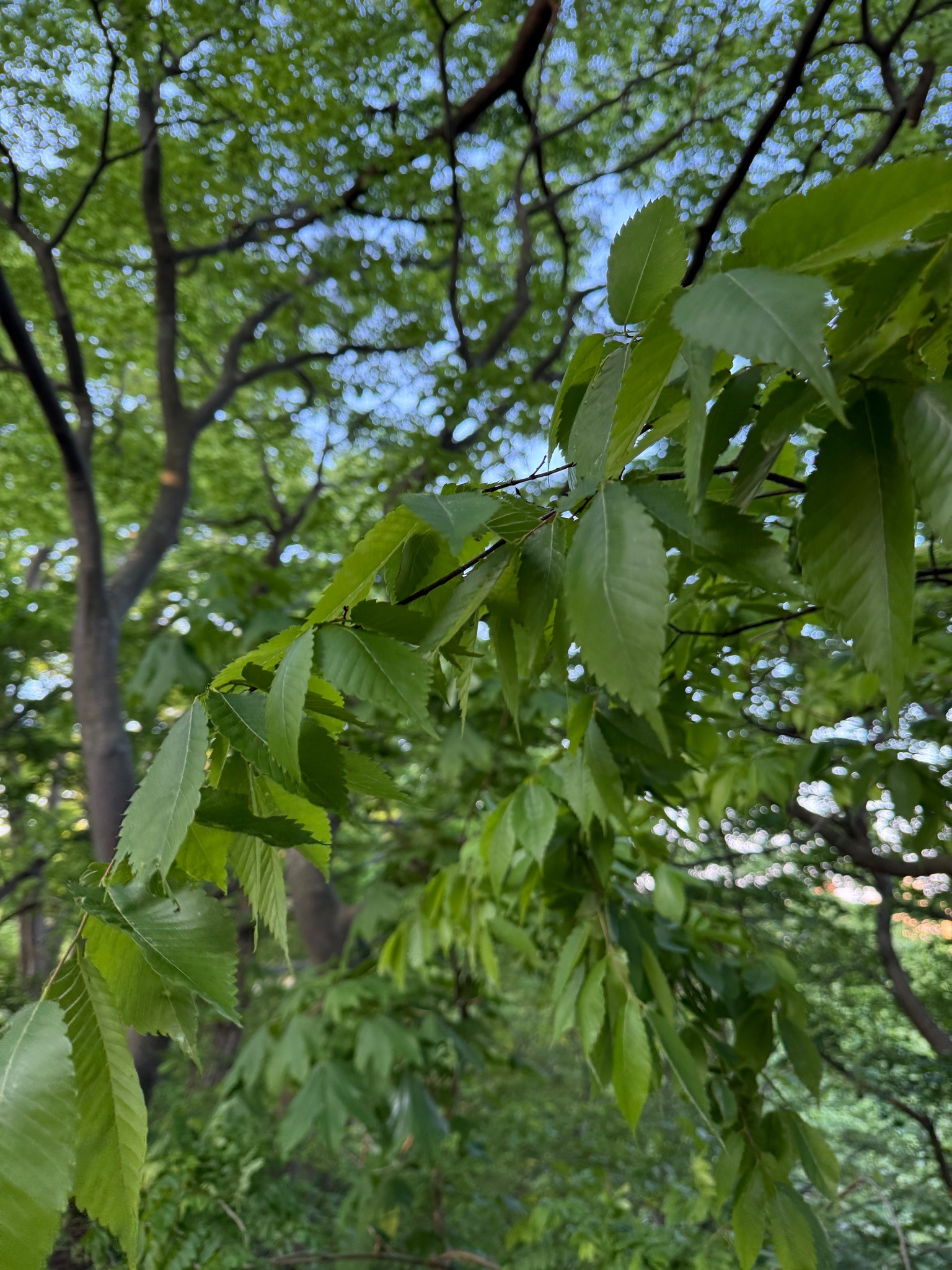
A medium to large deciduous tree known for its vase-shaped habit and attractive exfoliating bark. Leaves are alternate, simple, and ovate with sharply serrated margins.
Care Instructions
Plant in a location with full sun and well-draining soil. Water regularly until established; once mature, it is quite drought-tolerant. Prune in late winter or early spring to maintain its vase shape.
Medicinal Value
We do not currently provide medicinal value for plant identifications.
Sunlight
Full sun (6+ hours per day) for optimal growth and fall color.
Watering
Moderate; requires regular watering during its first few years. Becomes drought-tolerant once mature but benefits from occasional deep watering during dry spells.
Soil
Adaptable to various soil types including clay or loam, but prefers moist, well-draining soil with a pH of 6.0 to 7.5.
Hardiness Zone
5 to 8
Growth Habit
Deciduous tree with a rapid growth rate when young. Reaches a mature height of 50-80 feet and a similar spread with a distinctive upward-branching, vase-like form.
Bloom Season
Spring; flowers are small, green, and non-showy, appearing with the new leaves.
Toxicity
Non-toxic to humans, dogs, and cats.
Propagation
Most commonly propagated by seed or by grafting onto seedling rootstocks. Softwood cuttings can also be used in early summer.
Common Pests & Issues
Generally resistant to Dutch Elm Disease. May occasionally be affected by scale insects, Japanese beetles, or leaf spot, but usually lacks serious pest problems.
Similar Species
American Elm (Ulmus americana) - the Zelkova has smoother, exfoliating bark and more pointed leaf serrations; Chinese Elm (Ulmus parvifolia) - has smaller leaves and different bark patterns.
Interesting Facts
The Japanese Zelkova often turns vibrant shades of yellow, orange, or deep red in the fall and is frequently used as a replacement for the American Elm in urban landscapes due to its similar shape and disease resistance.
Created At: 2026-05-13T15:55:26.168979