Japanese Spirea
Scientific Name: Spiraea japonica
Plant Family: Rosaceae
Native Region: Japan, Korea, and China; widely naturalized in North America and Europe
Brief Description
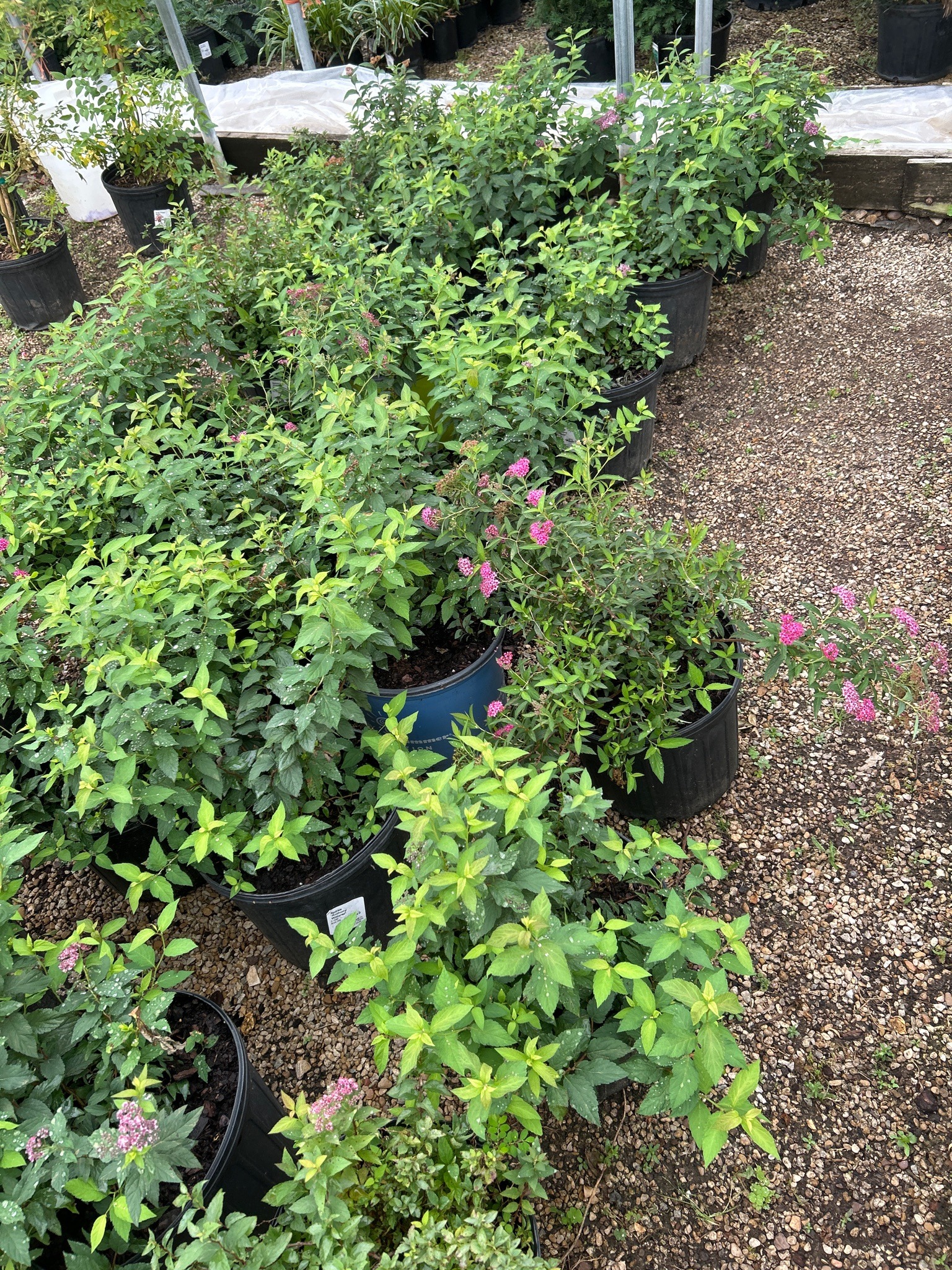
A deciduous, mounding shrub known for its clusters of small pink flowers and oval, serrated green or chartreuse leaves. It is popular in landscaping for its hardy nature and compact, rounded shape.
Care Instructions
Plant in full sun for best flowering and leaf color. Water regularly during the first growing season to establish roots; once mature, it is moderately drought-tolerant. Prune after flowering to encourage a second flush of blooms and maintain its rounded shape.
Medicinal Value
We do not currently provide medicinal value for plant identifications.
Sunlight
Full sun (6+ hours per day) for optimal flowering; can tolerate partial shade but may have fewer flowers.
Watering
Average water needs. Provide about 1 inch per week. Once established, it can handle occasional dry spells but prefers consistently moist, well-drained soil.
Soil
Adaptable to many soil types including clay, but prefers moist, well-drained loamy soil with a pH of 5.5 to 7.5.
Hardiness Zone
4 to 8
Growth Habit
Deciduous perennial shrub with a clumping, mounded growth habit. Usually reaches 2 to 4 feet in height and spread.
Bloom Season
Late spring to mid-summer; produces flat-topped clusters (corymbs) of tiny pink or white flowers.
Toxicity
Generally considered non-toxic to humans, dogs, and cats, making it a safe choice for family gardens.
Propagation
Easily propagated through softwood cuttings in summer or by dividing root clumps in late fall or early spring.
Common Pests & Issues
Susceptible to aphids, leaf spot, and powdery mildew. Fire blight can occasionally occur. Ensure good air circulation to prevent fungal issues.
Similar Species
Spiraea corymbosa (smaller, white flowers) and Spiraea douglasii (steeper, conical flower spikes rather than flat clusters).
Interesting Facts
The genus name 'Spiraea' comes from the Greek word 'speira' meaning wreath or spiral, referring to the flexibility of the branches for weaving. It is highly attractive to butterflies and bees.
Created At: 2026-05-19T17:42:42.366767